Rubella in pregnancy
Exam relevance: in 4 of 197 board exam reports · rank 111
- Synonyms
- German measles, rubella
- Specialty
- Obstetrics · Pregnancy disorders
- Images
- Clinical 1
- Exam relevance
- 4 of 197 reports · rank 111
- Last updated
- 10/2026 · Dr. Pascal Bafteh
Contents
Images (1)
Definition
- Congenital rubella syndrome (CRS) results from infection of the fetus across the placenta when the pregnant woman has rubella.
Occurrence & epidemiology
Epidemiology
- In the WHO Region of the Americas, rubella and CRS have officially been considered eliminated since 2015.
Aetiopathogenesis
Aetiology and pathogenesis
- Rubella virus is an RNA virus of the family Togaviridae and is usually transmitted by droplets.
- In the first 12 weeks of pregnancy the risk is very high, with damage in up to 90% of fetuses; it decreases markedly in weeks 13 to 16, and from week 20 damage occurs only exceptionally.
Clinical features
Clinical features and complications
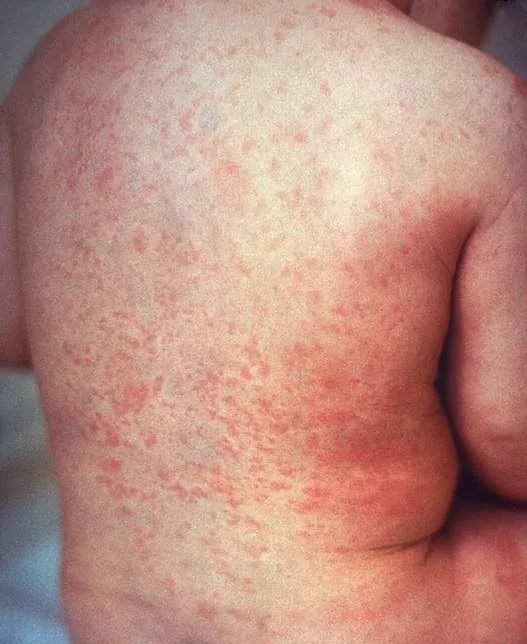
- Postnatal rubella is often mild, with nuchal and retroauricular lymphadenopathy and a fine macular rash; up to 50% of infections are asymptomatic.
- The classic Gregg triad comprises defects of the heart (patent ductus arteriosus), eyes (cataract) and ears (sensorineural deafness).
- Further consequences include low birthweight, thrombocytopenic purpura, hepatosplenomegaly, encephalitis, myocarditis and microcephaly; the overall case fatality of CRS is 15–20%.
Diagnosis
- If rubella is suspected in pregnancy, rubella virus PCR from throat swab, urine and blood, IgG avidity testing and immunoblot are used for clarification.
- Prenatally, the virus can be detected by PCR of chorionic villus material or amniotic fluid, and from week 22 additionally by IgM or PCR in fetal blood.
Keep learning in the app
Further reading (selection)
Cross-references
Note: Learning content from the GynFuchs app (flashcards, exam questions, image cases) for medical education – not a treatment recommendation and no substitute for diagnosis or treatment decisions in individual cases. Treatment and management are deliberately not covered on this page.