Polyhydramnios
Exam relevance: in 5 of 197 board exam reports · rank 101
- Synonyms
- too much amniotic fluid
- Specialty
- Obstetrics · Pregnancy disorders
- Images
- Ultrasound 3
- Exam relevance
- 5 of 197 reports · rank 101
- Last updated
- 10/2026 · Dr. Pascal Bafteh
Contents
Images (3)
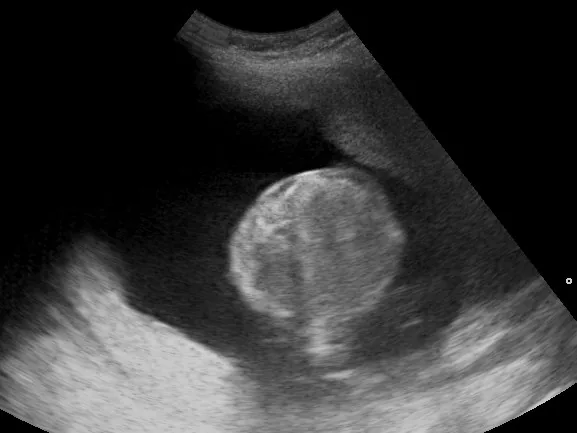 Ultrasound
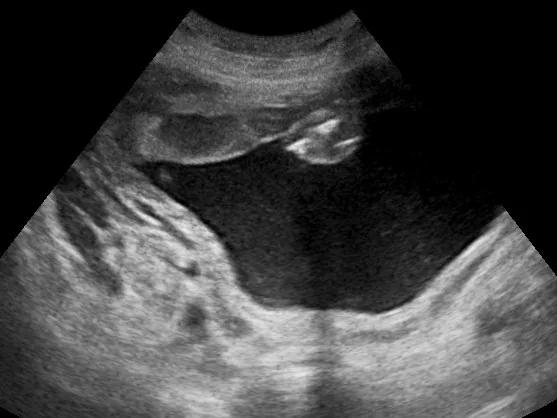 Ultrasound
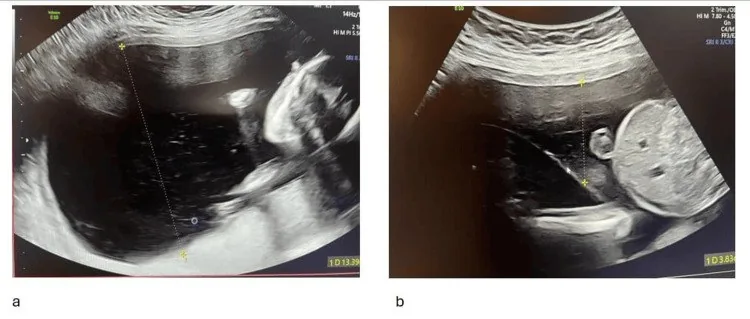 Ultrasound
Definition
- Polyhydramnios is a pathologically increased amniotic fluid volume, defined sonographically by a deepest vertical pocket of at least 8 cm or an amniotic fluid index of at least 24 cm.
Classification
- By amniotic fluid index or deepest pocket, mild, moderate and severe forms are distinguished; the risk of complications generally rises with the degree of fluid excess.
Aetiopathogenesis
Aetiology and risk factors
- The underlying problem is a disturbed balance between amniotic fluid production and absorption, usually due to increased fetal urine output, impaired swallowing or gastrointestinal obstruction; 60–70% of cases remain idiopathic.
- The commonest maternal cause is diabetes; increased urine output also occurs with macrosomia, fetal osmotic diuresis, high-output cardiac states and renal anomalies.
- Swallowing is impaired by, among others, CNS malformations, cleft palate, micrognathia, neck, mediastinal or lung masses, diaphragmatic hernia, gastrointestinal obstruction and neuromuscular disorders.
- Further causes include chromosomal abnormalities such as trisomy 21, 18 or 13, congenital infections, fetal anaemia, for example from alloimmunisation, and multiple pregnancy with twin-to-twin transfusion syndrome.
Clinical features
Clinical features and complications
- Polyhydramnios is often asymptomatic; sometimes the uterus is larger than expected for gestational age, and severe forms cause breathlessness and painful preterm contractions.
- Complications include preterm contractions and prelabour rupture of membranes, sometimes followed by placental abruption, malpresentation, cord prolapse, uterine atony, postpartum haemorrhage and fetal death, the latter also in idiopathic polyhydramnios.
Diagnosis
- Amniotic fluid volume is measured quantitatively using the amniotic fluid index (normal above 5 to below 24 cm) or the deepest pocket (normal 2 to below 8 cm); the deepest pocket tends to overdiagnose polyhydramnios.
- Investigation of the cause includes a comprehensive anomaly scan, a maternal glucose test, amniocentesis with karyotyping if other abnormalities are present, and tests for infection.
Keep learning in the app
Further reading (selection)
Cross-references
Note: Learning content from the GynFuchs app (flashcards, exam questions, image cases) for medical education – not a treatment recommendation and no substitute for diagnosis or treatment decisions in individual cases. Treatment and management are deliberately not covered on this page.