Rhesus incompatibility and fetal anaemia
Exam relevance: in 11 of 197 board exam reports · rank 64
- Synonyms
- rhesus disease, haemolytic disease of the newborn
- Specialty
- Obstetrics · Pregnancy disorders
- Images
- Histology & cytology 1 · Ultrasound 1
- Exam relevance
- 11 of 197 reports · rank 64
- Last updated
- 10/2026 · Dr. Pascal Bafteh
Contents
Images (2)
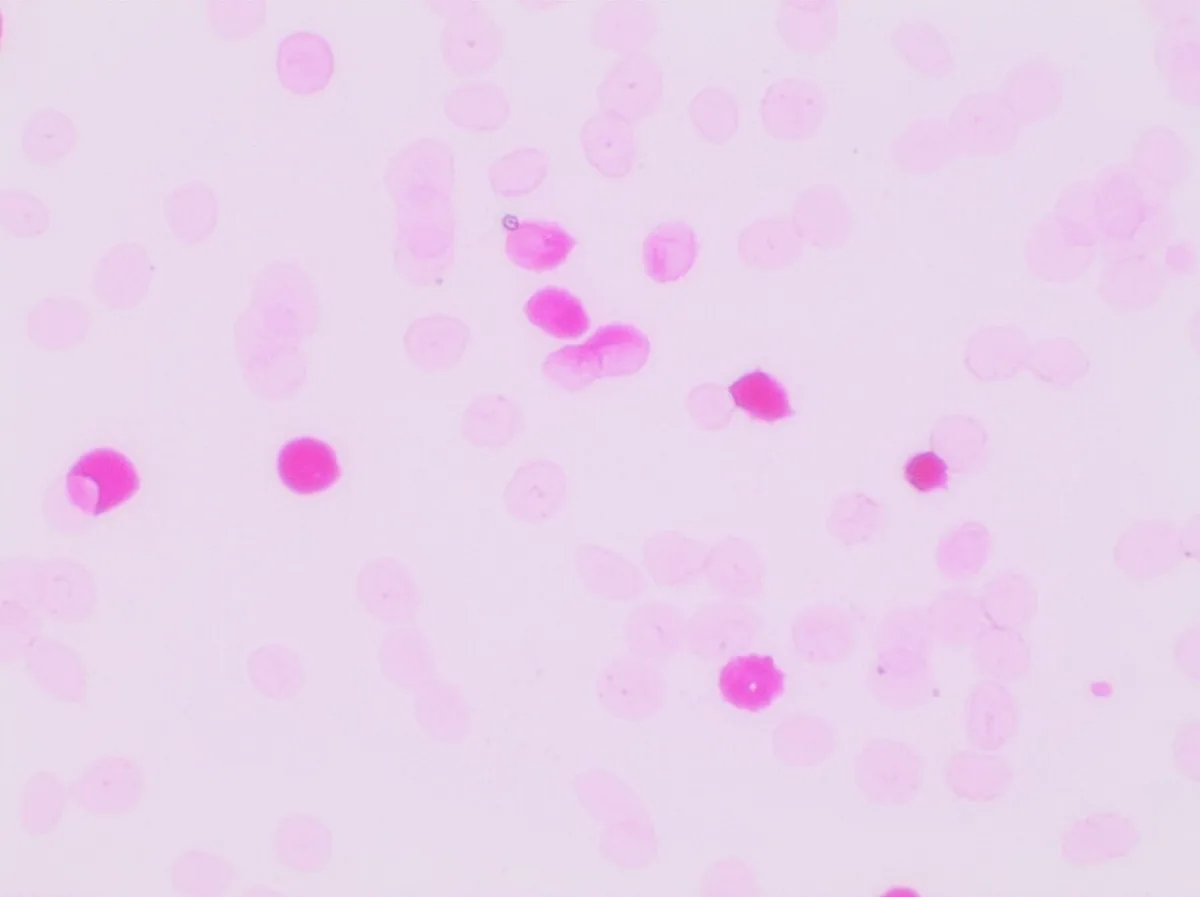 Histology & cytology
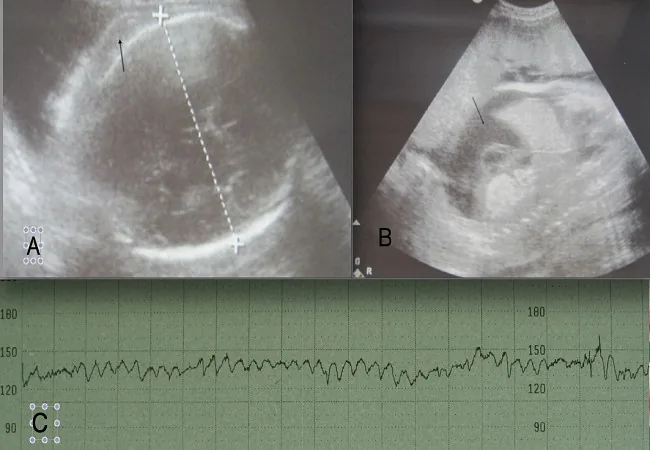 Ultrasound
Definition
- In rhesus incompatibility a Rh(D)-negative pregnant woman carrying a Rh-positive fetus forms antibodies against the D antigen on fetal red cells; in later pregnancies these cross the placenta and cause haemolysis in a Rh-positive fetus.
- The result is haemolytic disease of the fetus and newborn (formerly erythroblastosis fetalis).
Aetiopathogenesis
Aetiology and pathogenesis
- Fetal red cells enter the maternal circulation throughout pregnancy, most at birth or termination of pregnancy; larger fetomaternal haemorrhages occur, for example, after trauma, and the larger the haemorrhage, the more antibodies are formed.
- Other routes of sensitisation are needles contaminated with Rh-positive blood and inadvertent transfusion of Rh-positive blood.
- No complications develop in the sensitising pregnancy; subsequent pregnancies are affected.
- Other blood group systems such as Kell, Duffy, Kidd or Cc and Ee can also cause haemolytic disease; anti-Kell antibodies additionally suppress red cell production in the bone marrow directly.
Clinical features
Clinical features and complications
- In the fetus, haemolysis causes anaemia, hypoalbuminaemia, possibly high-output heart failure and fetal death; immature red cells (erythroblasts) are released into the circulation, and in severe cases hydrops fetalis develops.
- In the neonate, haemolysis raises indirect bilirubin with jaundice up to kernicterus; the pregnant woman herself usually remains asymptomatic.
Diagnosis
- At the first antenatal visit all women are tested for blood group, Rh type and an antibody screen; if relevant antibodies are present, the father's blood group and zygosity and serial titres are determined, with a laboratory-specific critical titre usually between 1:8 and 1:32.
- Fetal Rh status can be determined non-invasively from cell-free fetal DNA in maternal blood (RHD gene).
- An elevated middle cerebral artery flow velocity for gestational age indicates fetal anaemia; fetal haemoglobin is determined by umbilical cord blood sampling.
Keep learning in the app
Further reading (selection)
Cross-references
Note: Learning content from the GynFuchs app (flashcards, exam questions, image cases) for medical education – not a treatment recommendation and no substitute for diagnosis or treatment decisions in individual cases. Treatment and management are deliberately not covered on this page.