Non-puerperal mastitis
Exam relevance: in 2 of 197 board exam reports · rank 144
- Specialty
- Gynaecology · Breast
- Images
- Clinical 3 · Ultrasound 4
- Exam relevance
- 2 of 197 reports · rank 144
- In the app
- 1 flashcards · GynFuchs
- Last updated
- 10/2026 · Dr. Pascal Bafteh
Contents
Images (7)
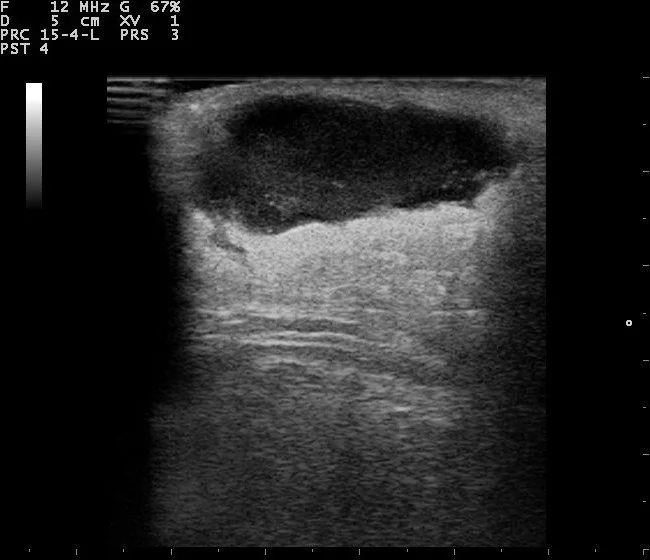
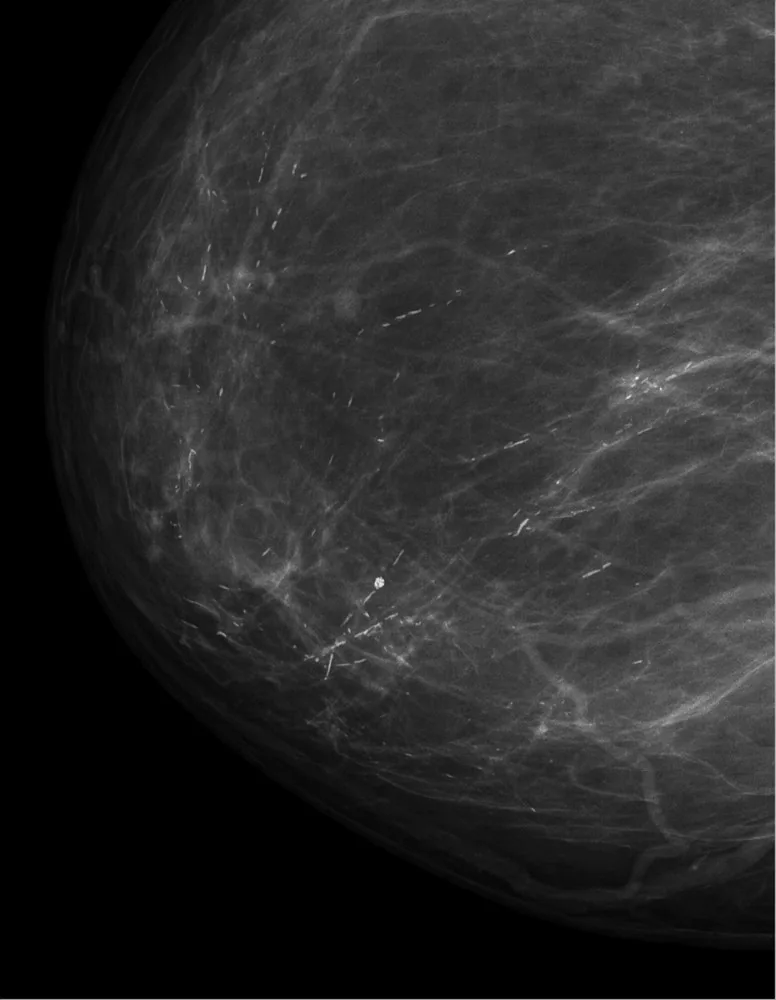 Ultrasound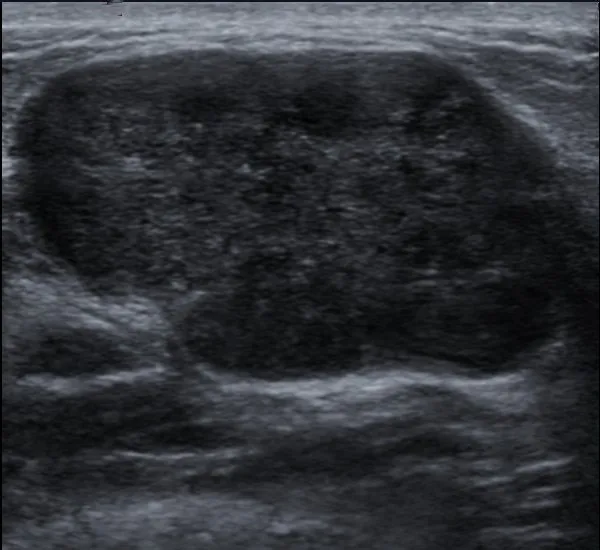
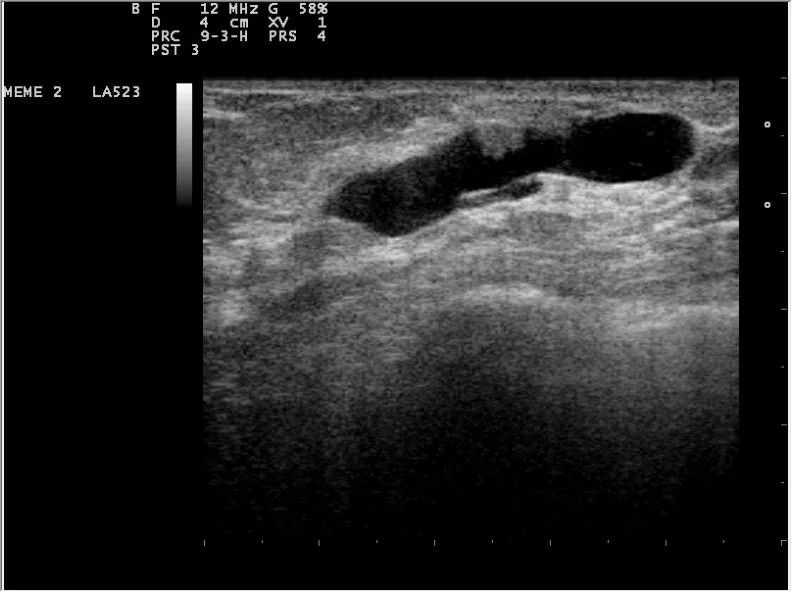 Ultrasound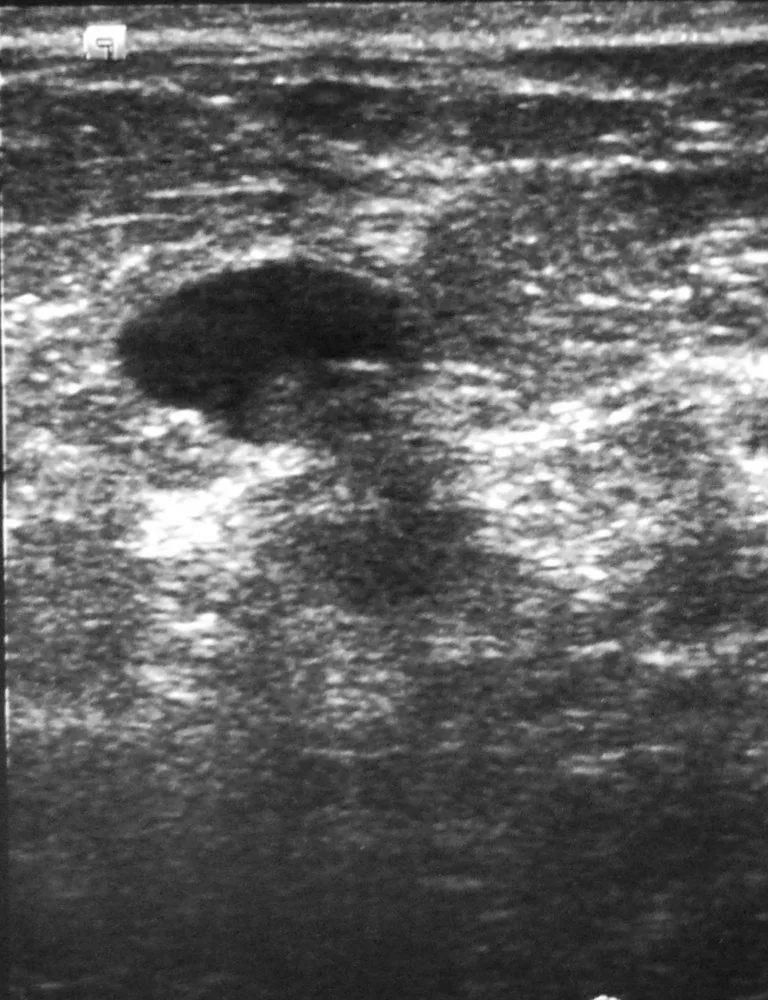
 Ultrasound
 Ultrasound
Definition
- Inflammation of the breast arising independently of lactation, distinguished as nonlactational (non-puerperal) mastitis from the lactational (puerperal) form.
Classification
- Forms include periductal mastitis, nonlactational infectious mastitis, idiopathic granulomatous mastitis and tuberculous mastitis.
- Recurrent subareolar abscesses with mammary duct fistulas are called Zuska disease after the original description of 1951.
- Whether duct ectasia and periductal mastitis are stages of the same disease or separate entities is debated.
Occurrence & epidemiology
Epidemiology
- Periductal mastitis mainly affects women under 30 years of age or perimenopausal women; granulomatous lobular mastitis usually occurs in women of childbearing age between 30 and 40 years, often within a few years after childbirth.
Aetiopathogenesis
Aetiology and pathogenesis
- Smoking is the best-documented risk factor for periductal mastitis: squamous metaplasia of the ductal epithelium leads to keratin production, duct obstruction, stasis and secondary bacterial infection.
- Nipple inversion promotes periductal mastitis through impaired outflow of secretions; nonlactational breast infections are also associated with obesity and diabetes mellitus.
- The most common pathogen is Staphylococcus aureus, followed by coagulase-negative staphylococci; mixed infections with anaerobes are frequent, especially in chronic or recurrent abscesses, and more so in heavy smokers.
Clinical features
Inflamed breast
- Puerperal mastitis characteristically presents with a wedge-shaped erythema, warmth, fever, and chills, most often caused by Staphylococcus aureus.
- Non-puerperal mastitis has a frequently chronic-recurrent course, often with duct ectasia and a history of smoking.
- Typical features are intermittent or noncyclical breast pain, purulent or serous nipple discharge, nipple retraction or inversion and a subareolar mass.
- Subareolar abscesses may rupture spontaneously, recur and progress to periareolar cutaneous fistulas.
Diagnosis
- Ultrasound is the initial examination to confirm inflammation and identify abscesses; mammography has a limited role in the acute phase.
- In abscesses, atypical course, uncertain diagnosis or recurrence, tissue sampling serves to exclude malignancy and uncommon pathogens, as noninfectious forms can mimic cancer; granulomatous lobular mastitis is confirmed histologically after exclusion of other causes.
Keep learning in the app
Further reading (selection)
Cross-references
More topics: Breast
Note: Learning content from the GynFuchs app (flashcards, exam questions, image cases) for medical education – not a treatment recommendation and no substitute for diagnosis or treatment decisions in individual cases. Treatment and management are deliberately not covered on this page.