Haematometra and pyometra
Exam relevance: in 2 of 197 board exam reports · rank 144
- Specialty
- Gynaecology · Uterus & endometrium
- Images
- Ultrasound 1
- Exam relevance
- 2 of 197 reports · rank 144
- Last updated
- 10/2026 · Dr. Pascal Bafteh
Contents
Images (1)
Definition
- Pyometra is a collection of pus in the uterine cavity resulting from impaired outflow through the cervix.
- Haematometra and haematocolpos denote the accumulation of menstrual blood in the uterus or vagina.
Occurrence & epidemiology
Epidemiology
- Pyometra is uncommon and occurs mainly in postmenopausal women; it is rare before the menopause.
- Spontaneous perforation with generalised peritonitis is extremely uncommon.
Aetiopathogenesis
Aetiology
- The most common cause is genital tract malignancy, accounting for about 35% of cases; other causes include endometrial lesions, fibroids, senile cervicitis, puerperal infection and congenital cervical anomalies.
- Further causes are cervical polyps, infection and occlusion of the cervical canal.
- In a literature review of perforated pyometra, mixed aerobic and anaerobic infection was found in most patients.
- Haematocolpos or haematometra can result from a congenital imperforate hymen, in which the hymen does not rupture spontaneously during neonatal development.
Clinical features
- Classic symptoms are purulent discharge, postmenopausal bleeding and lower abdominal pain, but none is specific; more than half of non-perforated cases are asymptomatic.
- Spontaneously perforated pyometra is difficult to diagnose clinically and commonly mimics gastrointestinal disease, so misdiagnoses are common.
Diagnosis
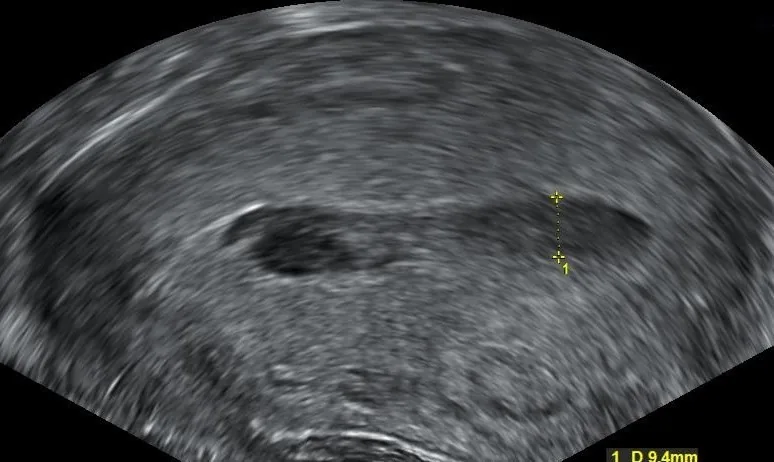
- Ultrasound is the first and most sensitive examination for pyometra but has a limited role once perforation has occurred; CT of the abdomen and MRI of the pelvis are additional options.
Keep learning in the app
Further reading (selection)
Cross-references
Note: Learning content from the GynFuchs app (flashcards, exam questions, image cases) for medical education – not a treatment recommendation and no substitute for diagnosis or treatment decisions in individual cases. Treatment and management are deliberately not covered on this page.