Lynch syndrome in gynaecology
Exam relevance: in 6 of 197 board exam reports · rank 93
- Specialty
- Gynaecology · Uterus & endometrium
- Images
- Histology & cytology 1
- Exam relevance
- 6 of 197 reports · rank 93
- In the app
- 1 flashcards · GynFuchs
- Last updated
- 10/2026 · Dr. Pascal Bafteh
Contents
Images (1)
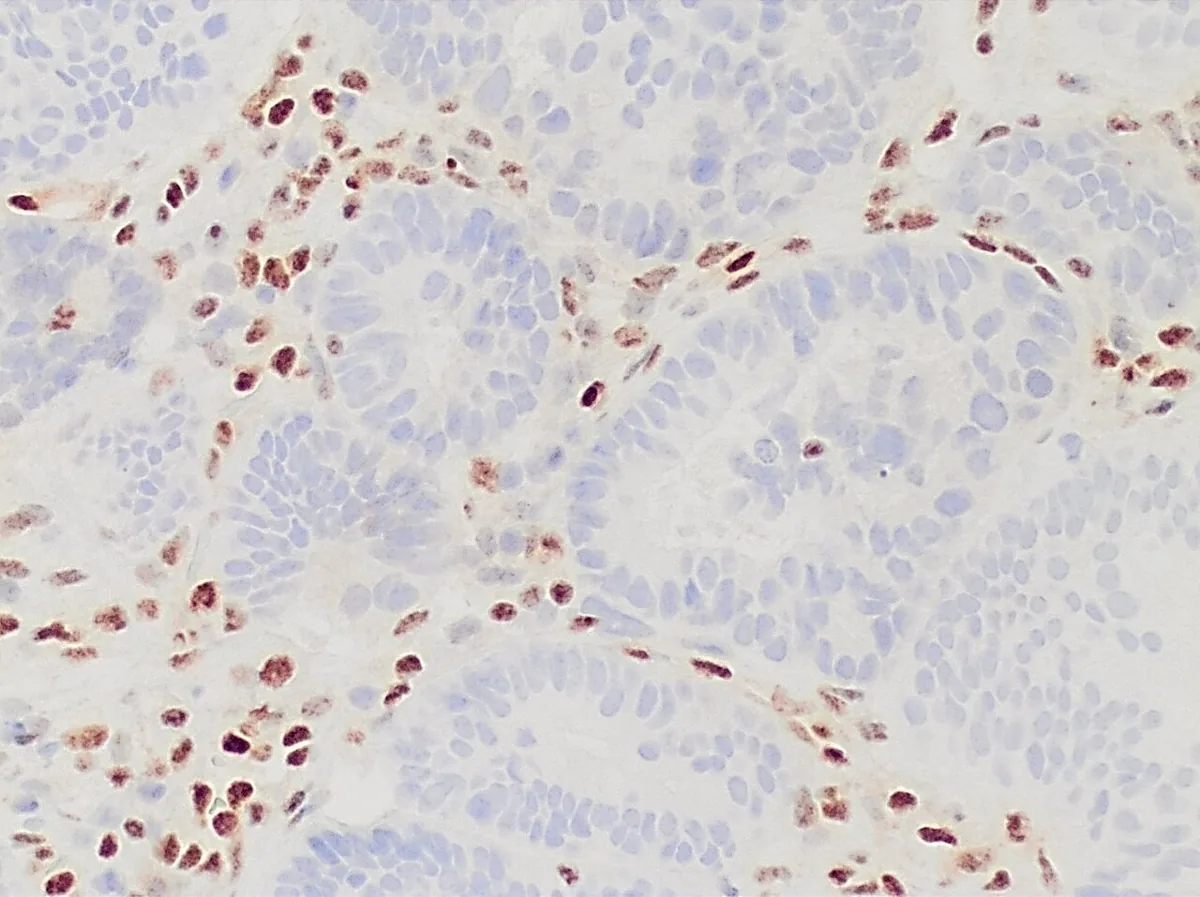
Definition
Lynch syndrome
- Pathophysiology: Lynch syndrome is based on a defect in DNA mismatch repair.
- Tumour risk: It increases the risk of colon, endometrial, and ovarian cancer.
- Histological clue: The clue in histology is a loss of mismatch repair proteins in immunohistochemistry.
- Lynch syndrome is an autosomal dominant hereditary cancer predisposition caused by germline variants in the mismatch repair genes MLH1, MSH2, PMS2 and MSH6 or in the EPCAM gene, which silences MSH2 through promoter hypermethylation.
Occurrence & epidemiology
Epidemiology
- About 1 in 300 people is affected; it is the most common cause of inherited colorectal cancer.
- About 3% of endometrial carcinomas are due to Lynch syndrome, while roughly a quarter show microsatellite instability or MMR deficiency.
Clinical features
- The lifetime cancer risk ranges from 10 to 90% depending on the variant and cancer type.
- Endometrial cancer is the most common extracolonic cancer and is often the first cancer to occur in women.
- Certain variants also increase the risk of ovarian cancer; Lynch-associated ovarian cancers are mostly endometrioid.
Diagnosis
- In patients with cancer, tumour tissue is examined immunohistochemically for loss of MMR proteins; microsatellite instability is a pathological hallmark of Lynch-associated cancers.
- Depending on the pattern of loss, MLH1 hypermethylation testing clarifies the cause of the loss; the diagnosis is confirmed by germline testing of the MMR genes.
- Family-history criteria such as the Amsterdam criteria are used to identify carriers.
Keep learning in the app
Further reading (selection)
Cross-references
Note: Learning content from the GynFuchs app (flashcards, exam questions, image cases) for medical education – not a treatment recommendation and no substitute for diagnosis or treatment decisions in individual cases. Treatment and management are deliberately not covered on this page.