Asherman syndrome
Exam relevance: in 2 of 197 board exam reports · rank 144
- Specialty
- Gynaecology · Uterus & endometrium
- Images
- Ultrasound 2 · Endoscopy & gross 2 · Histology & cytology 1
- Exam relevance
- 2 of 197 reports · rank 144
- In the app
- 1 flashcards · GynFuchs
- Last updated
- 10/2026 · Dr. Pascal Bafteh
Contents
Images (5)
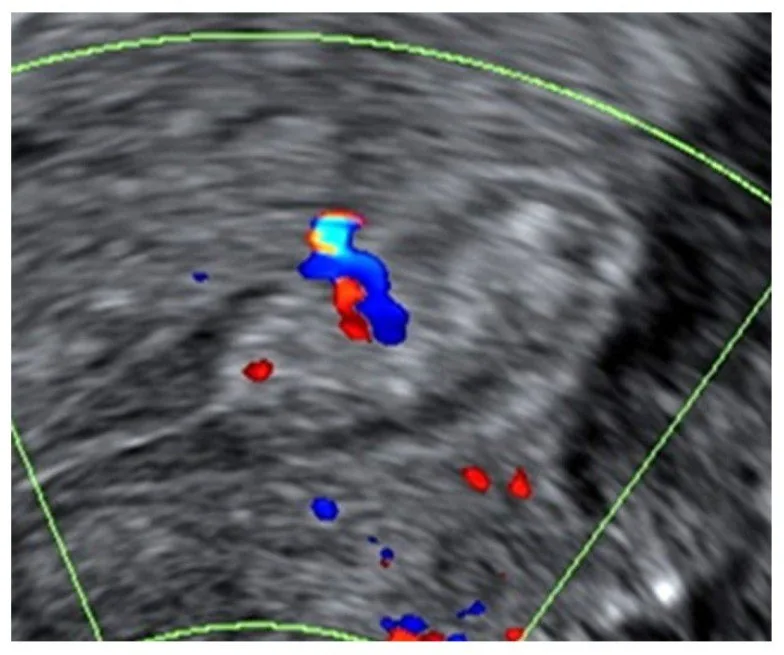 Ultrasound
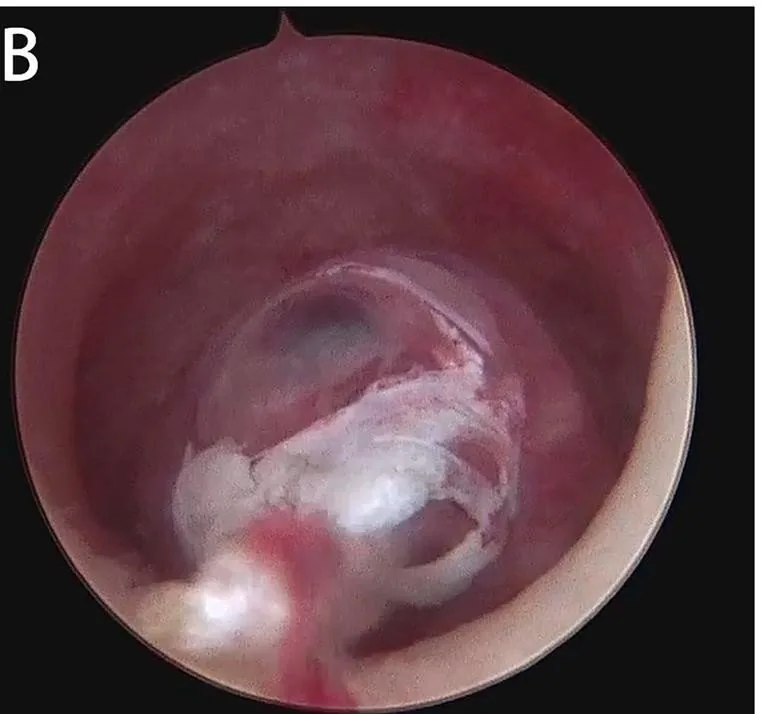 Endoscopy & gross
 Histology & cytology
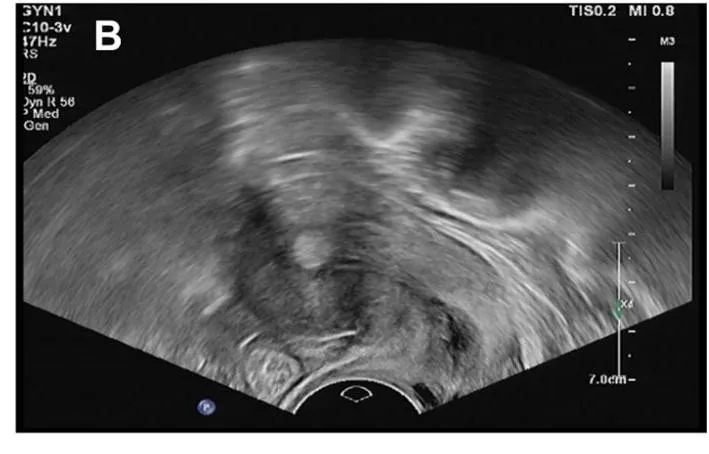
 Ultrasound
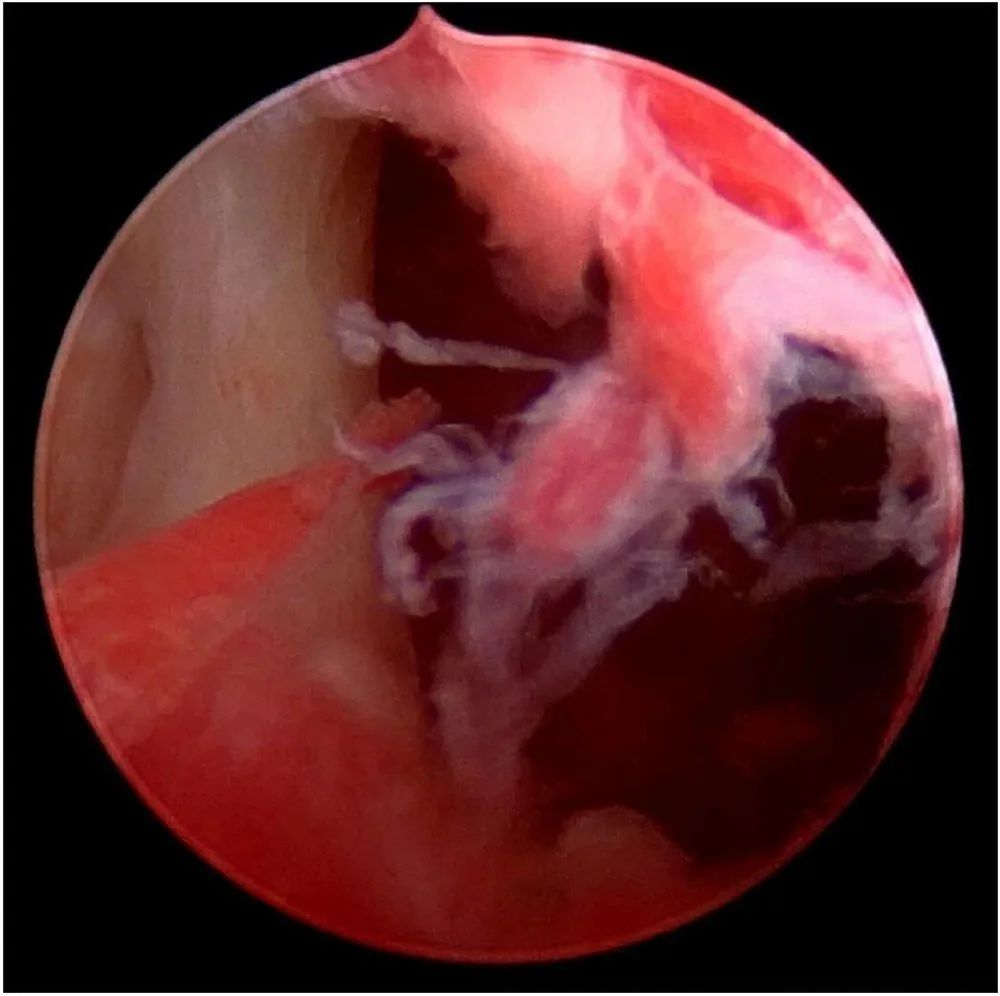
 Endoscopy & gross
Definition
- Asherman syndrome denotes intrauterine adhesions arising after injury that destroys the basal layer of the endometrium.
- The spectrum ranges from thin strands of tissue in minimal disease to complete obliteration of the cavity in severe disease.
Classification
- Classification systems describe the location and severity of the adhesions; symptoms alone do not reflect severity.
Occurrence & epidemiology
Epidemiology
- In some studies the risk rose with the number of D&C procedures, from 16% after one to 32% after three or more.
Aetiopathogenesis
Aetiology
- The commonest cause is injury to the basal layer by D&C after miscarriage, birth or termination; pregnancy-related intrauterine instrumentation precedes up to 91% of cases.
- Other causes are intrauterine devices and pelvic infections such as schistosomiasis and genital tuberculosis.
Clinical features
Clinical features and diagnosis
- Clinically, it presents as hypo-/amenorrhoea, cyclical pain, infertility.
- It is diagnosed hysteroscopy, supplemented by hydrosonography/HSG.
- Leading symptoms are reduced or absent menstruation, cyclical pelvic pain and reproductive disorders such as infertility and recurrent pregnancy loss.
- Cyclical pain arises when menstrual blood cannot leave the uterus because the cervix is blocked by adhesions.
- Later pregnancies show more placental attachment disorders as well as fetal growth restriction and fetal anomalies.
Diagnosis
- Hysterosalpingography, sonohysterography and ultrasound are used; hysteroscopy is regarded as the gold standard.
- Hysterosalpingography typically shows irregular, angulated, immobile filling defects.
- Sonohysterography and hysterosalpingography reached a sensitivity of 75% in one study; ultrasound alone is not reliable.
Keep learning in the app
Further reading (selection)
- The link between intrauterine adhesions and impaired reproductive performance: a systematic review of the literature (BMC Pregnancy Childbirth 2022, PubMed Central)
- Hysterosalpingography finding in intra uterine adhesion (asherman' s syndrome): a pictorial essay (Int J Fertil Steril 2013, PubMed Central)
- DocCheck Flexikon, Endometriumpolyp
Cross-references
Note: Learning content from the GynFuchs app (flashcards, exam questions, image cases) for medical education – not a treatment recommendation and no substitute for diagnosis or treatment decisions in individual cases. Treatment and management are deliberately not covered on this page.