Erythema exsudativum multiforme
Exam relevance: in 3 of more than 50 board exam reports · rank 45
- Synonyms
- erythema multiforme, target lesions, EM
- Specialty
- Dermatology · Drug reactions
- Images
- Clinical 2
- Last updated
- 10/2026 · Dr. Pascal Bafteh
Contents
Images (2)
Definition
Erythema multiforme (EM) is an acute, usually self-limiting immunological reaction of skin and mucosa with typical target lesions. Today it is clearly separated from Stevens-Johnson syndrome and toxic epidermal necrolysis.
- Infectious triggers: 1–2 weeks after HSV, Mycoplasma pneumoniae, EBV, VZV.
- EEM Major: Mild general symptoms & mucosal involvement, no skin detachment.
- EEM Minor: typical target lesions without significant general or mucosal symptoms.
- Histology: mononuclear infiltrates, mild basal cell necrosis.
Occurrence & epidemiology
It mainly affects young adults. An infection triggers about 90% of cases, above all herpes simplex (predominantly HSV-1); less often other infections or drugs are responsible. Mycoplasma pneumoniae-associated mucocutaneous reactions are now classified as a separate entity (RIME, reactive infectious mucocutaneous eruption).
Clinical features
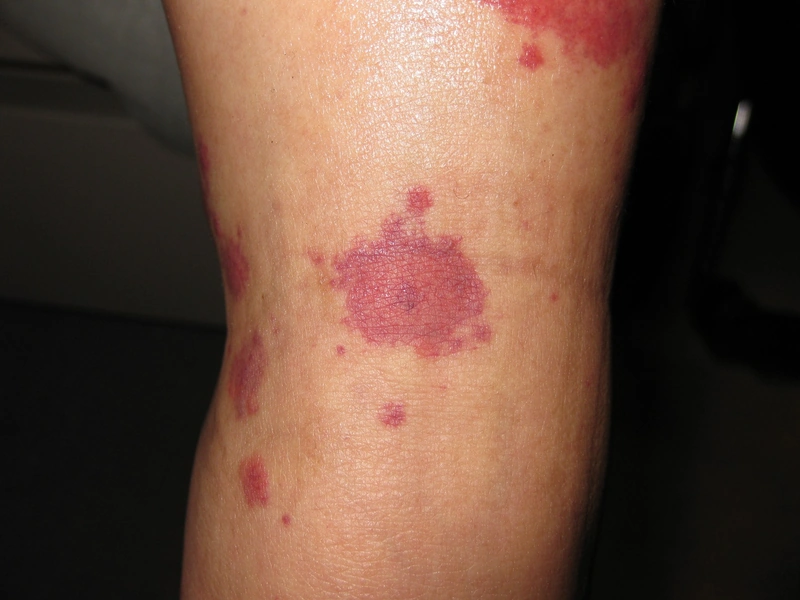
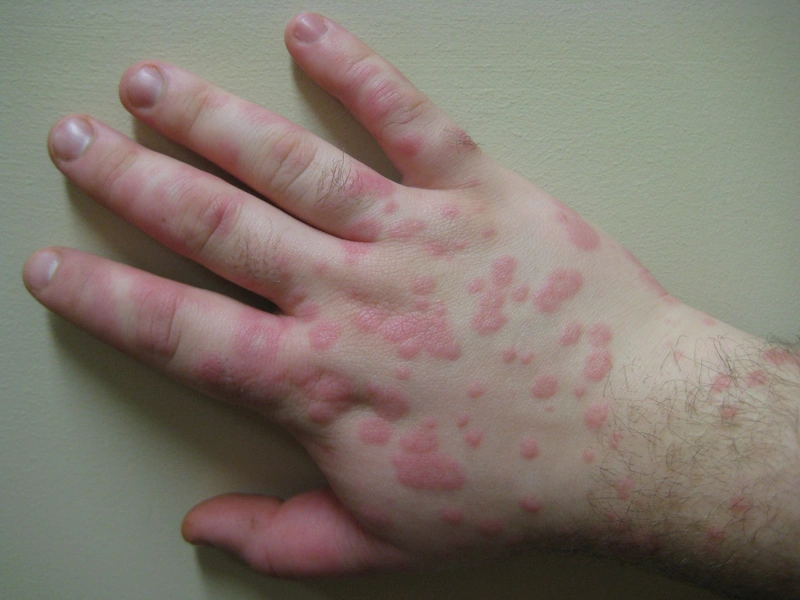
- Typical targets: round lesions with three zones – a dusky or blistered centre, a paler oedematous ring and an erythematous edge.
- Onset at the peripheries with central spread, usually symmetrical with a preference for extensor surfaces; may be painful, itchy or swollen.
- EM minor: skin involvement with no or only minor mucosal involvement; EM major: additionally marked erosions on lips, oral mucosa, eyes or genitals.
Diagnosis
- Clinical diagnosis based on typical targets and their acral distribution.
- Search for the trigger: serology for infectious causes, drug history; in recurrent disease HSV testing from skin or mucosal lesions, and in recurrent or persistent disease without a trigger a search for malignancy.
- Histology with direct immunofluorescence if uncertain: upper dermal oedema and individual necrotic keratinocytes; helps mainly to exclude autoimmune blistering diseases.
- Distinction from urticaria, viral exanthem, SJS/TEN, fixed drug eruption, bullous pemphigoid, paraneoplastic pemphigus, polymorphic light eruption and Rowell syndrome.
Treatment principles
- Erythema multiforme usually resolves spontaneously, and treatment is mainly symptomatic.
- Topical glucocorticoids are used, with antiseptic and anaesthetic oral care for mucosal involvement, and short courses of systemic glucocorticoids in severe cases.
- Herpes simplex infection is the most common trigger, and long-term antiviral prophylaxis is an option in frequent recurrences; a suspected drug is discontinued.
Specific treatment regimens with drugs and doses are covered in the DermaFuchs app.
Keep learning in the app
References (selection)
Cross-references
Keep learning
Keep learning with flashcards, exam questions and spot diagnoses in the DermaFuchs app – free, in your browser or as an app.
Related pages: Fixed drug eruption (FDE) · Stevens-Johnson syndrome (SJS) · AGEP (acute generalized exanthematous pustulosis)
Note: This page is intended for medical education and does not replace diagnosis or treatment decisions in individual cases.