Accessory (supernumerary) nipple
Exam relevance: in 1 of more than 50 board exam reports · rank 93
- Synonyms
- überzählige Brustwarze, Polythelie, dritte Brustwarze, Mamilla accessoria, supernumerary nipple, accessory nipple, third nipple, polythelia
- Specialty
- Dermatology · Skin tumours
- Images
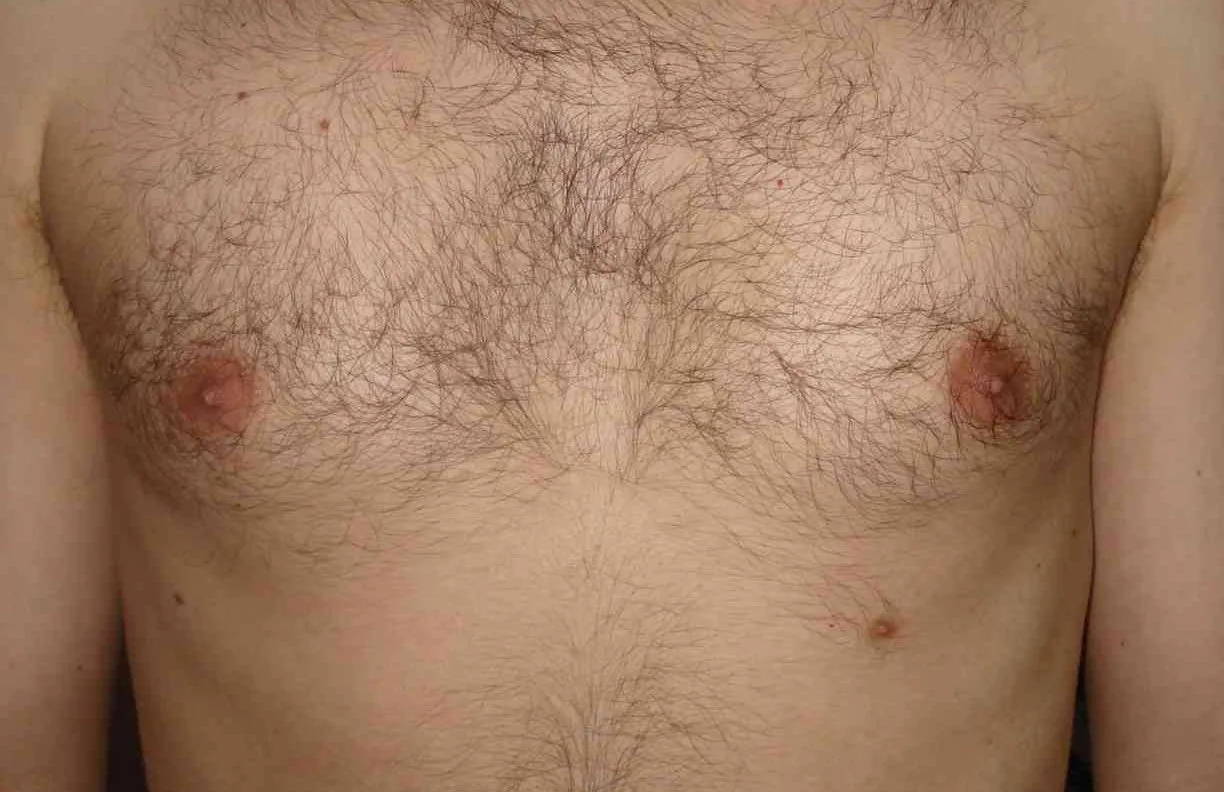
- Clinical 1
- Last updated
- 10/2026 · Dr. Pascal Bafteh
Contents
Images (1)
Definition
An accessory (supernumerary) nipple is a minor malformation of mammary tissue resulting in an extra nipple and/or associated tissue. It is distinguished from polythelia (supernumerary nipple without glandular tissue) and supernumerary breasts, with or without nipples. Accessory nipples are congenital and usually harmless, but they are influenced by hormones.
Occurrence & epidemiology
Supernumerary nipples or breasts are found in up to 6% of the population, usually as isolated, sporadic findings; familial occurrence with autosomal dominant inheritance and incomplete penetrance has been described. Rarely they are part of genetic syndromes.
Clinical features
- Present at birth; usually much smaller than the normal nipple and areola and easily mistaken for a congenital naevus.
- Single or multiple along the milk line, on one or both sides; pink or brown, at least the centre is raised, sometimes with a central dimple.
- Hair may grow at puberty; if it contains glandular tissue it can enlarge, swell and become tender.
Diagnosis
- Usually a clinical diagnosis based on the position on the milk line and the typical appearance; it is confirmed histologically (structure like a normal nipple: epidermal thickening, pilosebaceous structures, smooth muscle, breast ducts).
- Kajava classification (1915) according to whether nipple, areola and glandular tissue are present; the most common type is a nipple only.
Treatment principles
- No treatment is required, as this is a harmless developmental variant.
- If it causes symptoms or for cosmetic reasons, it can be removed surgically, and the tissue is examined histologically.
- If it contains glandular tissue, it may swell in response to hormones and can in principle develop the same changes as the normal breast.
Specific treatment regimens with drugs and doses are covered in the DermaFuchs app.
Keep learning in the app
References (selection)
Cross-references
Keep learning
Keep learning with flashcards, exam questions and spot diagnoses in the DermaFuchs app – free, in your browser or as an app.
Related pages: Amelanotic melanoma · Cutaneous angiosarcoma · Atypical fibroxanthoma
Note: This page is intended for medical education and does not replace diagnosis or treatment decisions in individual cases.