Legionnaires' disease
Board exam relevance: in 3 of 105 exam reports · rank 111- Synonyms
- legionellosis, Legionella pneumonia, Legionella, Pontiac fever
- Specialty
- Internal medicine · Pulmonology
- Images
- CT 1 · Histology 1 · Blood smear & cytology 1
- Last updated
- 10/2026 · Dr. Pascal Bafteh
Contents
Images (3)
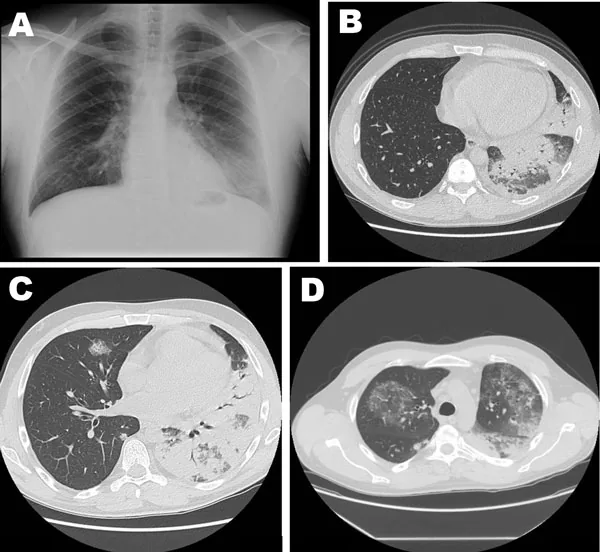 CT
CT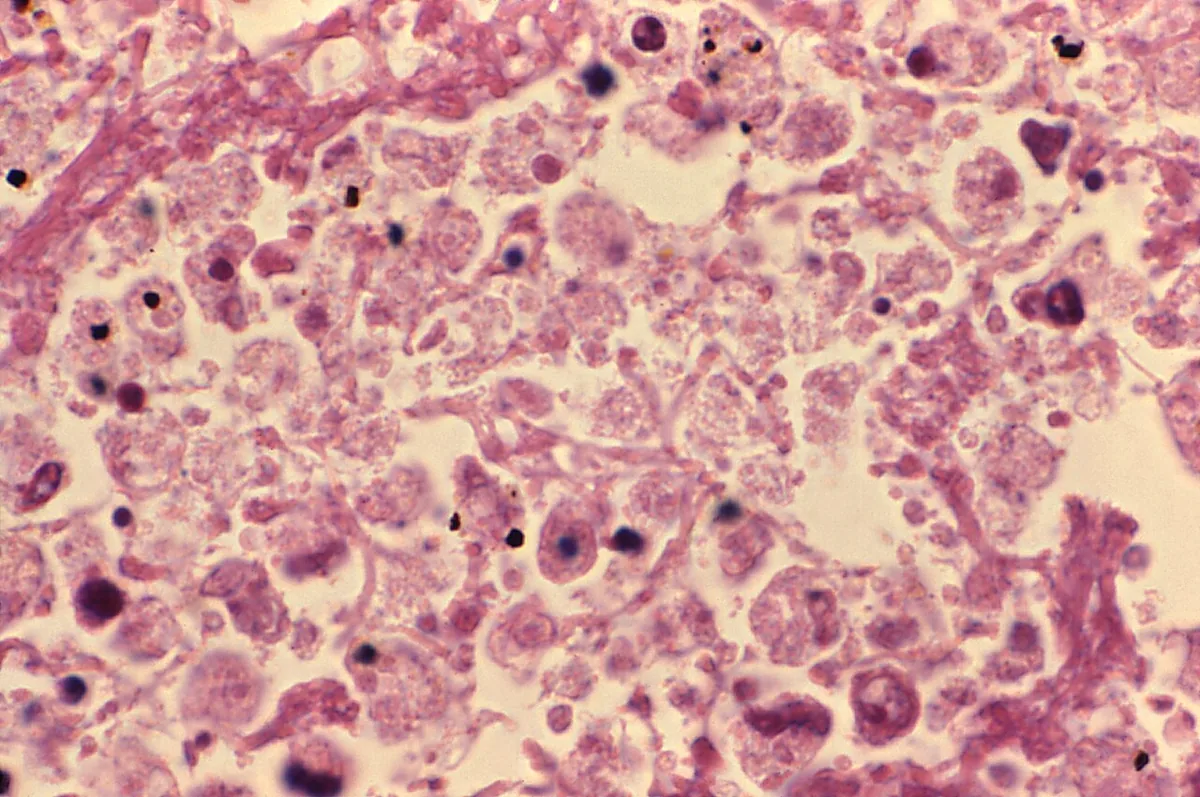 Histology
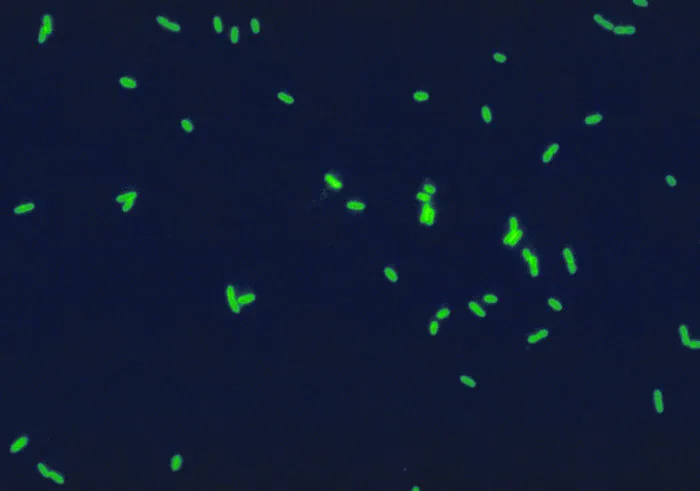 Blood smear & cytology
Definition
Legionellosis is an infection caused by bacteria of the genus Legionella. It occurs as Legionnaires' disease, a severe pneumonia, and as Pontiac fever, an acute febrile illness without pneumonia. The name derives from an outbreak at a meeting of the "American Legion" in Philadelphia in 1976.
Classification
Epidemiologically, four exposure categories are distinguished: community-acquired (just under 75 % of cases), travel-associated (about one case in five, with at least one overnight stay in a hotel, guesthouse, campsite or cruise ship), nosocomial and nursing home-associated (each below 5 %).
Occurrence & epidemiology
In 2018 Germany had a notification incidence of 1.7 cases per 100,000 population, just below the European average of 1.8. Because not every pneumonia is tested for legionellae, substantial under-reporting is likely; the true incidence of non-hospital-associated cases is estimated at about 18 to 36 per 100,000 population. Mainly affected are older people (75–80 % of notified cases are older than 50), smokers, people with weakened immunity and those with diabetes mellitus or chronic heart and lung disease. Men are affected two to three times as often as women; case numbers regularly rise in summer and autumn.
Aetiopathogenesis
Pathogen: gram-negative, aerobic rods; more than 60 species with at least 79 serogroups are known. Most community-acquired cases in Europe are caused by Legionella pneumophila serogroup 1. Legionellae multiply intracellularly in free-living amoebae and in human macrophages.
Reservoir: surface water and groundwater, moist soil, compost. They grow best at 25–45 °C; below 20 °C they hardly multiply. Of infectious importance are technical water systems with aerosol formation: drinking water installations with stagnation, deposits and biofilm, open recooling plants and evaporative cooling systems, whirlpools, showers and decorative fountains.
Transmission: usually by inhaling an aerosol of water containing legionellae, less often by (micro)aspiration. Drinking contaminated water is harmless. Person-to-person transmission plays practically no role.
Clinical features
Legionnaires' disease: incubation period about 2–10 days, usually 5–6 days; in outbreaks 5–16 % of cases fell ill only after more than 10 days. A flu-like onset with fever, chills, malaise, muscle pain and headache or confusion is typical. Nausea, watery diarrhea, abdominal pain, cough and joint pain are common; pneumonic signs are breathlessness, pleuritic pain and hemoptysis. Bradycardia relative to the fever may occur. Clinically, Legionella pneumonia cannot be reliably distinguished from other pneumonias. Extrapulmonary manifestations (e.g. abscesses, myocarditis, pericarditis, endocarditis) are rare and mostly affect immunocompromised patients.
Pontiac fever: incubation period about 5–72 hours (usually 8–24 hours); flu-like illness with headache and aching limbs, chest pain and dry cough, without pneumonia. Patients recover within a few days.
Diagnosis
- Chest X-ray: usually patchy infiltrates progressing rapidly and asymmetrically, with or without small pleural effusions.
- Laboratory tests: frequently hyponatremia, hypophosphatemia and raised aminotransferases and CRP.
- Urinary antigen test: the most common method; specificity above 99 %, sensitivity for L. pneumophila serogroup 1 of 60–95 %, depending on disease severity. Practically only serogroup 1 infections are detected, so a negative test does not exclude legionellosis, especially in nosocomial cases. Antigen excretion begins about 24 hours after symptom onset and usually persists for 2–6 weeks.
- PCR: rapid and very sensitive from lower respiratory tract material (BAL, tracheal secretions, sputum, lung tissue); unsuitable for urine.
- Culture: gold standard on special agar; results only after several days, but it allows typing to trace the source of infection. Blood cultures are unreliable.
- Direct immunofluorescence: low sensitivity (about 20–60 %).
- Serology: unsuitable for acute diagnosis because a diagnostic rise in titer often occurs only in the 6th–8th week of illness.
Keep learning in the app
Further reading (open access)
Cross-references
More topics: Pulmonology
- Community-acquired pneumonia
- Tuberculosis
- Pneumothorax
- Sarcoidosis
- Lung cancer (bronchial carcinoma)
- COPD (chronic obstructive pulmonary disease)
- Pleural effusion
- Asthma
- Acute respiratory distress syndrome (ARDS)
- Pleural empyema
- Alpha-1 antitrypsin deficiency
- Idiopathic pulmonary fibrosis and interstitial lung disease
Note: Learning content for medical education – not a treatment recommendation and no substitute for diagnosis or treatment decisions in individual cases. Treatment and management are deliberately not covered on this page.