Hypersensitivity pneumonitis
Board exam relevance: in 1 of 105 exam reports · rank 181- Synonyms
- extrinsic allergic alveolitis, HP, farmer's lung, bird fancier's lung, humidifier lung, pigeon breeder's lung
- Specialty
- Internal medicine · Pulmonology
- Images
- Histology 2
- Last updated
- 10/2026 · Dr. Pascal Bafteh
Contents
Images (2)
 Histology
 Histology
Definition
Hypersensitivity pneumonitis (HP, extrinsic allergic alveolitis) is an immunologically mediated interstitial lung disease caused by repeated inhalation of foreign, mostly organic antigens in genetically susceptible people.
Classification
- Classic classification by course: acute (days), subacute (weeks) and chronic (months to years).
- Naming by antigen source: e.g. farmer's lung (thermophilic actinomycetes and molds in hay, grain, silage), bird fancier's lung (proteins from droppings and feathers of budgerigars, pigeons, chickens), humidifier lung (contaminated water in humidifiers or air-conditioning systems), hot tub lung, cheese washer's, winegrower's and malt worker's lung, chemical worker's lung (isocyanates).
Occurrence & epidemiology
HP is rare but an important cause of interstitial lung disease. In high-income settings the frequency is estimated at about 1 to 2 cases per 100,000 people per year, and it is higher in exposed groups such as farmers and bird breeders. Active smokers are affected less often.
Aetiopathogenesis
More than 300 antigens are known triggers; antigens from agriculture, birds and contaminated water account for about 75 % of cases. Only a small proportion of exposed people fall ill, usually after weeks to months of exposure and sensitization.
Pathogenesis: In the acute phase a neutrophilic and mononuclear alveolitis predominates. Later, Th1 and Th17 lymphocytes infiltrate the interstitium, immune complexes form, and granulomas develop under the influence of CD4-positive Th1 cells. With continued exposure, fibrosis with bronchiolar obliteration may follow. Genetic factors such as MUC5B variants influence the risk; atopy does not predispose. Cigarette smoke apparently dampens the immune reaction to inhaled antigens.
Clinical features
- Acute: in sensitized people, 4–8 hours after exposure to large amounts of antigen, fever, chills, cough, chest tightness and breathlessness, sometimes nausea; findings of tachypnea and fine to medium inspiratory crackles, usually without wheeze.
- Subacute: cough, breathlessness, fatigue and loss of appetite over days to weeks.
- Chronic: with long-term exposure to small amounts of antigen (e.g. keeping birds), exertional breathlessness, cough, fatigue and loss of weight over months to years, without fever; inspiratory "squeaks", basal crackles, rarely digital clubbing; in late stages right heart failure and respiratory failure.
- Typical clue: symptoms improve away from and worsen in a particular environment (workplace, home, hobby).
Histology
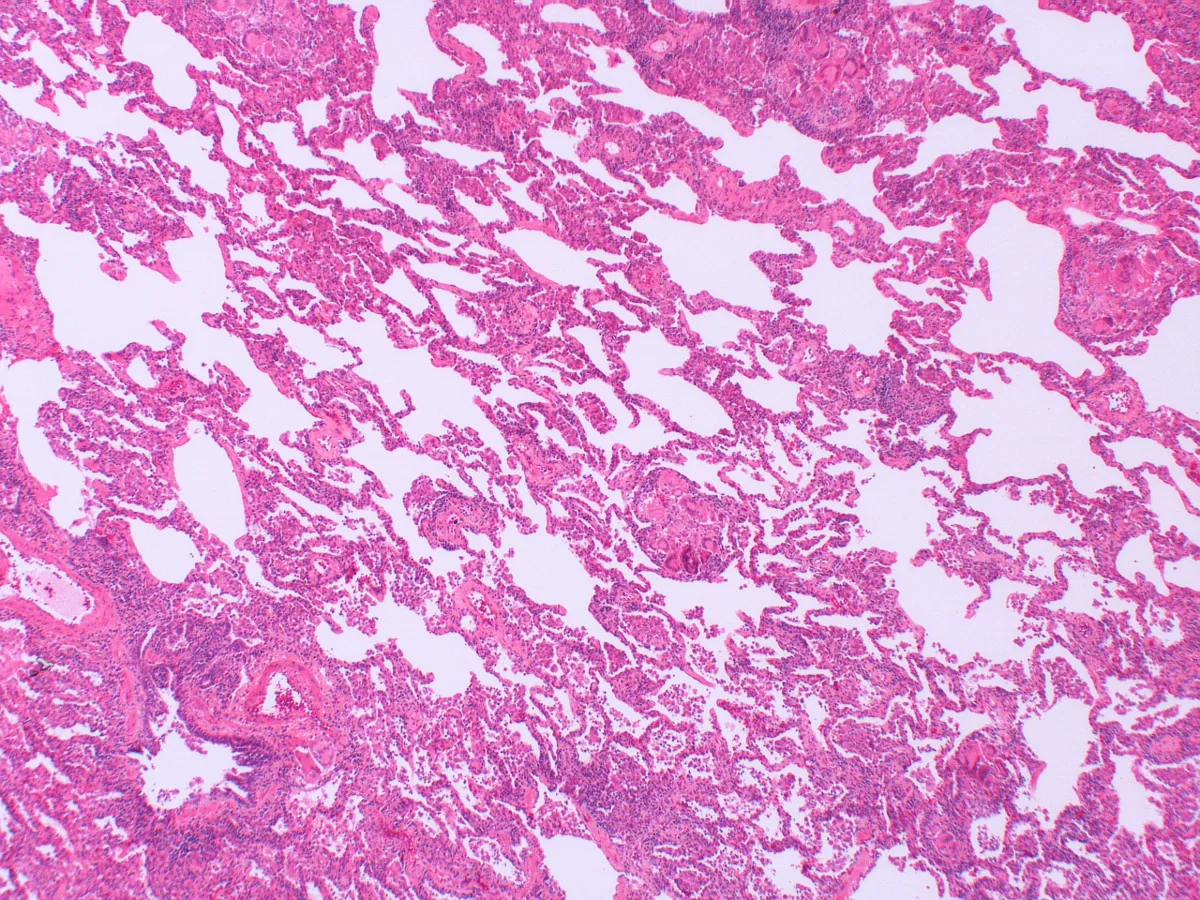
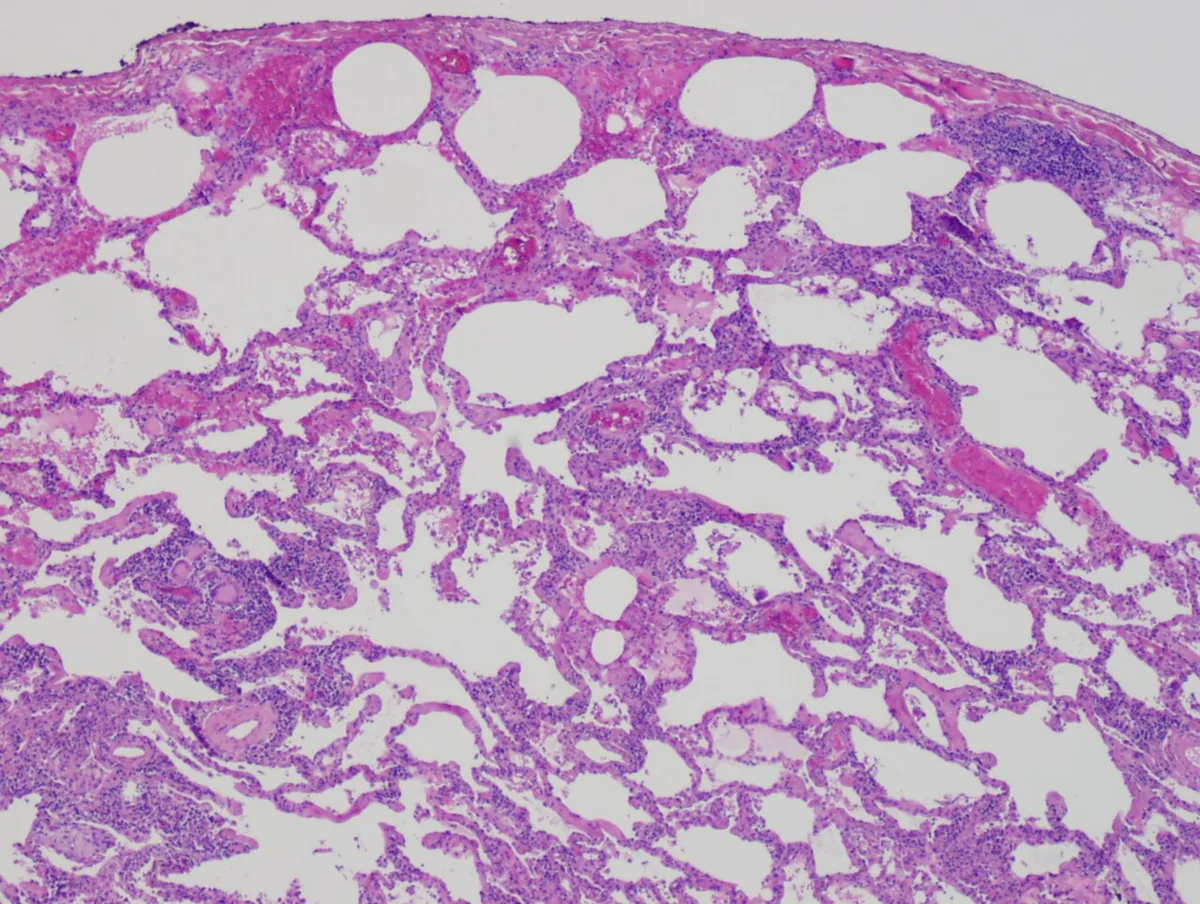
Findings vary; typical are peribronchiolar metaplasia, poorly formed non-necrotizing granulomas and organizing pneumonia. In chronic forms interstitial fibrosis may be added.
Diagnosis
- Exposure history: the most important element; home (damp damage, mold, humidifiers), pets, birds, occupation and hobbies, onset after a change of workplace or home.
- HRCT: in the non-fibrotic form centrilobular micronodules (usually under 3 mm), ground-glass opacities and mosaic attenuation with air trapping on expiration; in the chronic form signs of fibrosis with volume loss, linear or reticular opacities, honeycombing and traction bronchiectasis. Mediastinal lymphadenopathy is unusual.
- Chest X-ray: neither sensitive nor specific, often normal in acute forms; in the chronic form reticular and nodular markings in the upper lobes with volume loss and honeycombing.
- Lung function: restrictive, obstructive or mixed impairment; in advanced disease restriction, reduced DLCO and exercise hypoxemia.
- Antigen-specific IgG (precipitins): may indicate exposure but are neither reliable nor specific.
- Bronchoalveolar lavage: typically marked lymphocytosis (above 40 %) with a reduced CD4/CD8 ratio (below 1); in older people and smokers the lymphocyte count may be lower.
- Lung biopsy: if the other findings are inconclusive.
Keep learning in the app
Further reading (open access)
Cross-references
Note: Learning content for medical education – not a treatment recommendation and no substitute for diagnosis or treatment decisions in individual cases. Treatment and management are deliberately not covered on this page.