Cystic fibrosis
- Synonyms
- mucoviscidosis, CF, CFTR disease, cystic fibrosis of the pancreas
- Specialty
- Internal medicine · Pulmonology
- Images
- Gross specimen 1 · Histology 1 · Clinical 1
- Last updated
- 10/2026 · Dr. Pascal Bafteh
Contents
Images (3)
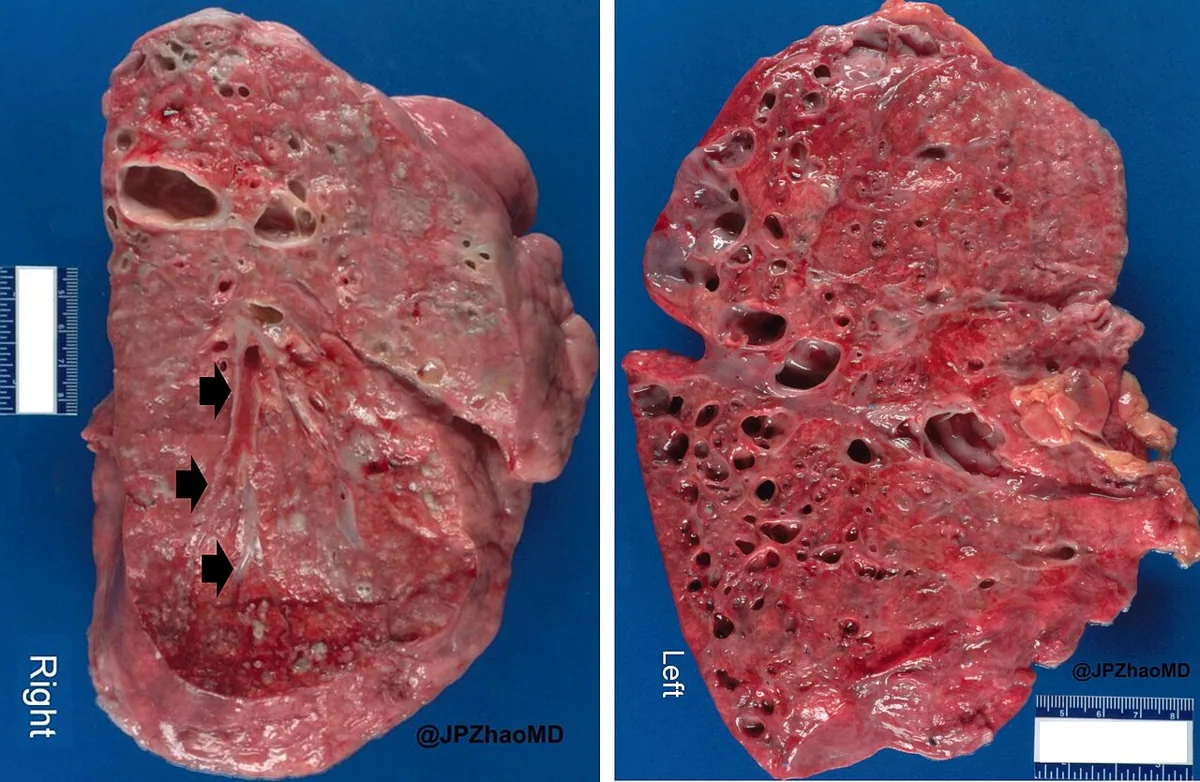 Gross specimen
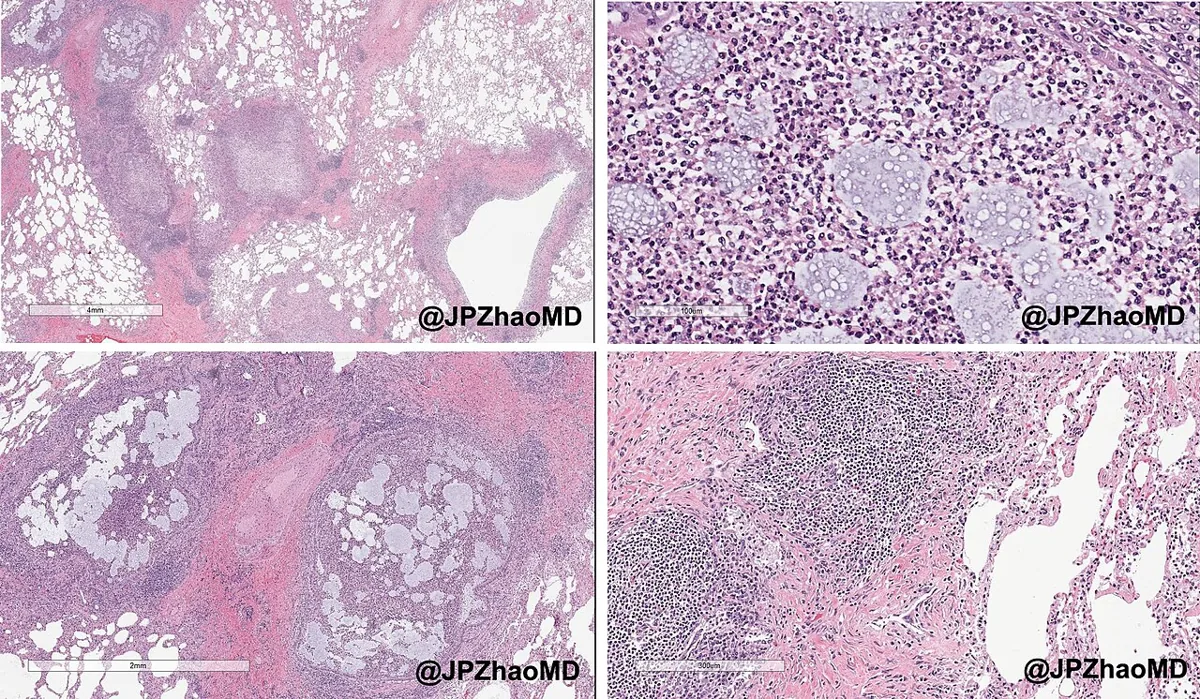 Histology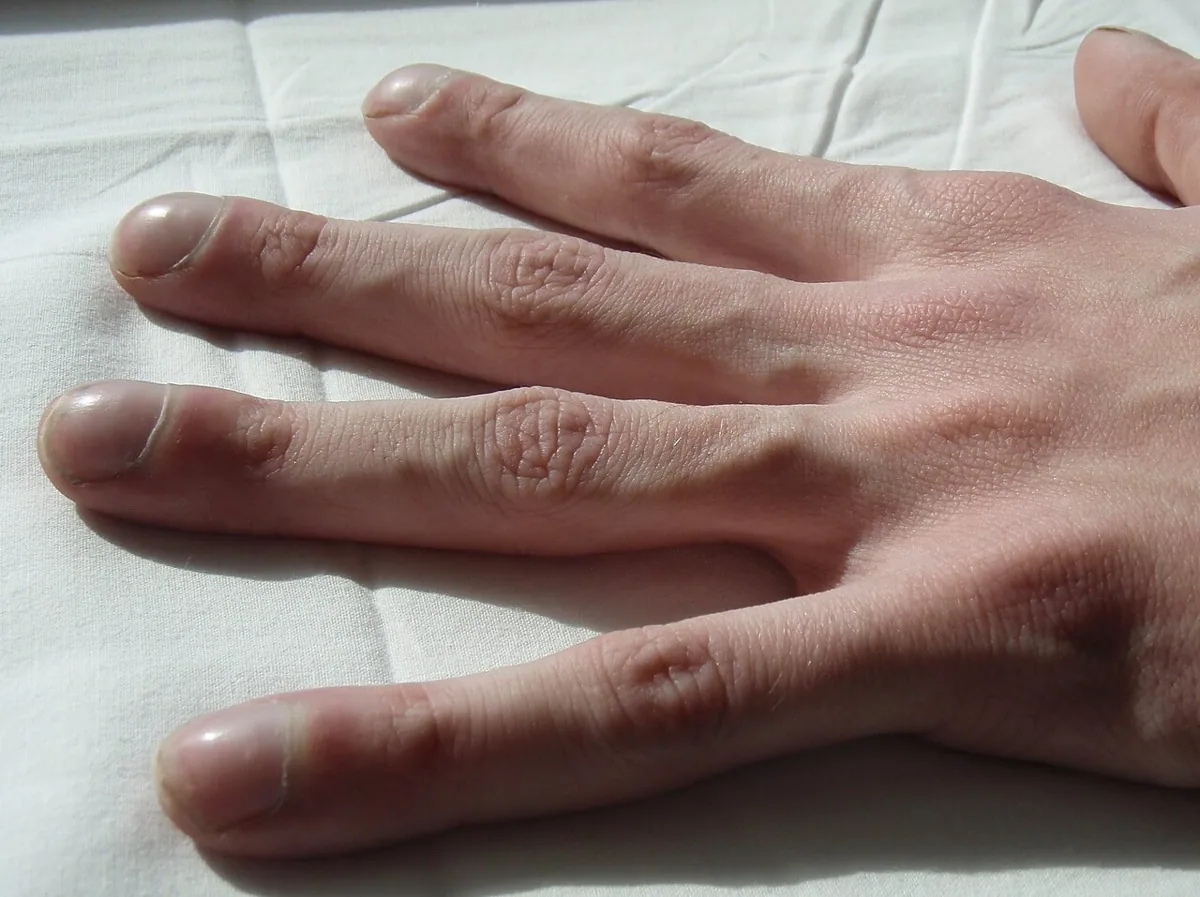
Definition
Cystic fibrosis (CF) is an autosomal recessive multisystem disease caused by pathogenic variants in the CFTR gene. It leads to chronic lung disease, exocrine pancreatic insufficiency, hepatobiliary disease and raised electrolyte concentrations in sweat.
Classification
CFTR variants are divided into six classes according to their effect on production and function of the protein. Class I–III variants are considered a severe genotype with absent or minimal CFTR function; class IV–VI variants allow residual function, often with preserved pancreatic function. Patients with single-organ manifestations (e.g. recurrent pancreatitis, isolated bronchiectasis, bilateral absence of the vas deferens) who do not meet the CF criteria are classified as having a CFTR-related disorder.
Occurrence & epidemiology
In the USA in 2021, cystic fibrosis occurred in about 1 in 3,300 births of white, 1 in 15,300 of Black and 1 in 32,000 of Asian American infants. Worldwide it has been diagnosed in an estimated 105,000 people in 94 countries; in the USA about 60 % of patients are adults.
Aetiopathogenesis
The CFTR gene lies on the long arm of chromosome 7 and encodes a cAMP-regulated chloride channel that controls the transport of chloride, sodium and HCO₃⁻ across epithelial membranes. The most common variant, F508del, is found in about 85 % of CF alleles; more than 2,000 rarer variants are known. Only people with two pathogenic variants are affected; heterozygotes are clinically unaffected.
Pathophysiology: Almost all exocrine glands are affected. Viscous mucus obstructs the ducts of the pancreas, intestinal glands, intrahepatic bile ducts and gallbladder; the sweat glands secrete excess sodium and chloride. In the lungs, obstruction of the small airways by viscous secretions, chronic bacterial infection and inflammation lead to bronchiectasis and respiratory failure. Early on Staphylococcus aureus predominates, later frequently Pseudomonas aeruginosa including mucoid variants; other pathogens are Burkholderia cepacia complex, non-tuberculous mycobacteria, Stenotrophomonas maltophilia, Achromobacter xylosoxidans and Aspergillus.
Clinical features
- Airways: chronic cough with sputum, wheeze, recurrent infections; later retractions, barrel chest, digital clubbing, cyanosis; nasal polyps and chronic rhinosinusitis. Complications are pneumothorax, hemoptysis, ABPA, non-tuberculous mycobacterial infection and cor pulmonale.
- Intestine: meconium ileus in about 20 % of affected newborns; otherwise often failure to thrive with delayed regain of birth weight; later constipation, distal intestinal obstruction syndrome, rectal prolapse.
- Pancreas: exocrine insufficiency in about 85 % with steatorrhea, malabsorption of fat-soluble vitamins and growth failure; impaired glucose tolerance or diabetes in about 20 % of adolescents and up to 50 % of adults.
- Liver and bile: CF-related liver disease in about 30 %, cirrhosis with portal hypertension in about 3–4 %; more gallstones.
- Reproduction: infertility in about 98 % of men due to maldevelopment of the vas deferens (obstructive azoospermia); slightly reduced fertility in women due to viscous cervical mucus.
- Others: salt crystals on the skin, osteoporosis, depression and anxiety, joint symptoms.
Diagnosis
- Sweat test: the standard for confirming the diagnosis. After stimulation of sweating by iontophoresis, the chloride concentration is measured: ≤ 30 mmol/L unlikely, 30–59 mmol/L possible, ≥ 60 mmol/L consistent with CF. A positive result is confirmed by a second test or by detection of two disease-causing variants.
- Genetics: detection of two CF-causing CFTR variants (one on each chromosome).
- In unclear cases: measurement of nasal potential difference and intestinal current, extended CFTR analysis.
- Pancreatic function: fecal elastase.
- Lungs: chest X-ray, HRCT, lung function, sputum cultures.
Keep learning in the app
Further reading (open access)
Cross-references
Note: Learning content for medical education – not a treatment recommendation and no substitute for diagnosis or treatment decisions in individual cases. Treatment and management are deliberately not covered on this page.