Allergic rhinitis (hay fever)
- Synonyms
- hay fever, pollen allergy, pollinosis, house dust mite allergy, allergic rhinoconjunctivitis
- Specialty
- Internal medicine · Allergology
- Images
- Clinical 2
- Last updated
- 10/2026 · Dr. Pascal Bafteh
Contents
Images (2)
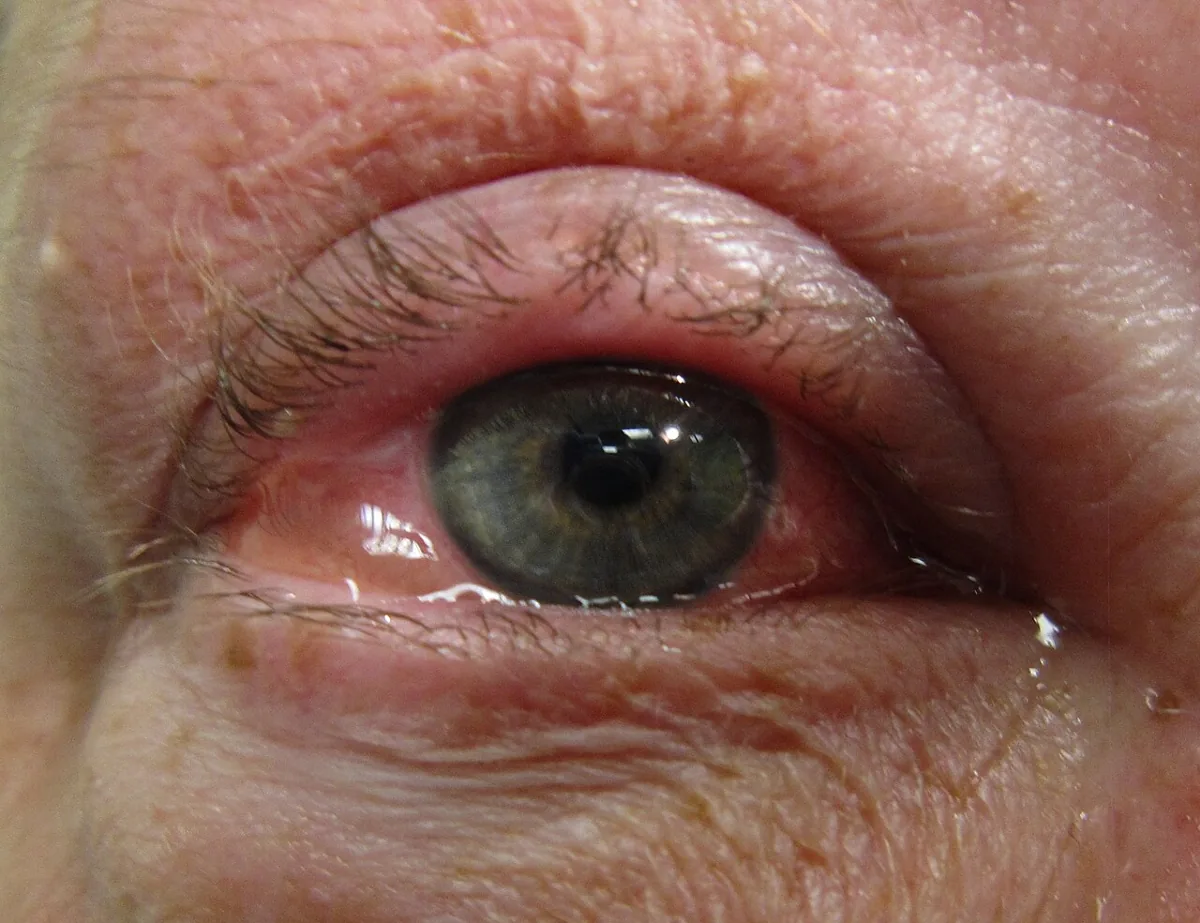
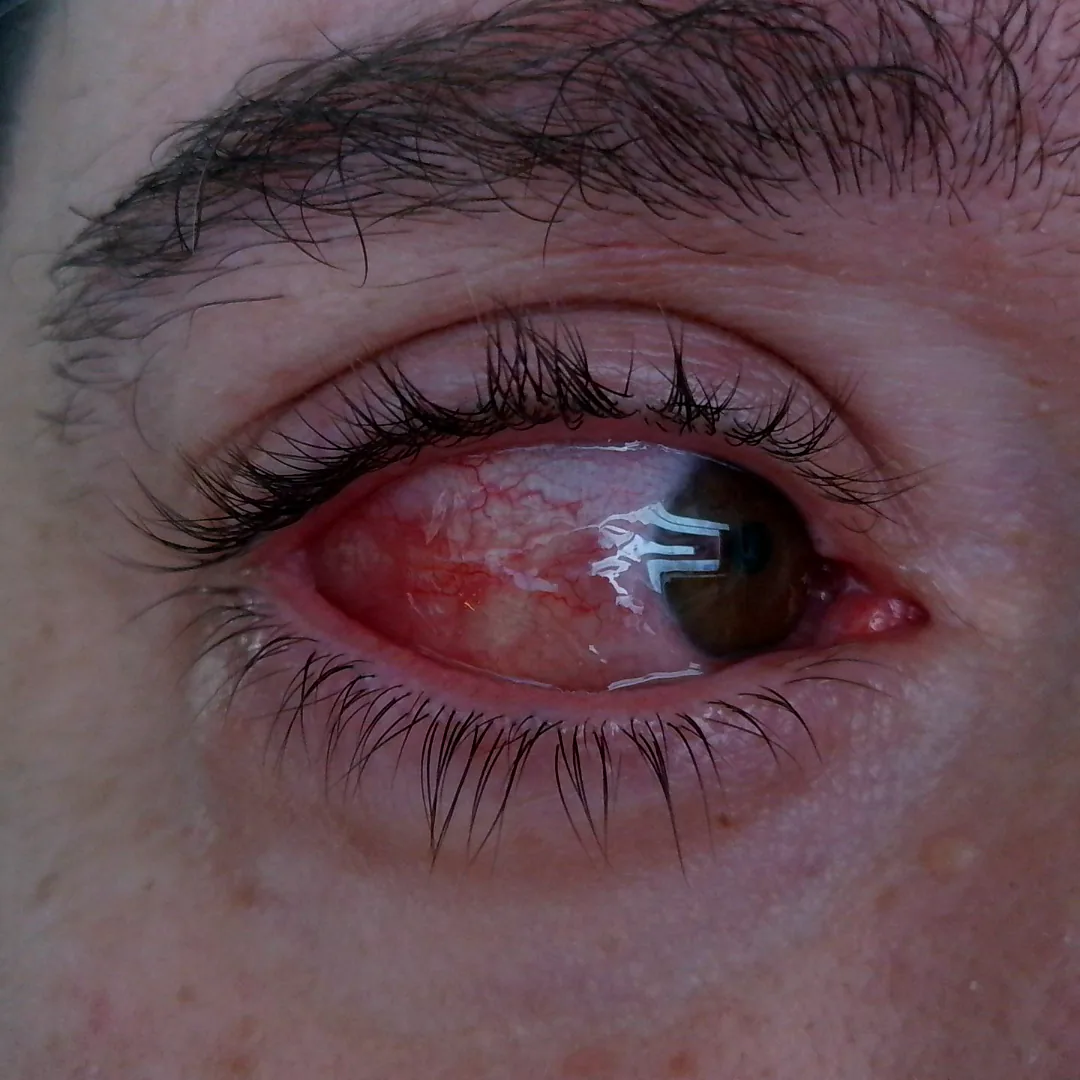
Definition
Allergic rhinitis is an IgE-mediated inflammation of the nasal mucosa following exposure to pollen or other allergens. Cardinal symptoms are itching, sneezing, rhinorrhoea and nasal obstruction, often accompanied by conjunctivitis (allergic rhinoconjunctivitis). It occurs seasonally (hay fever) or year-round (perennial) and frequently coexists with asthma.
Classification
- By duration: intermittent (symptoms on fewer than 4 days per week or for fewer than 4 consecutive weeks per year) or persistent (on at least 4 days per week and for at least 4 consecutive weeks per year).
- By severity: mild or moderate to severe.
- By allergen exposure: seasonal (mainly pollen) or perennial (year-round indoor allergens).
- Distinction from non-allergic forms: at least 25% of perennial rhinitis is non-allergic, e.g. infectious, vasomotor, drug-induced, atrophic or non-allergic rhinitis with eosinophilia (NARES).
Aetiopathogenesis
After sensitisation, allergen-specific IgE binds to mucosal mast cells. Renewed allergen contact leads to degranulation with release of histamine, prostaglandins, leukotrienes and cytokines, followed by vasodilation, mucosal edema, mucus secretion and infiltration with eosinophils and Th2 cells.
- Spring: tree pollen (e.g. birch, alder, olive).
- Summer: grass pollen and some weed pollen (e.g. English plantain).
- Autumn: other weed pollen (e.g. ragweed).
- Year-round: house dust mite feces, cockroaches, animal dander and mould spores; strong reactivity to pollen in consecutive seasons can also cause year-round symptoms.
Clinical features
- Nose: itching (also of the eyes and palate), bouts of sneezing, watery rhinorrhoea and blockage of the nose and sinuses; the latter may cause frontal headache.
- Eyes: bilateral itching, conjunctival redness, tearing or stringy discharge, photosensitivity, conjunctival swelling and eyelid edema.
- Perennial rhinitis: chronic nasal obstruction predominates and itching is less prominent; chronic sinusitis and nasal polyps may develop, and in children chronic otitis media.
- Examination findings: swollen, edematous, bluish-red inferior turbinates.
- Complications and comorbidities: viral or bacterial sinusitis; cough and wheezing with coexisting asthma.
Diagnosis
- Clinical diagnosis: history of typical symptoms, triggers, timing and family history, and examination of the nose.
- Skin prick test: allergen extract is placed on the skin and pricked with a lancet. A wheal and flare whose diameter after 15 to 20 minutes is at least 3 mm larger than the negative control is positive; histamine serves as the positive control. False-positive results can occur in dermatographism.
- Allergen-specific serum IgE: when skin tests are not possible or equivocal; component-resolved diagnostics can additionally distinguish true sensitisation from cross-reactivity.
- Nasal smear for eosinophils: moderate sensitivity (above 50%) and high specificity (above 95%); eosinophilia with negative skin tests suggests NARES or analgesic intolerance.
- Negative allergy tests: suggest non-allergic rhinitis.
Keep learning in the app
Further reading (open access)
Cross-references
Note: Learning content for medical education – not a treatment recommendation and no substitute for diagnosis or treatment decisions in individual cases. Treatment and management are deliberately not covered on this page.