Angiedema (bradykinin- and histamine-mediated)
Board exam relevance: in 1 of 105 exam reports · rank 181- Synonyms
- Quincke's oedema, angioneurotic oedema, hereditary angioedema, HAE, C1 inhibitor deficiency, swollen lips
- Specialty
- Internal medicine · Allergology
- Images
- Clinical 3
- Last updated
- 10/2026 · Dr. Pascal Bafteh
Contents
Images (3)
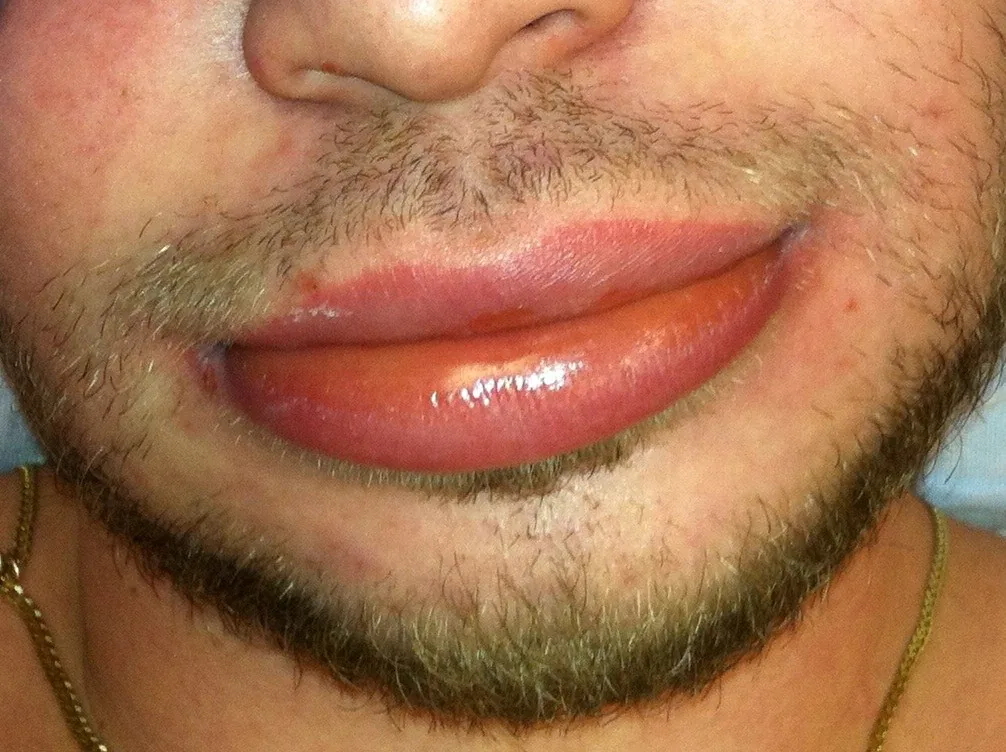
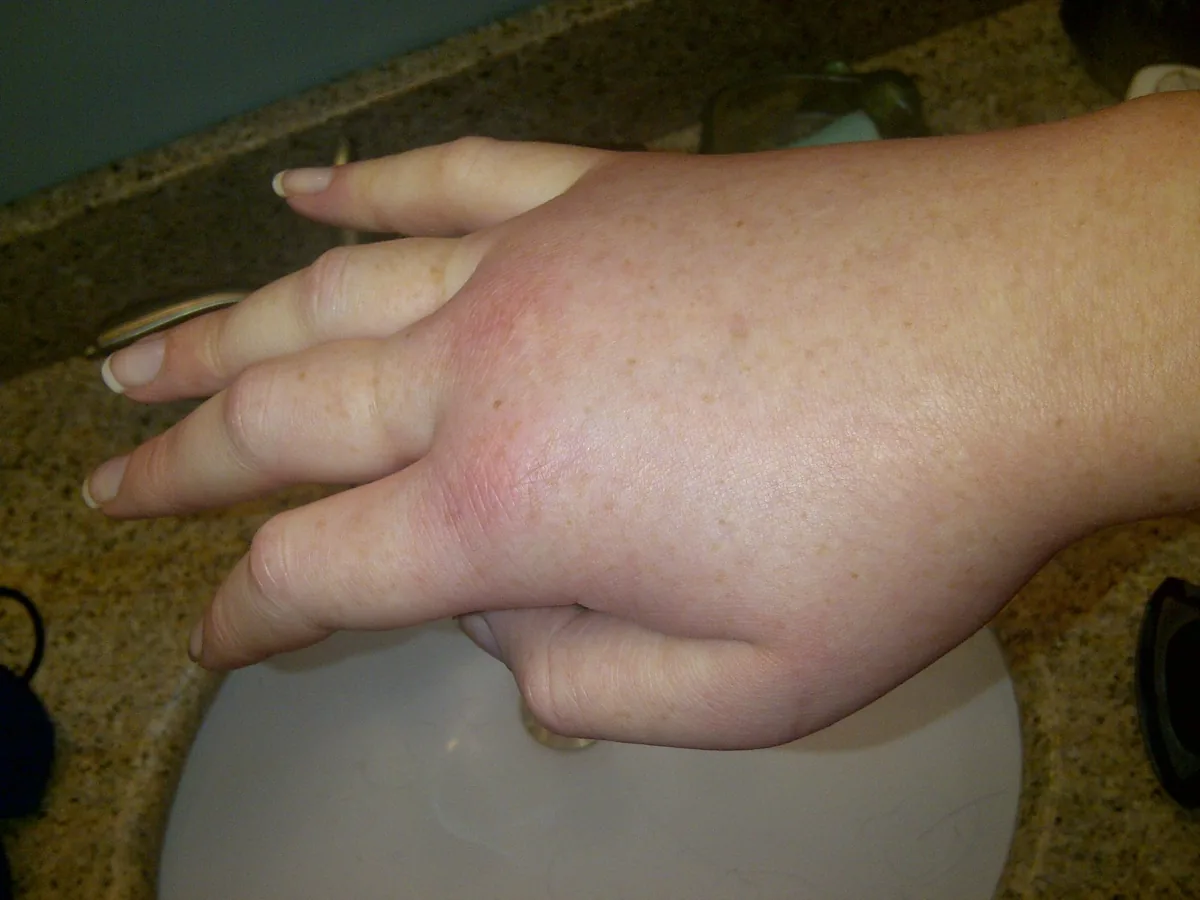
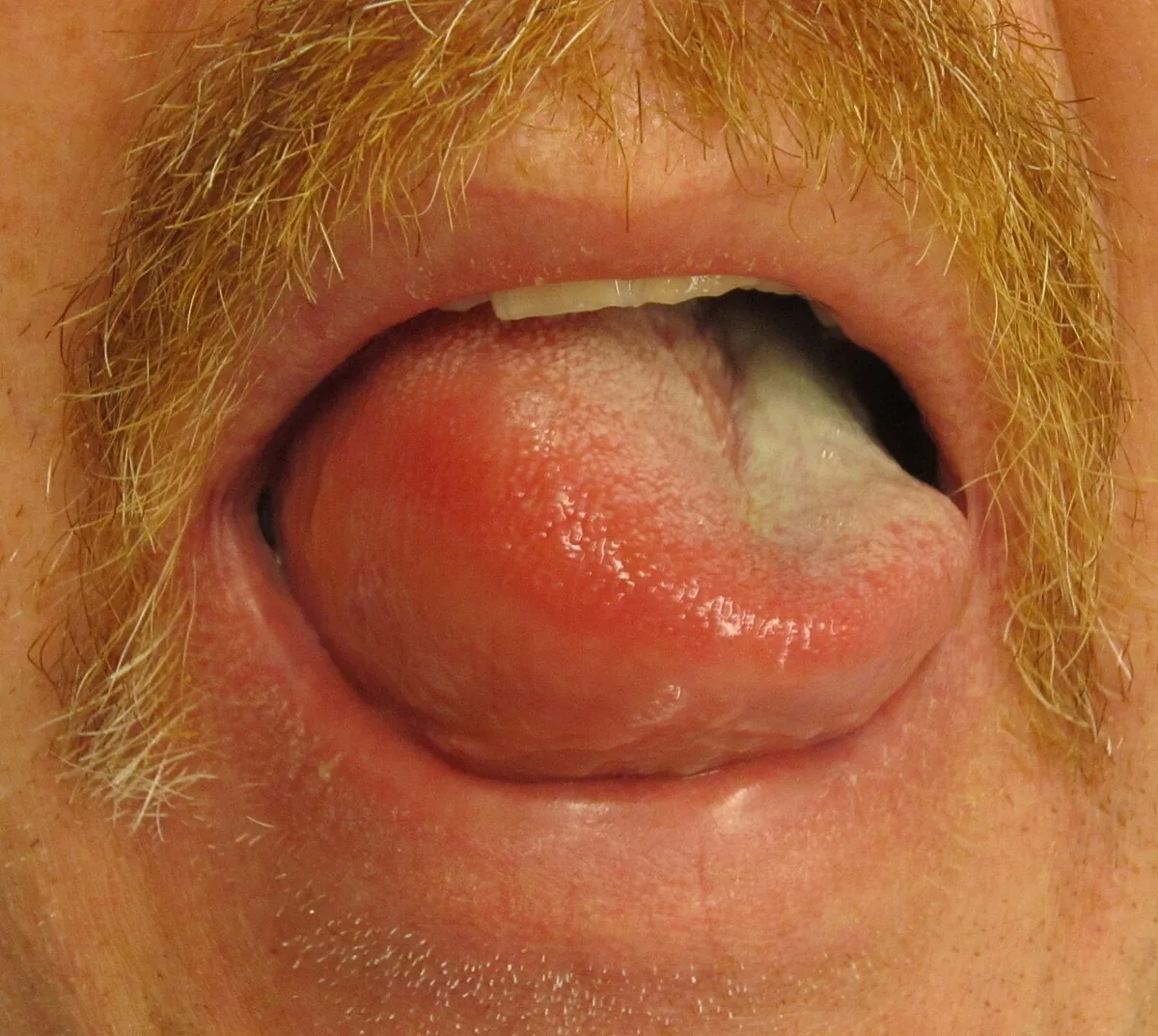
Definition
Angiedema is a usually localised swelling of the deep dermis and subcutis due to increased vascular permeability. According to the mediator involved, mast cell- or histamine-mediated and bradykinin-mediated angiedema are distinguished. Angiedema is usually acute; if it lasts longer than 6 weeks it is termed chronic angiedema.
Classification
- Histamine-mediated (mast cell-mediated): usually IgE-mediated and accompanied by urticaria and itching; triggers are drugs, insect venom, foods, pollen or animal dander. Opioids, radiocontrast agents and NSAIDs can also activate mast cells directly without IgE.
- Bradykinin-mediated due to blockade of angiotensin-converting enzyme (ACE blockers): occurs in fewer than 1% of those exposed but accounts for about 30% of acute angiedema seen in emergency departments; onset shortly after starting or only after years.
- Hereditary angiedema (HAE): type 1 (about 85%) with reduced concentration and function of C1-INH, type 2 (about 15%) with normal concentration but impaired function; type 3 (rare) with normal C1-INH, partly due to mutations in factor XII, plasminogen, angiopoietin-1 or kininogen, more common in women.
- Acquired C1-INH deficiency: due to complement consumption in B-cell lymphoma, adenocarcinoma or immune complex disorders, due to autoantibodies in monoclonal gammopathy or autoimmune diseases; usually presents at an older age.
- Idiopathic angiedema: chronic and recurrent without urticaria and without an identifiable cause.
Aetiopathogenesis
In histamine-mediated angiedema, mast cells release histamine, leukotrienes and prostaglandins; because the upper skin layers are also involved, urticaria and itching are usually present. In bradykinin-mediated angiedema, the epidermis and upper dermis are spared, and urticaria and itching are absent. C1-INH, a regulatory plasma protein, controls the classical and lectin complement pathways as well as the kinin, coagulation and fibrinolytic systems. If it is lacking or dysfunctional, the contact system is activated uncontrollably and more bradykinin is generated; at the same time complement is consumed, so that C4 falls. Blockade of angiotensin-converting enzyme raises bradykinin levels directly.
HAE types 1 and 2 are inherited in an autosomal dominant manner; in type 2 about a quarter of cases arise from new mutations. About 75% of people with type 1 have a first attack by the age of 15. Attacks are triggered by minor trauma (e.g. dental procedures), viral infections, cold, pregnancy, estrogens, certain foods and emotional stress.
Clinical features
- Swelling: often asymmetric and mildly painful, predominantly of the face, lips and tongue, also of the backs of the hands and feet and the genitals.
- Airway: upper airway edema causes breathlessness and stridor (which may be mistaken for asthma) up to complete obstruction.
- Bowel: nausea, vomiting, colicky abdominal pain and diarrhea, in HAE sometimes resembling bowel obstruction.
- Histamine-mediated: develops over minutes to a few hours, often with itching, urticaria, flushing and bronchospasm up to anaphylactic shock.
- Bradykinin-mediated: develops over hours to a few days, without urticaria, itching or bronchospasm; in HAE the swellings usually subside after about 1 to 3 days.
Diagnosis
- History: drugs (ask specifically about blockers of angiotensin-converting enzyme), foods, insect stings, accompanying symptoms and family history; concomitant urticaria suggests a histamine-mediated mechanism.
- Complement tests: in angiedema without urticaria, recurrences without an obvious cause or affected relatives. A low C4 – even between attacks – supports a diagnosis of HAE type 1 or 2 or acquired C1-INH deficiency.
- C1-INH level, C1-INH function and C1q: type 1 shows reduced level and function with normal C1q, type 2 normal or raised level with reduced function, type 3 normal values; in acquired deficiency level, function and C1q are all reduced.
- Family testing: first-degree relatives of people with hereditary C1-INH deficiency are tested for C1-INH and C4, even without symptoms.
Keep learning in the app
Further reading (open access)
Cross-references
More topics: Allergology
Note: Learning content for medical education – not a treatment recommendation and no substitute for diagnosis or treatment decisions in individual cases. Treatment and management are deliberately not covered on this page.