Food allergy
Board exam relevance: in 1 of 105 exam reports · rank 181- Synonyms
- peanut allergy, cow's milk allergy, egg allergy, oral allergy syndrome, pollen food allergy syndrome, cross-allergy
- Specialty
- Internal medicine · Allergology
- Images
- Clinical 1
- Last updated
- 10/2026 · Dr. Pascal Bafteh
Contents
Images (1)
Definition
Food allergy is an exaggerated immune response to dietary components, usually proteins. Manifestations range from atopic dermatitis to gastrointestinal and respiratory symptoms and anaphylaxis. It is distinct from non-immune intolerances (e.g. lactose intolerance, irritable bowel syndrome, infectious gastroenteritis) and reactions to additives such as monosodium glutamate, sulfites or tartrazine.
Classification
- IgE-mediated: acute onset with urticaria, asthma or anaphylaxis; usually starting in infancy and early childhood, more frequent with a strong family history of atopy.
- T cell-mediated: gradual, chronic course, e.g. dietary protein-induced enteropathies and celiac disease; mainly in infants and children.
- Mixed IgE- and T cell-mediated: delayed or chronic, e.g. atopic dermatitis, eosinophilic gastroenteropathy and eosinophilic esophagitis.
- Oral allergy syndrome (pollen food allergy syndrome): cross-reactivity between pollen and food proteins.
- Special forms: food protein-induced enterocolitis syndrome (FPIES) and food-dependent exercise-induced anaphylaxis.
Occurrence & epidemiology
The prevalence of true food allergy ranges from below 1% to 3% depending on region and method of ascertainment; part of the variation reflects intolerances being mistaken for allergy. Children are most often affected, particularly when parents have food allergy, allergic rhinitis or allergic asthma. Allergies to milk, egg and soy are often outgrown during childhood, whereas allergies to peanuts, tree nuts, fish and shellfish usually persist.
Aetiopathogenesis
- Most common triggers in infants and young children: milk, eggs, peanuts, soy and wheat.
- Most common triggers in older children and adults: nuts (peanuts and tree nuts) and seafood (fish and shellfish).
- Sensitisation by other routes: e.g. through the skin from skin products with peanut oil or via inhaled pollen.
- Birch pollen: cross-reactions with apple, peach, pear, plum, cherry, kiwi, carrot, celery, hazelnut and almond.
- Grass pollen: cross-reactions with celery, melon, orange, peach and tomato.
- Ragweed pollen: cross-reactions with banana, cucumber, melon, sunflower seeds and courgette.
- Latex: cross-reactions with banana, kiwi, avocado, potato, tomato and chestnut.
- Heat lability: the proteins involved in oral allergy syndrome are denatured by cooking, so cooked foods are often tolerated.
Clinical features
- Infants: most often atopic dermatitis, alone or with nausea, vomiting and diarrhea.
- Older children and adults: more severe reactions with generalised urticaria, angiedema up to anaphylaxis; sometimes non-specific with light-headedness or syncope.
- Oral allergy syndrome: itching, redness and swelling of the mouth and throat when eating raw fruit and vegetables; anaphylaxis is uncommon but possible.
- FPIES: delayed, usually more than 2 hours after ingestion, severe vomiting and diarrhea, sometimes with lethargy, dehydration, hypotension and pallor.
- Exercise-induced form: anaphylaxis only when physical exertion follows soon after eating (e.g. wheat or shrimp).
- Eosinophilic gastrointestinal disorders: abdominal pain, cramps and diarrhea with blood eosinophilia and protein loss; in eosinophilic esophagitis dysphagia and possible strictures.
Diagnosis
- History and food diary: careful recording of all foods eaten and symptoms with their timing. Only foods that have clearly caused symptoms on every exposure are tested; broad test panels without a matching history often produce false-positive results.
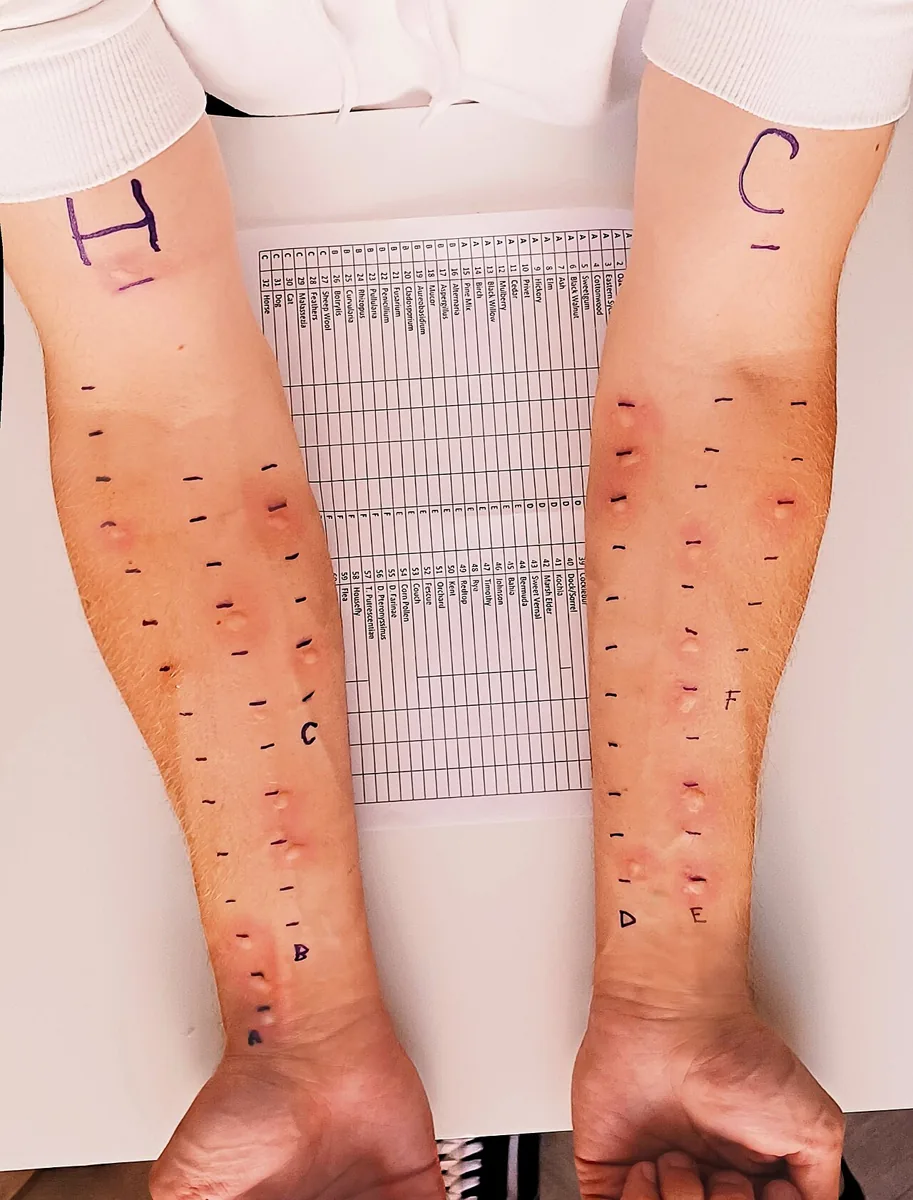
- Skin prick test: more sensitive than serum testing but more often false positive; the result is available after 15 to 20 minutes. In oral allergy syndrome, skin prick testing can confirm the clinical diagnosis.
- Allergen-specific serum IgE: a positive result indicates clinically relevant allergy only together with a matching history.
- Component-resolved diagnostics: available for milk, egg, peanut, tree nuts and sesame; high specificity and helpful in distinguishing true allergy from cross-reactivity.
- Oral food challenge: re-exposure after a symptom-free interval, preferably double-blind; recurrence of symptoms is the best evidence of allergy.
- Eosinophilic gastroenteropathy: endoscopic biopsy showing at least 15 eosinophils per high-power field.
Keep learning in the app
Further reading (open access)
Cross-references
Note: Learning content for medical education – not a treatment recommendation and no substitute for diagnosis or treatment decisions in individual cases. Treatment and management are deliberately not covered on this page.