Urogenital fistulas (vesicovaginal fistula)
Exam relevance: in 2 of 197 board exam reports · rank 144
- Specialty
- Gynaecology · Pelvic floor & urogynaecology
- Images
- Clinical 1
- Exam relevance
- 2 of 197 reports · rank 144
- Last updated
- 10/2026 · Dr. Pascal Bafteh
Contents
Images (1)
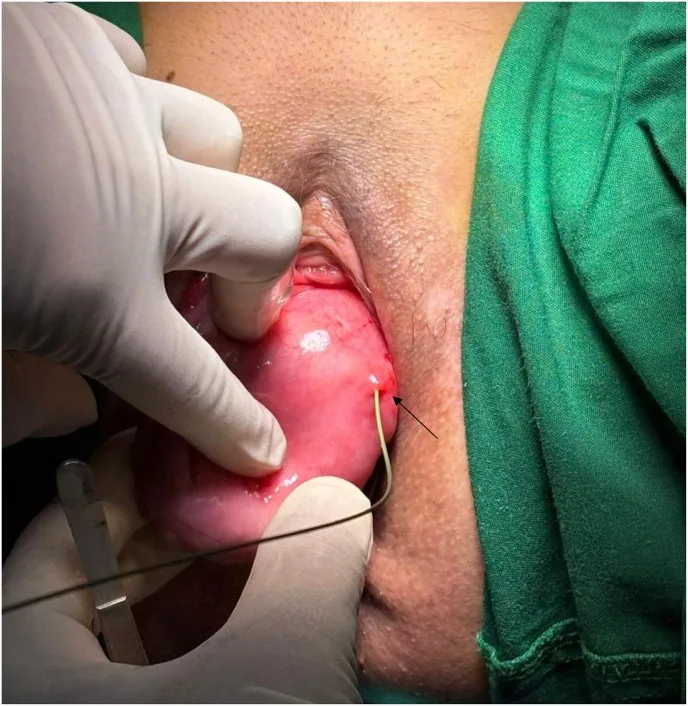
Definition
- Abnormal communication between the bladder and the vagina resulting in continuous leakage of urine through the vagina.
- Vesicovaginal fistula is the most common type of urinary tract fistula.
Aetiopathogenesis
Aetiology and pathogenesis
- In high-income countries vesicovaginal fistulas are mostly iatrogenic, usually resulting from an unrecognised bladder injury during gynaecological pelvic procedures.
- In low-resource countries the most common cause is prolonged obstructed labour, whose pressure necrosis destroys the tissue separating the bladder and vagina.
- Other causes include malignancy, radiogenic tissue damage, inflammation, infection, ischaemia, foreign bodies, trauma and congenital anomalies.
Clinical features
- The cardinal symptom is continuous leakage of urine from the vagina; recurrent urinary tract infections may also occur.
- Iatrogenic genitourinary fistulas typically occur as an early complication within the first 30 days.
Diagnosis
- The work-up comprises physical examination, dye testing, cystoscopy and CT urography.
- In the methylene blue test the dye is instilled retrogradely into the bladder; blue staining of a vaginal tampon indicates a vesicovaginal fistula.
- Staining of the tampon after oral phenazopyridine suggests a ureterovaginal fistula; the two tests combined form the double-dye test.
- Analysis of the vaginal fluid for urea, creatinine and potassium can suggest a genitourinary fistula.
- In 12–25% of vesicovaginal fistulas there is an associated ureterovaginal fistula.
Keep learning in the app
Further reading (selection)
Cross-references
Note: Learning content from the GynFuchs app (flashcards, exam questions, image cases) for medical education – not a treatment recommendation and no substitute for diagnosis or treatment decisions in individual cases. Treatment and management are deliberately not covered on this page.