Urge incontinence and overactive bladder
Exam relevance: in 13 of 197 board exam reports · rank 57
- Synonyms
- overactive bladder, OAB, urge incontinence
- Specialty
- Gynaecology · Pelvic floor & urogynaecology
- Images
- Clinical 1
- Exam relevance
- 13 of 197 reports · rank 57
- In the app
- 1 flashcards · GynFuchs
- Last updated
- 10/2026 · Dr. Pascal Bafteh
Contents
Images (1)
Definition
- A sudden, compelling urge to void that is difficult to hold and often results in involuntary leakage of urine.
- Leakage is usually of moderate to large volume and occurs immediately after the urgent, irrepressible need to void.
- Overactive bladder is defined as urgency, usually with frequency and nocturia, with or without urge incontinence and in the absence of urinary tract infection or other obvious pathology.
Occurrence & epidemiology
Epidemiology
- Urge incontinence is the most common type of incontinence in older adults but also occurs in younger people.
- Urinary incontinence overall affects approximately 37% of older women worldwide.
Aetiopathogenesis
Why urge incontinence develops
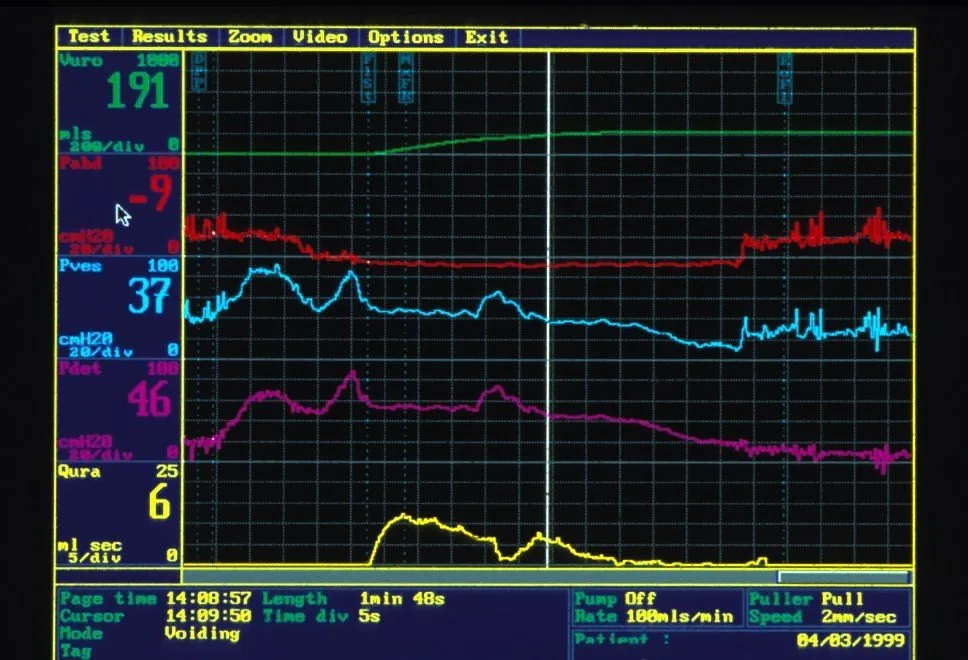
- Basic mechanism: involuntary detrusor contractions during the filling phase.
- The umbrella term: overactive bladder, divided into OAB dry without and OAB wet with urine loss.
Aetiology and pathogenesis
- The most common cause is detrusor overactivity with involuntary contractions during filling, usually when the bladder is partially or nearly full.
- Detrusor overactivity may be idiopathic or result from dysfunction of frontal brain areas that suppress micturition, for example due to ageing, dementia or stroke, or from outlet obstruction.
- Neurological causes of overactive bladder include multiple sclerosis, spinal cord injury, Parkinson disease, stroke and dementia.
- It is often precipitated by diuretics; in women, atrophic vaginitis, common with ageing, contributes to urethral irritation and urgency.
Clinical features
- Typical features are urgency, frequent voiding, nocturia and nocturnal incontinence.
- Urgency or an abrupt gush of urine without warning or preceding rise in intra-abdominal pressure typically indicates detrusor overactivity.
- Older adults with urgency are at increased risk of falls and fractures.
Diagnosis
- In the cough stress test, delayed or persistent leakage suggests cough-triggered detrusor overactivity, whereas immediate leakage that starts and stops with the cough indicates stress incontinence.
- Urinalysis, urine culture and kidney function tests are part of the basic work-up; a post-void residual below 50 mL is normal.
- A voiding diary kept over 48 to 72 hours records the time and volume of each void and each incontinent episode.
- If filling of less than 300 mL triggers urgency or contractions on cystometry, detrusor overactivity and urge incontinence are likely.
Keep learning in the app
Further reading (selection)
Cross-references
Note: Learning content from the GynFuchs app (flashcards, exam questions, image cases) for medical education – not a treatment recommendation and no substitute for diagnosis or treatment decisions in individual cases. Treatment and management are deliberately not covered on this page.