Transverse lie
Exam relevance: in 3 of 197 board exam reports · rank 125
- Specialty
- Obstetrics · Birth & puerperium
- Images
- Diagram 1
- Exam relevance
- 3 of 197 reports · rank 125
- In the app
- 1 flashcards · GynFuchs
- Last updated
- 10/2026 · Dr. Pascal Bafteh
Contents
Images (1)
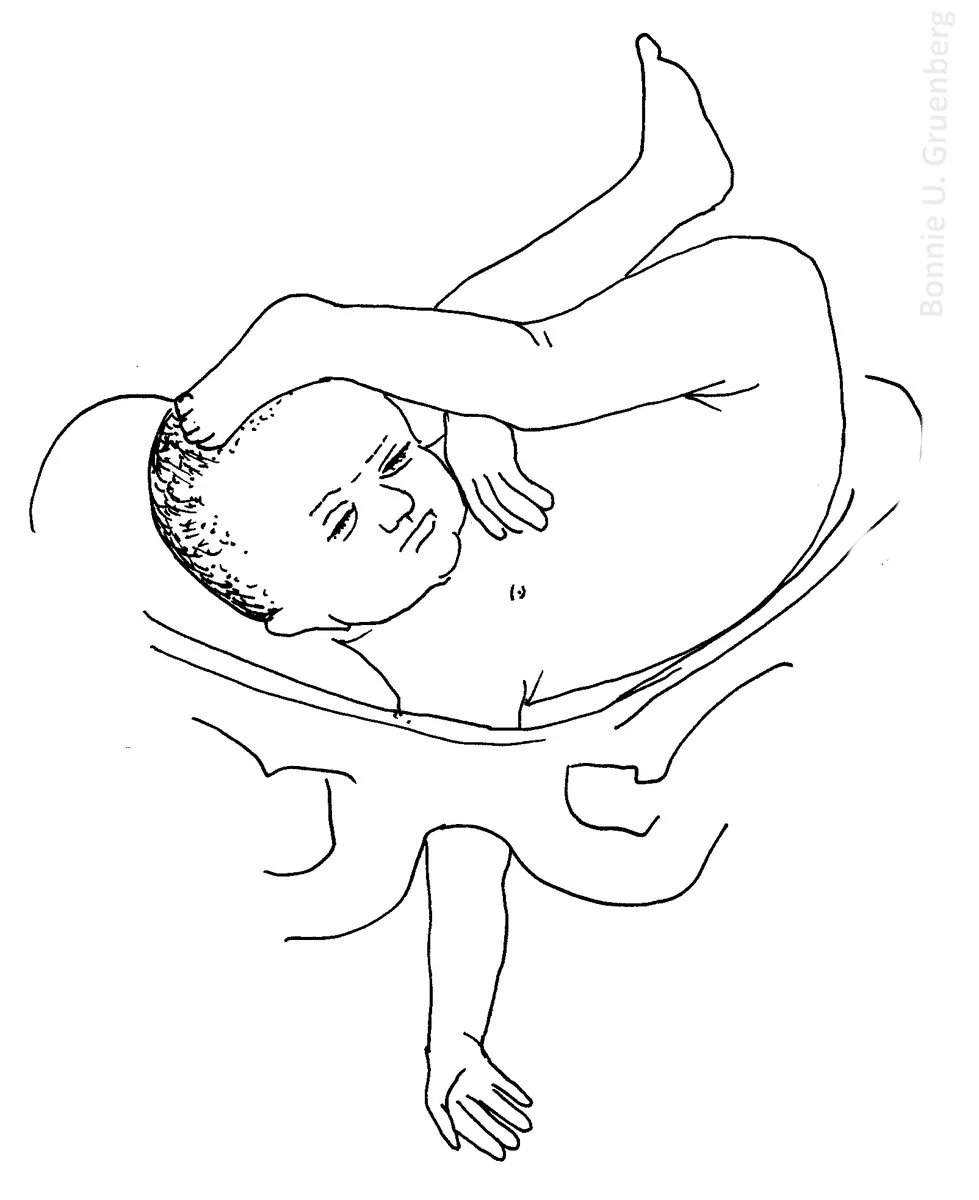 Diagram
Definition
Lie
- In a transverse lie the fetal long axis lies across the long axis of the uterus.
- It is favoured by multiparity, polyhydramnios, placenta praevia.
- Lie describes the relationship of the fetal long axis or spine to the long axis of the uterus and mother; the normal lie is longitudinal.
- In transverse lie the fetal long axis is perpendicular or oblique rather than parallel to the maternal long axis; together with oblique lie it belongs to the non-longitudinal lies.
Aetiopathogenesis
Aetiology and risk factors
- Abnormal lie occurs, among other things, with fetopelvic disproportion, fetal anomalies, structural uterine changes such as fibroids or synechiae and multiple pregnancy.
Clinical features
Dangers
- With rupture of the membranes there is a risk of a cord or arm prolapse.
- Neglected transverse lie arises when contractions in transverse lie lead to rupture.
- The Bandl ring is then a warning sign of impending rupture.
- Transverse lie is often accompanied by shoulder presentation, in which the fetal shoulder is closest to the pelvic inlet; vaginal birth is then not possible.
Diagnosis
- Ultrasound is used in addition and to confirm the diagnosis whenever an abnormal lie or presentation is suspected.
Keep learning in the app
Further reading (selection)
Cross-references
Note: Learning content from the GynFuchs app (flashcards, exam questions, image cases) for medical education – not a treatment recommendation and no substitute for diagnosis or treatment decisions in individual cases. Treatment and management are deliberately not covered on this page.