Venous thromboembolism in pregnancy and puerperium
Exam relevance: in 3 of 197 board exam reports · rank 125
- Synonyms
- DVT in pregnancy, blood clot in pregnancy
- Specialty
- Obstetrics · Birth & puerperium
- Images
- Ultrasound 1 · Clinical 1
- Exam relevance
- 3 of 197 reports · rank 125
- Last updated
- 10/2026 · Dr. Pascal Bafteh
Contents
Images (2)
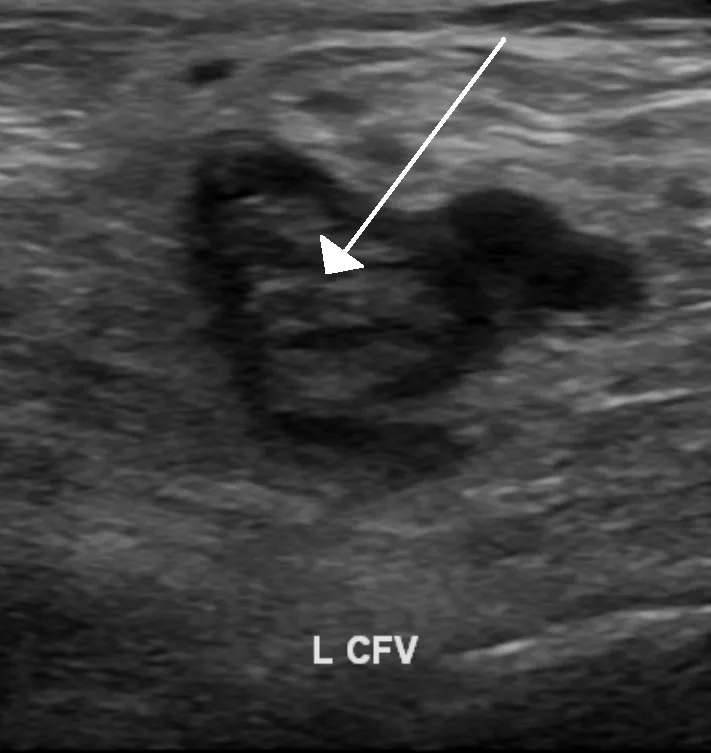 Ultrasound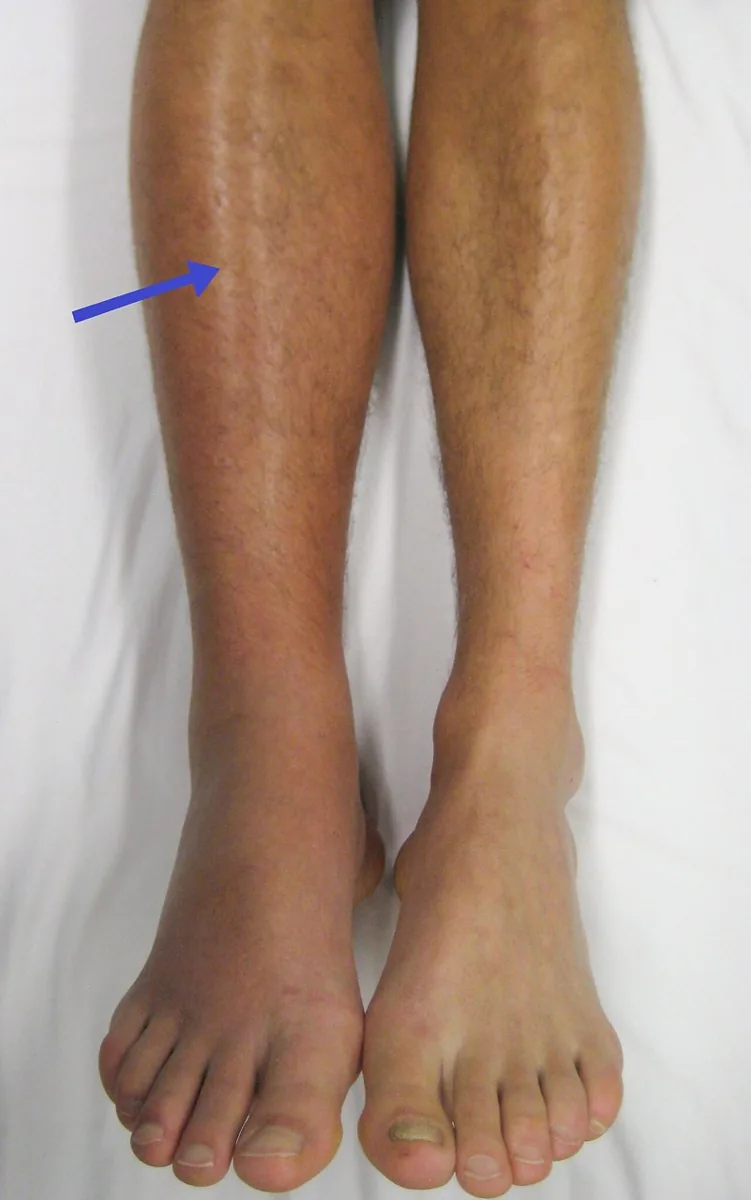
Definition
- Thromboembolic disorders are among the leading causes of maternal death.
Aetiopathogenesis
Aetiology and risk factors
- In pregnancy, increased venous capacitance and venous pressure in the legs promote stasis, and there is a degree of hypercoagulability.
- Most thromboembolic events, however, arise postpartum from vascular trauma at birth; the risk remains raised for about 6 weeks after birth, and caesarean section increases it further.
- General risk factors are thrombophilias and acquired conditions such as prolonged immobility; most pulmonary emboli originate from deep vein thrombosis of the legs.
Clinical features
Clinical features and complications
- Calf oedema, cramping and tenderness also occur physiologically in pregnancy and may mimic signs of thrombosis.
- Rarely, septic pelvic thrombophlebitis with infected thrombi in the ovarian or iliac veins or vena cava occurs postpartum; it presents with fever persisting for days without another cause.
Diagnosis
- D-dimer levels rise in pregnancy; only a negative result is helpful, as it excludes thrombosis.
- Deep vein thrombosis in pregnancy and postpartum is usually diagnosed by Doppler ultrasound.
Keep learning in the app
Further reading (selection)
Cross-references
Note: Learning content from the GynFuchs app (flashcards, exam questions, image cases) for medical education – not a treatment recommendation and no substitute for diagnosis or treatment decisions in individual cases. Treatment and management are deliberately not covered on this page.