Sheehan syndrome
Exam relevance: in 1 of 197 board exam reports · rank 171
- Synonyms
- postpartum hypopituitarism
- Specialty
- Obstetrics · Birth & puerperium
- Images
- Mammography/MRI 2
- Exam relevance
- 1 of 197 reports · rank 171
- In the app
- 1 flashcards · GynFuchs
- Last updated
- 10/2026 · Dr. Pascal Bafteh
Contents
Images (2)
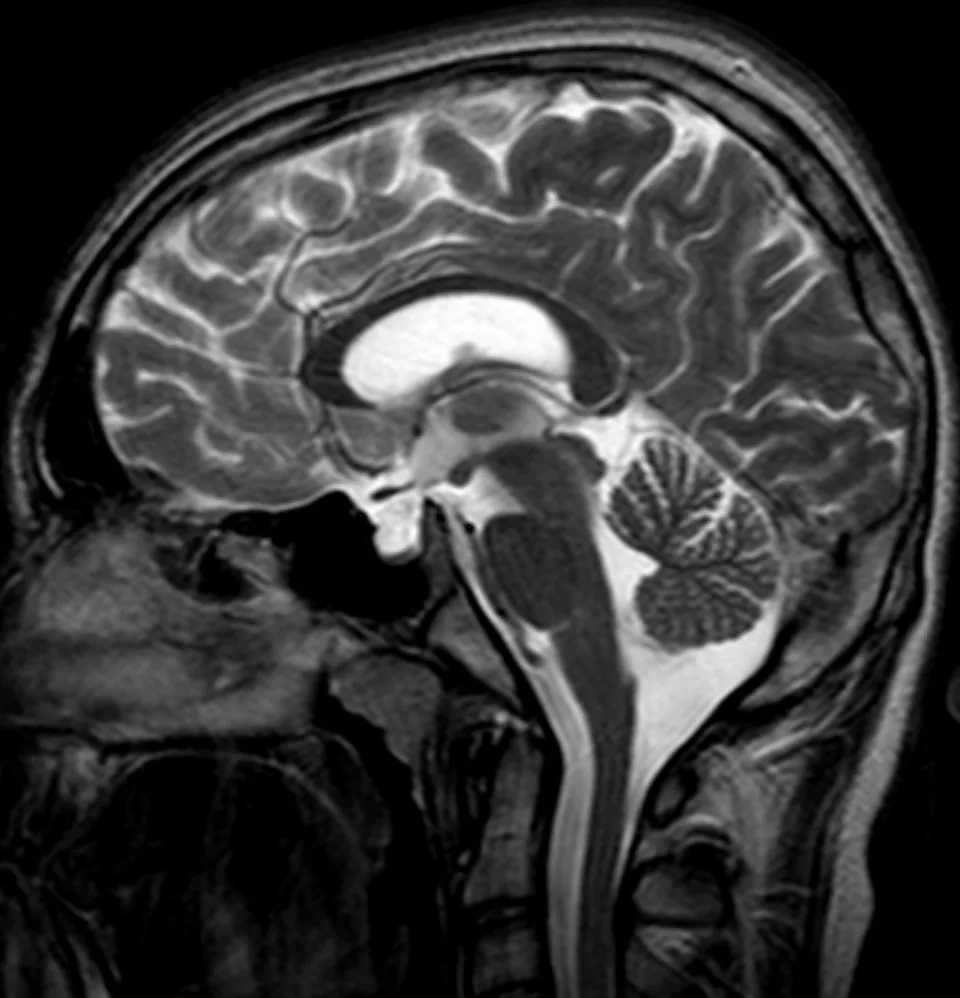 Mammography/MRI
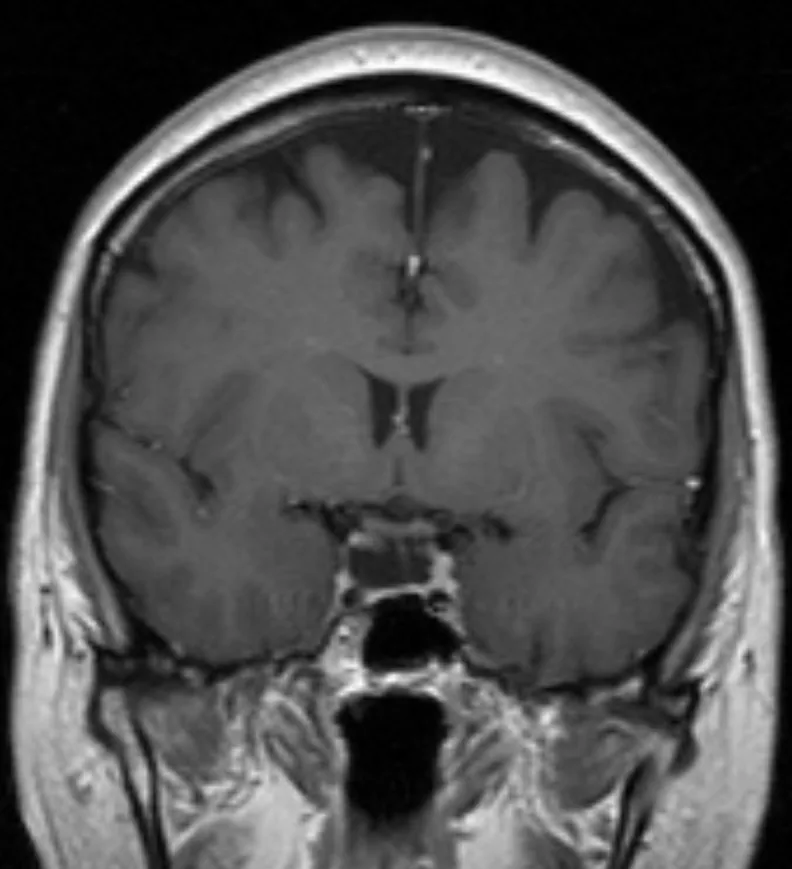 Mammography/MRI
Definition
Pathogenesis
- The differentials named were postpartum anaemia with pale mucosa, sleep deprivation and postnatal depression.
- The answer sought was Sheehan syndrome.
- The underlying lesion is ischaemic necrosis of the anterior pituitary after severe blood loss.
- Sheehan syndrome (postpartum pituitary necrosis) is necrosis of anterior pituitary cells after severe postpartum haemorrhage with hypovolaemia and shock; it causes pituitary insufficiency of varying extent up to panhypopituitarism.
Occurrence & epidemiology
Epidemiology
- Thanks to improved obstetric care it has become much rarer in high-income countries, while in resource-limited countries it remains a significant cause of morbidity and mortality; it accounts for about 6–8% of all causes of hypopituitarism.
Aetiopathogenesis
Aetiology and pathogenesis
- The anterior pituitary enlarges physiologically during pregnancy; its low-flow portal system is particularly susceptible to infarction with hypotension.
- Usually only the anterior lobe is affected, sometimes also the posterior lobe; diabetes insipidus is rare.
Clinical features
Presentation
- The earliest and most typical sign is failure of lactation.
- Added to this are amenorrhoea, fatigue, cold intolerance, hypotension and loss of secondary body hair.
- The most dangerous component is secondary adrenal insufficiency, with the risk of an adrenal crisis.
- The course is often insidious, so the diagnosis is made months or years later.
Clinical features and complications
- The typical feature is failure of lactation after birth, together with fatigue and loss of pubic and axillary hair.
- TSH deficiency causes hypothyroidism with facial puffiness, a hoarse voice, bradycardia and cold intolerance, ACTH deficiency adrenal insufficiency with fatigue, hypotension and reduced stress tolerance; hyperpigmentation and hyperkalaemia are absent.
- Acutely after birth, headache, impaired consciousness, hypotension, hypoglycaemia, nausea, vomiting and hyponatraemia may occur; usually, however, symptoms are non-specific, so diagnosis is often delayed.
Diagnosis
- A history of severe peripartum haemorrhage is the key clue; the diagnosis is based on low pituitary hormones and their target hormones.
- Pituitary MRI typically shows an empty sella in the later course.
Keep learning in the app
Further reading (selection)
Cross-references
Note: Learning content from the GynFuchs app (flashcards, exam questions, image cases) for medical education – not a treatment recommendation and no substitute for diagnosis or treatment decisions in individual cases. Treatment and management are deliberately not covered on this page.