Obstetric perineal injury
Exam relevance: in 12 of 197 board exam reports · rank 59
- Synonyms
- perineal tear, third-degree tear, OASI
- Specialty
- Obstetrics · Birth & puerperium
- Images
- Diagram 3
- Exam relevance
- 12 of 197 reports · rank 59
- In the app
- 1 flashcards · GynFuchs
- Last updated
- 10/2026 · Dr. Pascal Bafteh
Contents
Images (3)
 Diagram
 Diagram
 Diagram
Definition
- Obstetric injuries are tears of the perineum, labia, vagina and cervix arising during birth, spontaneously or in association with episiotomy; third- and fourth-degree tears are termed obstetric anal sphincter injuries (OASIS).
Classification
Tears
- Grade I: skin/mucosa, II: perineal muscles.
- Grade III: sphincter, IV: also rectal mucosa.
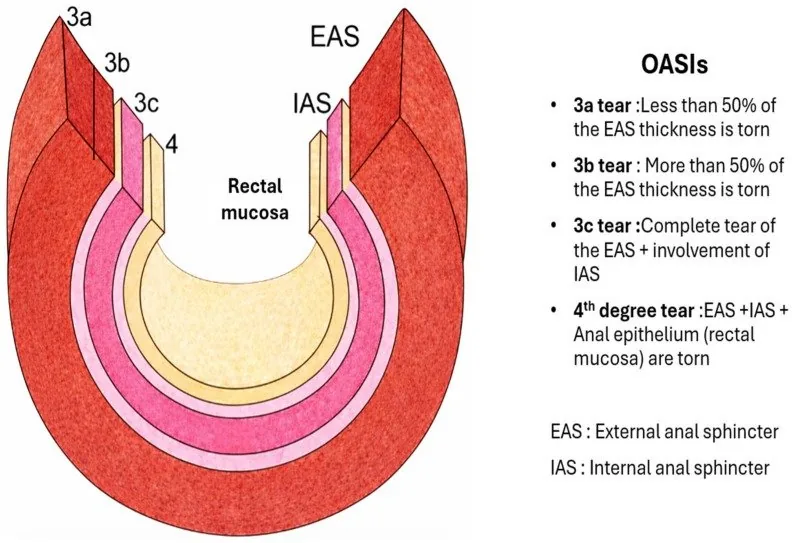
- The subdivision is 3a <50% EAS, 3b >50% EAS, 3c IAS.
- Perineal tears are classified into four degrees (classification adopted by the RCOG among others): first-degree tears involve skin or mucosa only, second-degree tears also the perineal muscles but not the anal sphincter.
- Third-degree tears involve the anal sphincter complex (3a: less than 50% of external sphincter thickness, 3b: more than 50%, 3c: internal sphincter also torn), fourth-degree tears also the anal or rectal epithelium.
Occurrence & epidemiology
Epidemiology
- Perineal injuries are common in vaginal births, mostly first- or second-degree tears; anal sphincter injuries affect about 4 to 11% of vaginal births in the United States, while considerably lower rates are reported in other countries.
Aetiopathogenesis
Aetiology and risk factors
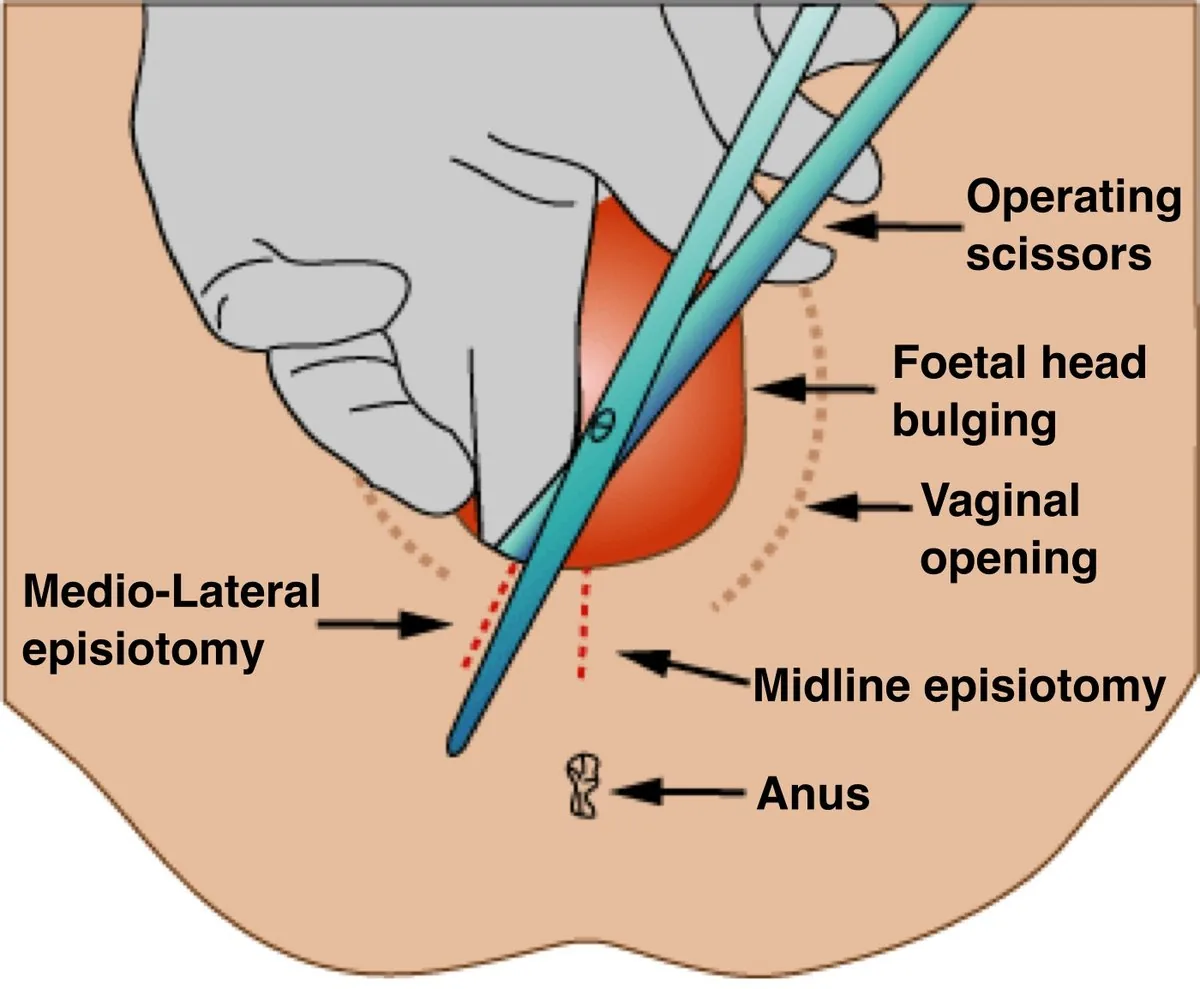
- Risk factors include nulliparity, forceps or vacuum birth, a large baby, certain fetal positions such as persistent occiput posterior position, maternal age and ethnicity (for example Asian ethnicity) and midline episiotomy.
Clinical features
Clinical features and complications
- Most tears heal without sequelae; severe tears can lead to prolonged pain, sexual dysfunction, pelvic floor dysfunction and incontinence.
- Anal sphincter injuries are the main cause of later anal incontinence in women; further complications are infection, wound breakdown and dyspareunia.
Diagnosis
- It is essential to recognise severe tears immediately and to determine their full extent, particularly involvement of the anal sphincter.
Keep learning in the app
Further reading (selection)
Cross-references
Note: Learning content from the GynFuchs app (flashcards, exam questions, image cases) for medical education – not a treatment recommendation and no substitute for diagnosis or treatment decisions in individual cases. Treatment and management are deliberately not covered on this page.