Cephalopelvic disproportion
Exam relevance: in 4 of 197 board exam reports · rank 111
- Specialty
- Obstetrics · Birth & puerperium
- Images
- Diagram 1
- Exam relevance
- 4 of 197 reports · rank 111
- In the app
- 1 flashcards · GynFuchs
- Last updated
- 10/2026 · Dr. Pascal Bafteh
Contents
Images (1)
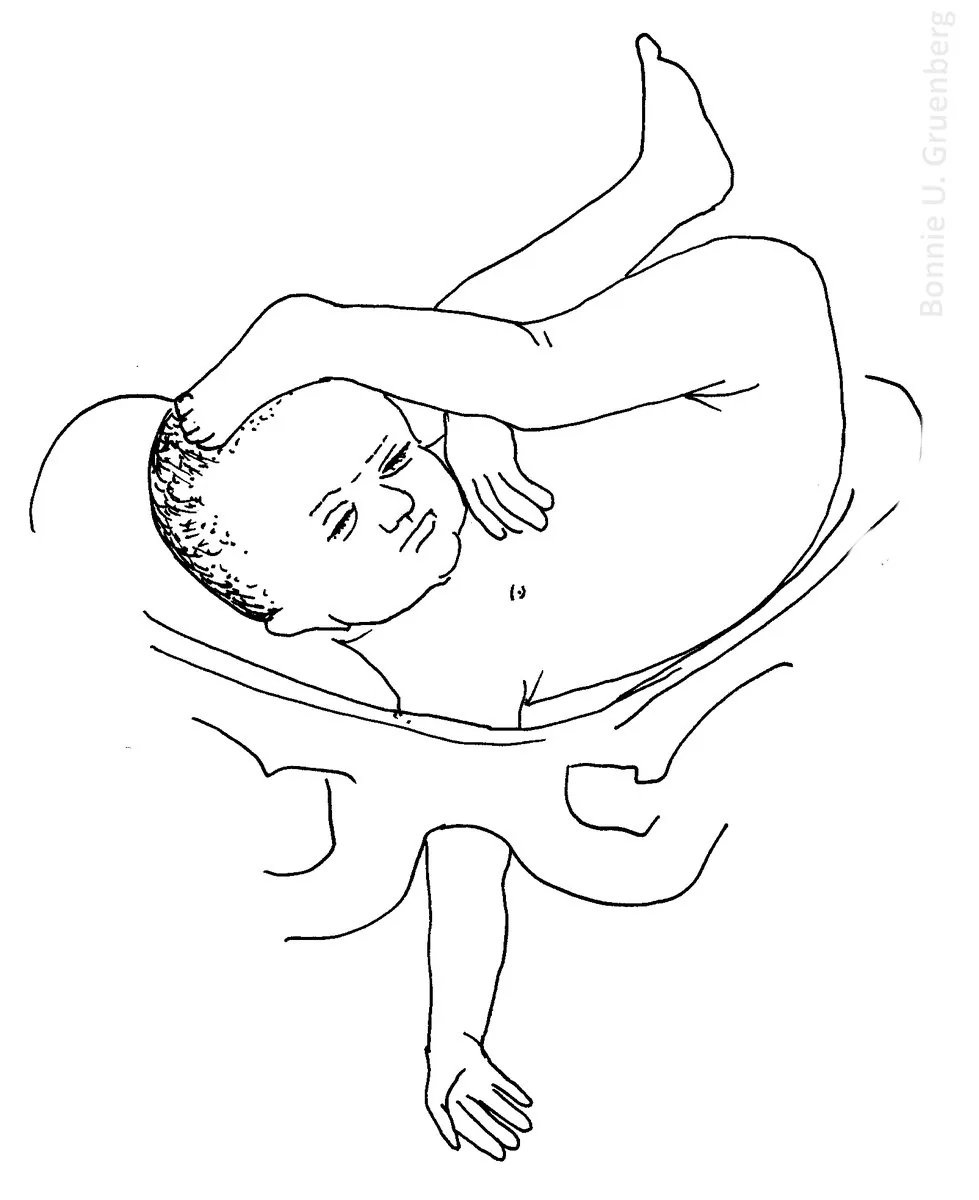 Diagram
Definition
- Cephalopelvic (fetopelvic) disproportion is present when the fetus cannot pass through the maternal pelvis because the pelvis is too small, the fetus is too large, or there is abnormal lie, presentation or position.
Aetiopathogenesis
Aetiology and risk factors
- Fetal factors are mainly macrosomia and abnormal lie, presentation or position; on the maternal side, a pelvis that is too small.
- Macrosomia is usually defined as a birth weight of 4000 or 4500 g or more, without a uniform definition; apart from genetically determined size, maternal diabetes is the most important cause, and maternal obesity also contributes.
Clinical features
Clinical features and complications
- Disproportion presents as protracted labour or labour arrest.
- Macrosomia is also a risk factor for shoulder dystocia and severe perineal laceration; the infant is at risk of clavicular or limb fractures and perinatal asphyxia, and above 4500 g morbidity and mortality rise steeply.
Diagnosis
Pelvic dimensions
- The baby's course: entry transverse at the inlet, rotation to anteroposterior at the pelvic floor, deflexion at the perineum.
- The diagnosis of protracted labour is clinical and based on cervical findings and assessment of contractions; clinical or ultrasound weight estimation in the first stage helps to identify macrosomia.
- Sonographic weight estimation has only limited accuracy, with increasing error as weight rises; clinical estimation is also unreliable.
Keep learning in the app
Further reading (selection)
Cross-references
Note: Learning content from the GynFuchs app (flashcards, exam questions, image cases) for medical education – not a treatment recommendation and no substitute for diagnosis or treatment decisions in individual cases. Treatment and management are deliberately not covered on this page.