Nuchal cord and umbilical cord knots
Exam relevance: in 1 of 197 board exam reports · rank 171
- Specialty
- Obstetrics · Birth & puerperium
- Images
- Clinical 2
- Exam relevance
- 1 of 197 reports · rank 171
- Last updated
- 10/2026 · Dr. Pascal Bafteh
Contents
Images (2)
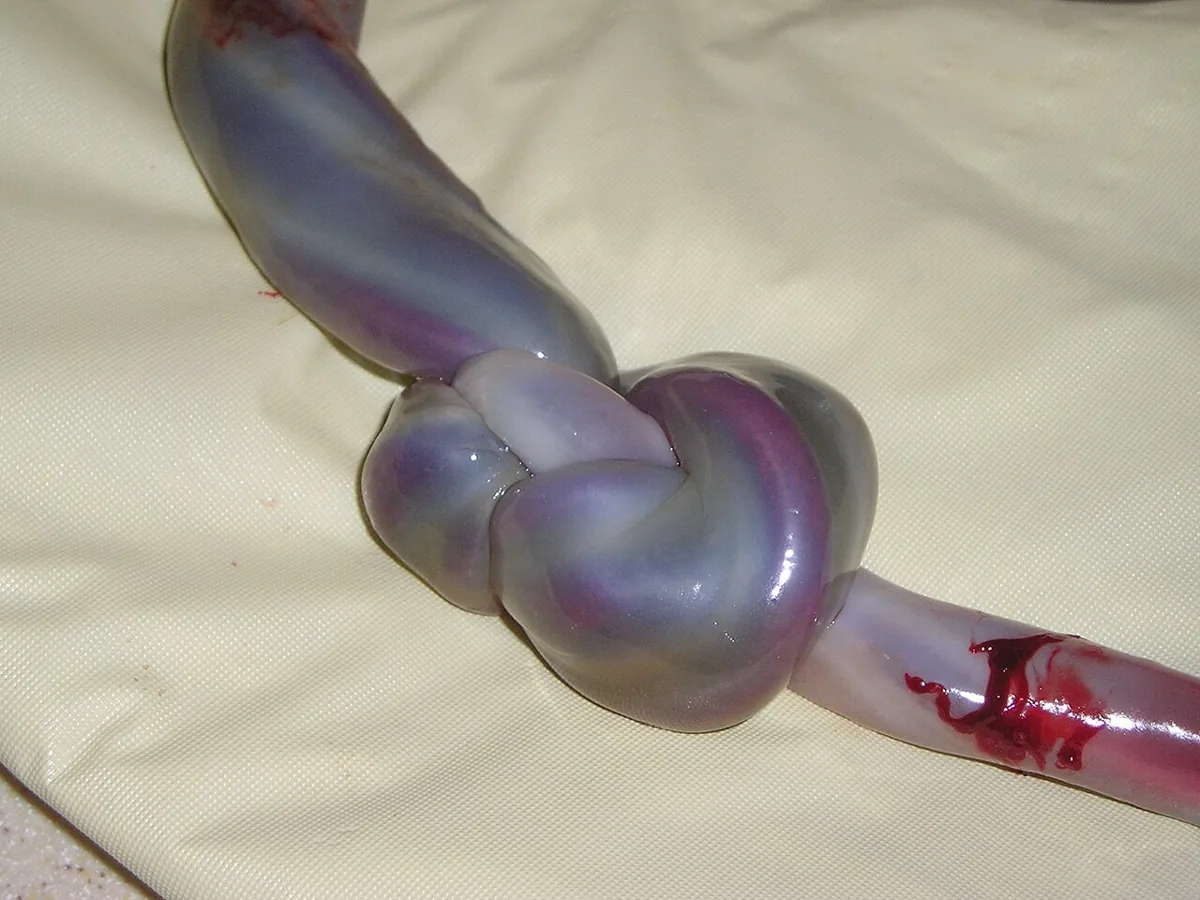
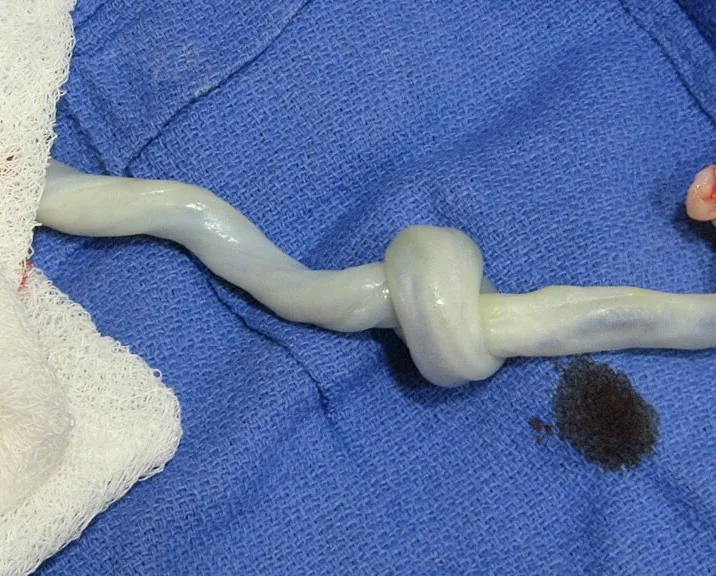
Definition
- A nuchal cord is present when the umbilical cord is wrapped 360 degrees around the fetal neck; loose and tight as well as single and multiple loops are distinguished.
- A true cord knot is a genuine knotting of the umbilical cord; in monoamniotic twins the two cords can become entangled with each other.
Occurrence & epidemiology
Epidemiology
- Nuchal cords occur in about 10 to 29 per cent of fetuses and increase with gestational age, from about 6 per cent at 20 weeks to 29 per cent at 42 weeks; two or more loops affect 2.4 to 8.3 per cent of pregnancies.
- True knots occur in 0.04 to 3 per cent of all births.
- In monochorionic monoamniotic twins cord entanglement is very common, in one small study in all 18 pregnancies.
Aetiopathogenesis
Aetiology and risk factors
- The umbilical cord averages 50 to 60 cm in length; long cords (over 70 cm) are associated with more frequent entanglement, true knots and torsion.
- True knots usually form early in pregnancy (about 9–12 weeks), when amniotic fluid volume is large relative to the fetus, by the fetus somersaulting through a loop of cord, and can gradually tighten later.
- Predisposing factors are a long cord, polyhydramnios, excessive fetal movements, gestational diabetes, multiparity, male fetal sex and chronic hypertension.
Clinical features
Clinical features and complications
- Most nuchal cords are not associated with perinatal morbidity or mortality; problems arise mainly with a tight nuchal cord.
- A tight nuchal cord first compresses the thin-walled umbilical vein while blood continues to be pumped out of the infant through the thicker-walled arteries; the result is hypovolaemia, acidosis and anaemia.
- Loose knots do not affect venous perfusion pressure; as they tighten, resistance rises; true knots are associated with a 4- to 10-fold increased risk of stillbirth.
Diagnosis
- Colour and power Doppler and 3D sonography improve prenatal detection of true knots; because the whole cord cannot be visualised, many knots remain undetected until birth, and false-positive findings are possible.
- Cord entanglement in monoamniotic twins can be detected sonographically from about 10 weeks.
Keep learning in the app
Further reading (selection)
Cross-references
Note: Learning content from the GynFuchs app (flashcards, exam questions, image cases) for medical education – not a treatment recommendation and no substitute for diagnosis or treatment decisions in individual cases. Treatment and management are deliberately not covered on this page.