Ovarian hyperstimulation syndrome (OHSS)
- Specialty
- Gynaecology · Endocrinology & cycle
- Images
- Ultrasound 2
- Last updated
- 10/2026 · Dr. Pascal Bafteh
Contents
Images (2)
Definition
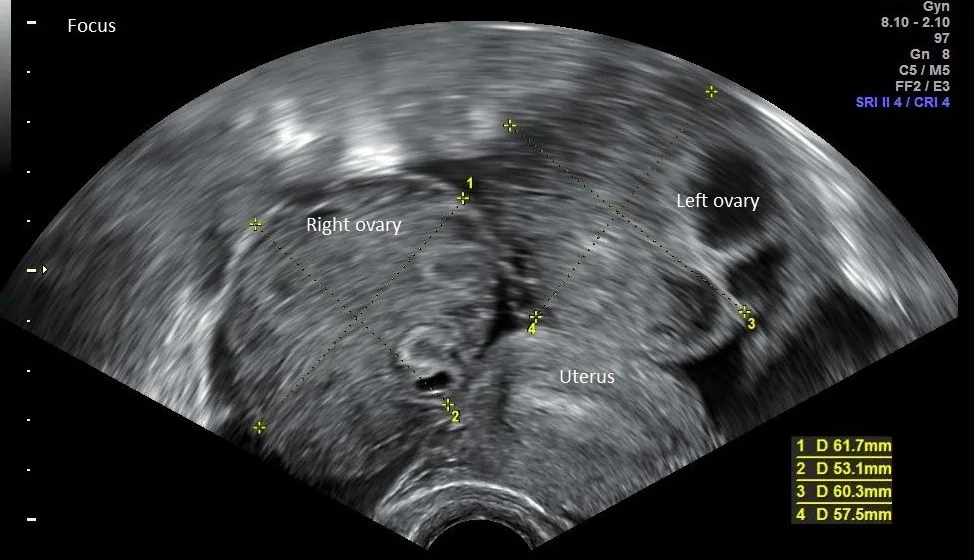
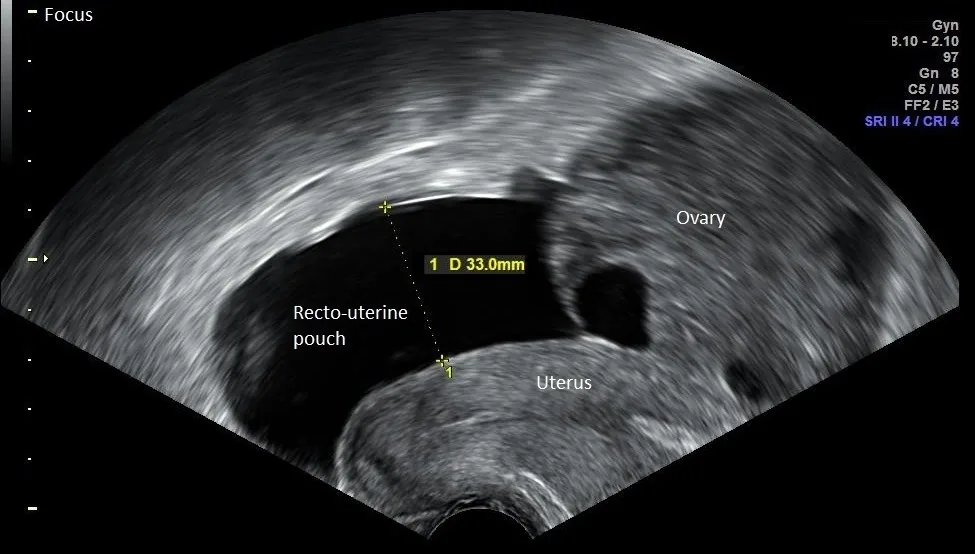
- Ovarian hyperstimulation syndrome is a potentially life-threatening iatrogenic complication of ovarian stimulation in which the ovaries become markedly swollen and fluid leaks into the abdomen and chest.
Classification
- Mild, moderate, severe and critical forms are distinguished; the mild form with enlarged ovaries, abdominal bloating and mild abdominal pain is the most frequent.
- Severe forms show clinical ascites with or without hydrothorax, hyperkalaemia, hyponatraemia, oliguria and haemoconcentration with a haematocrit above 45%; critical forms involve a haematocrit above 55%, oliguria or anuria, thromboembolic events or acute respiratory distress syndrome.
Occurrence & epidemiology
Epidemiology
- OHSS affects about 3–6% of women undergoing assisted reproduction; after gonadotrophin stimulation, figures of 10–20% are also reported depending on source and definition, and severe courses are rare.
Aetiopathogenesis
Aetiology and pathogenesis
- It usually follows stimulation with gonadotrophins and is rare after oral stimulation alone; hCG used to trigger ovulation and pregnancy in the same cycle increase the risk.
- hCG promotes ovarian production of VEGF, which increases capillary permeability; intravascular volume shifts into the extravascular space with ascites, haemoconcentration and hypovolaemia, and severity correlates with VEGF levels.
- Risk factors include age under 35, polycystic ovary syndrome, low body weight, very high oestrogen levels and an unusually large number of follicles.
Clinical features
- Mild forms show abdominal bloating, mild abdominal pain and weight gain; severe forms present with severe abdominal pain, abdominal swelling, rapid weight gain, shortness of breath, nausea, vomiting and reduced urine output.
- Life-threatening complications include thromboembolic events, acute kidney failure, acute respiratory distress syndrome and severe electrolyte disturbances; ovarian torsion may also occur.
Diagnosis
- Laboratory findings include haemoconcentration with a raised haematocrit, leucocytosis, hyponatraemia, hyperkalaemia, raised creatinine and signs of liver dysfunction.
- Abdominal or transvaginal ultrasound and chest X-ray demonstrate enlarged ovaries, ascites and pleural effusions.
Keep learning in the app
Further reading (selection)
Cross-references
Note: Learning content from the GynFuchs app (flashcards, exam questions, image cases) for medical education – not a treatment recommendation and no substitute for diagnosis or treatment decisions in individual cases. Treatment and management are deliberately not covered on this page.