Turner syndrome
- Specialty
- Gynaecology · Endocrinology & cycle
- Images
- Ultrasound 1
- Last updated
- 10/2026 · Dr. Pascal Bafteh
Contents
Images (1)
Definition
- Turner syndrome is a chromosomal disorder in individuals with a female phenotype who have one normal X chromosome while the second sex chromosome is missing or structurally altered.
Classification
- About 45% of affected individuals have a 45,X karyotype and most of the remainder have mosaicism (e.g. 45,X/46,XX); ring and isochromosome X variants and mosaicism with a Y-bearing cell line also occur.
Occurrence & epidemiology
Epidemiology
- Turner syndrome occurs in about 1 in 2,000 to 2,500 female newborns; about 99% of 45,X conceptions end in spontaneous miscarriage.
- Most cases are not inherited but arise from a random error during gamete formation or during early embryonic cell division.
Clinical features
- Leading features are short stature and ovarian insufficiency with delayed or absent puberty and usually primary amenorrhoea; the ovaries are almost always replaced by fibrous streak gonads.
- Only 15–40% of adolescents undergo spontaneous puberty and only 2–10% have spontaneous menarche.
- Typical findings include dorsal lymphoedema of the hands and feet in newborns, webbed neck, low posterior hairline, broad chest with widely spaced nipples, cubitus valgus and shortened fourth metacarpals and metatarsals.
- Congenital heart disease is present in about half of affected individuals, mainly bicuspid aortic valve and coarctation of the aorta; aortic dilatation can lead to rare but often fatal aortic dissection.
- Anomalies of the kidneys and urinary tract (18–60%, especially horseshoe kidney), hearing loss and autoimmune conditions such as autoimmune thyroiditis and coeliac disease are also common.
Diagnosis
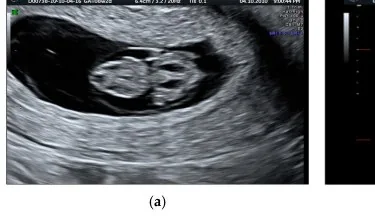
- Prenatally, increased nuchal translucency, cystic hygroma or left-sided cardiac anomalies may be noted.
- Diagnosis is based on chromosome analysis counting at least 30 metaphases, which detects mosaicism of about 10%; biochemically, gonadal dysgenesis results in hypergonadotropic hypogonadism.
- Detection of Y chromosome material is important because it confers an increased risk of gonadal tumours, especially gonadoblastoma.
Keep learning in the app
Further reading (selection)
Cross-references
Note: Learning content from the GynFuchs app (flashcards, exam questions, image cases) for medical education – not a treatment recommendation and no substitute for diagnosis or treatment decisions in individual cases. Treatment and management are deliberately not covered on this page.