Premature ovarian insufficiency (POI)
- Specialty
- Gynaecology · Endocrinology & cycle
- Images
- Histology & cytology 1
- Last updated
- 10/2026 · Dr. Pascal Bafteh
Contents
Images (1)
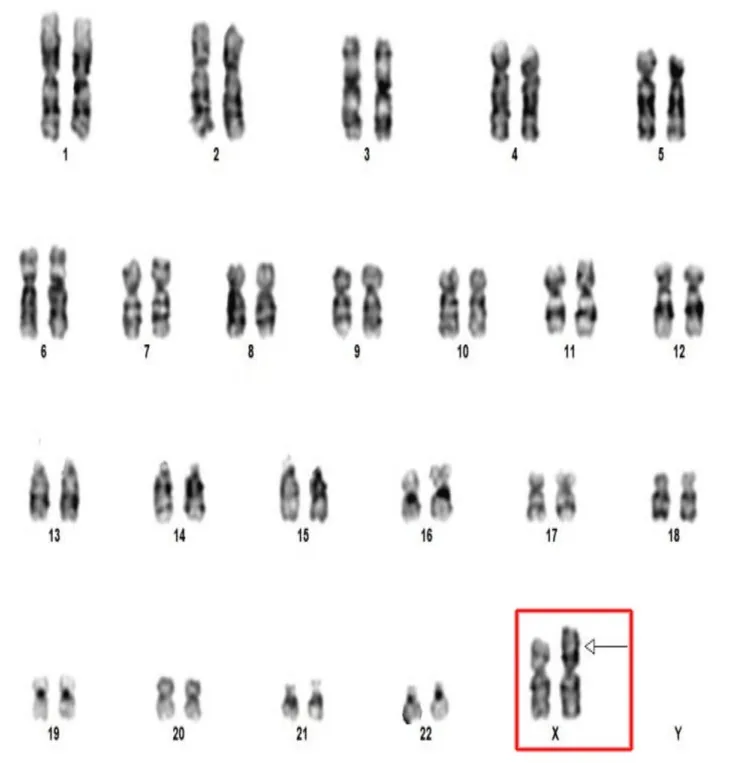 Histology & cytology
Definition
- Premature ovarian insufficiency is a loss of ovarian function before the age of 40, with amenorrhoea, low oestradiol and raised FSH.
- Because the degree of ovarian impairment may fluctuate over time, the former term premature ovarian failure has largely been abandoned.
Occurrence & epidemiology
Epidemiology
- The prevalence of non-iatrogenic POI is reported as about 1% in older studies and about 3.5% in recent publications.
Aetiopathogenesis
Aetiology and pathogenesis
- The cause often remains unclear: idiopathic cases are estimated at about 39–67%, genetic causes at 10–30%, autoimmune causes at 5–17% and iatrogenic causes at 6–47%.
- Genetic causes include Turner syndrome and FMR1 premutation; associated autoimmune diseases include Addison disease, Hashimoto thyroiditis and type 1 diabetes.
- Further causes are iatrogenic gonadotoxic exposure, metabolic disorders such as galactosaemia and infections such as mumps or tuberculosis.
Clinical features
- The leading symptom is primary or secondary amenorrhoea, sometimes with irregular bleeding, often with oestrogen-deficiency symptoms such as hot flushes, vaginal dryness and decreased libido.
- Oestrogen deficiency reduces bone density with increased fracture risk and raises cardiovascular risk; spontaneous pregnancy is possible but occurs in only about 5–10% of affected women.
Diagnosis
- According to the 2024 ESHRE guideline, disordered cycles (amenorrhoea or irregular cycles) for at least 4 months and an FSH above 25 IU/L are diagnostic; FSH is measured again after 4–6 weeks if the result is unclear.
- Other causes of secondary amenorrhoea such as pregnancy and hypothyroidism are excluded beforehand.
- AMH is not a primary diagnostic test but can support the diagnosis when FSH results are inconclusive; in non-iatrogenic POI, chromosomal analysis, for example to detect Turner syndrome, and FMR1 testing are part of the work-up.
Keep learning in the app
Further reading (selection)
Cross-references
Note: Learning content from the GynFuchs app (flashcards, exam questions, image cases) for medical education – not a treatment recommendation and no substitute for diagnosis or treatment decisions in individual cases. Treatment and management are deliberately not covered on this page.