Polycystic ovary syndrome (PCOS)
Exam relevance: in 15 of 197 board exam reports · rank 49
- Synonyms
- polycystic ovary syndrome, PCOS, polycystic ovaries
- Specialty
- Gynaecology · Endocrinology & cycle
- Images
- Ultrasound 1 · Clinical 1
- Exam relevance
- 15 of 197 reports · rank 49
- In the app
- 2 flashcards · GynFuchs
- Last updated
- 10/2026 · Dr. Pascal Bafteh
Contents
Images (2)
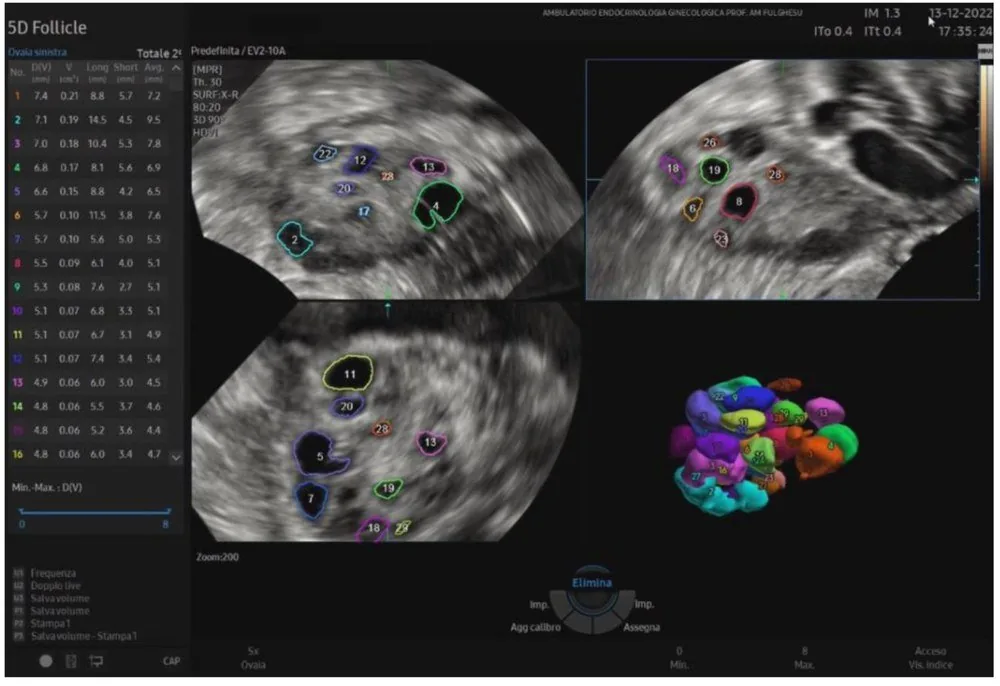 Ultrasound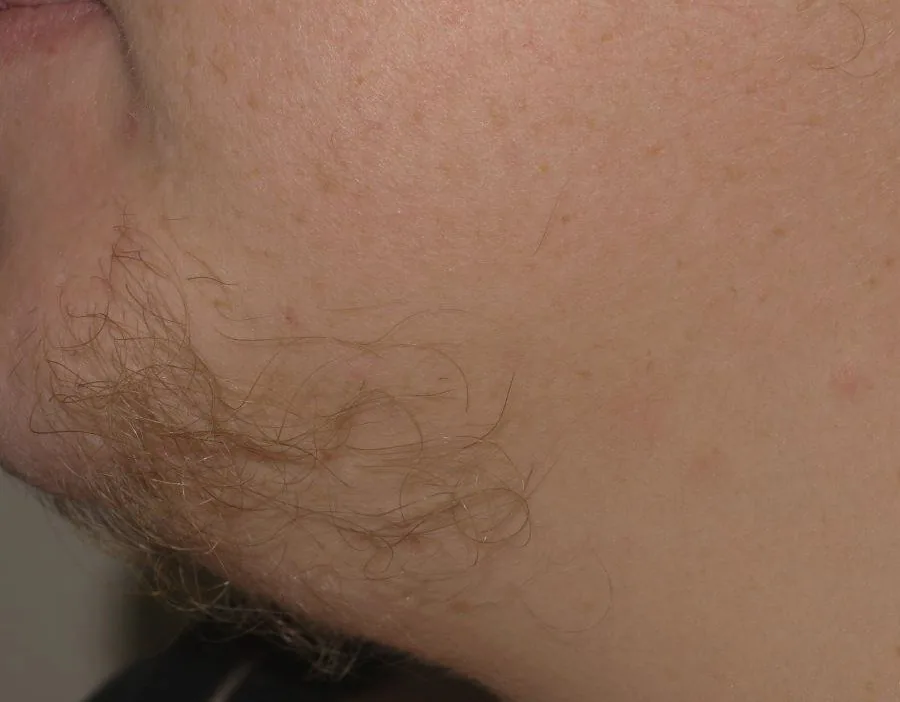
Definition
Rotterdam Criteria
- First criterion: oligo- and/or anovulation.
- Second criterion: clinical and/or biochemical hyperandrogenism.
- Third criterion: polycystic ovaries (ultrasound).
- What is additionally required: exclusion of other causes (diagnosis of exclusion).
- In adolescents in the first few years after menarche: ultrasound criterion does not apply.
Clinical features
What Belongs to PCOS but Is Not in the Criteria
- Pathogenetically central: insulin resistance with hyperinsulinaemia.
- Further risks: dyslipidemia, hypertension, fatty liver.
- Long-term gynaecological risk: endometrial hyperplasia to carcinoma.
Differentiating the Terms
- Hirsutism: terminal hair at androgen-dependent sites.
- Hypertrichosis: androgen-independent hair growth, often drug-induced.
- Virilisation: hirsutism plus clitoromegaly, voice deepening.
- How hirsutism is graded: using the Ferriman-Gallwey score (9 body regions).
- What rapid progression with virilisation means: suspicion of androgen-producing tumor (urgent workup!).
Diagnosis
Ovary on Ultrasound
- Follicle count criterion according to current definition: ≥ 20 follicles (2–9 mm) per ovary.
- Alternative criterion: ovarian volume > 10 ml (without follicle/corpus luteum).
- Typical distribution of follicles: string of pearls, subcapsular.
- Important clarification: PCO alone is not a syndrome.
Laboratory Findings and Their Interpretation
- Tests performed: testosterone, SHBG, FAI, DHEAS, LH, FSH, E2, PRL, TSH.
- Classic but not mandatory constellation: elevated LH-FSH ratio.
- Where ovarian androgens are produced: in the theca cells.
- Where DHEAS originates: from the adrenal cortex.
- What a markedly elevated testosterone necessitates: ruling out an androgen-producing tumour/CAH.
- Why AMH is often high: many small follicles produce AMH.
Keep learning in the app
Further reading (selection)
Cross-references
Note: Learning content from the GynFuchs app (flashcards, exam questions, image cases) for medical education – not a treatment recommendation and no substitute for diagnosis or treatment decisions in individual cases. Treatment and management are deliberately not covered on this page.