Precocious and delayed puberty
- Specialty
- Gynaecology · Endocrinology & cycle
- Images
- Mammography/MRI 1
- Last updated
- 10/2026 · Dr. Pascal Bafteh
Contents
Images (1)
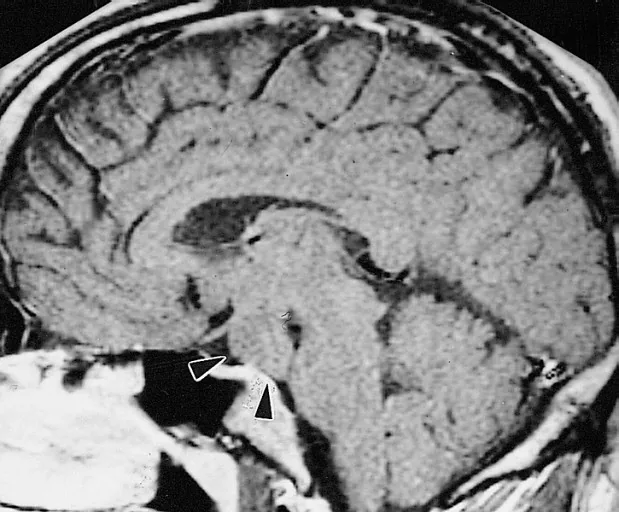 Mammography/MRI
Definition
- Precocious puberty denotes the onset of secondary sexual characteristics in girls before the age of 8.
- Delayed puberty in girls is present if breast development has not begun by the age of 13, more than 3 years elapse between thelarche and menarche, or menarche has not occurred by the age of 15; the cut-offs for the last two criteria are not defined uniformly in the literature.
Classification
- Precocious puberty is divided into the more common central, gonadotrophin-dependent form and a peripheral, gonadotrophin-independent form; premature thelarche and premature adrenarche are benign, non-progressive variants.
- Delayed puberty is divided into constitutional delay, functional and permanent hypogonadotrophic hypogonadism, and hypergonadotrophic hypogonadism.
Occurrence & epidemiology
Epidemiology
- True precocious puberty affects about 0.2% of girls.
- In recent decades, puberty has started earlier, especially in girls, probably owing to increasing childhood obesity and environmental factors.
Aetiopathogenesis
Aetiology and pathogenesis
- In most girls with central precocious puberty no specific cause can be identified; intracranial lesions such as hamartomas or other tumours of the hypothalamic region are uncommon.
- Peripheral forms result from sex hormones from the gonads, adrenals or exogenous sources; oestrogenic effects are most commonly due to follicular ovarian cysts, less often to granulosa-theca cell tumours or McCune-Albright syndrome, and androgen excess most commonly to congenital adrenal hyperplasia with 21-hydroxylase deficiency.
- Causes of delayed puberty include chronic illness, undernutrition and eating disorders, excessive physical activity, Kallmann syndrome with hyposmia or anosmia, and chromosomal disorders such as Turner syndrome.
Clinical features
- In precocious puberty, an early growth spurt leads to reduced adult height through premature epiphyseal closure; psychosocial problems may also occur.
Diagnosis
- A pubertal morning LH level measured with a high-sensitivity assay, or a pubertal LH response to stimulation testing, indicates a central form.
- A radiograph of the left hand shows accelerated skeletal maturation; brain MRI serves to exclude intracranial causes.
- In delayed puberty, raised gonadotrophins point to primary gonadal failure; bone age and, if gonadotrophins are raised, karyotyping, for example for Turner syndrome, complete the work-up.
Keep learning in the app
Further reading (selection)
Cross-references
Note: Learning content from the GynFuchs app (flashcards, exam questions, image cases) for medical education – not a treatment recommendation and no substitute for diagnosis or treatment decisions in individual cases. Treatment and management are deliberately not covered on this page.