Female infertility
Exam relevance: in 17 of 197 board exam reports · rank 39
- Synonyms
- infertility, subfertility
- Specialty
- Gynaecology · Endocrinology & cycle
- Images
- Mammography/MRI 1 · Histology & cytology 1 · Diagram 1
- Exam relevance
- 17 of 197 reports · rank 39
- In the app
- 2 flashcards · GynFuchs
- Last updated
- 10/2026 · Dr. Pascal Bafteh
Contents
Images (3)
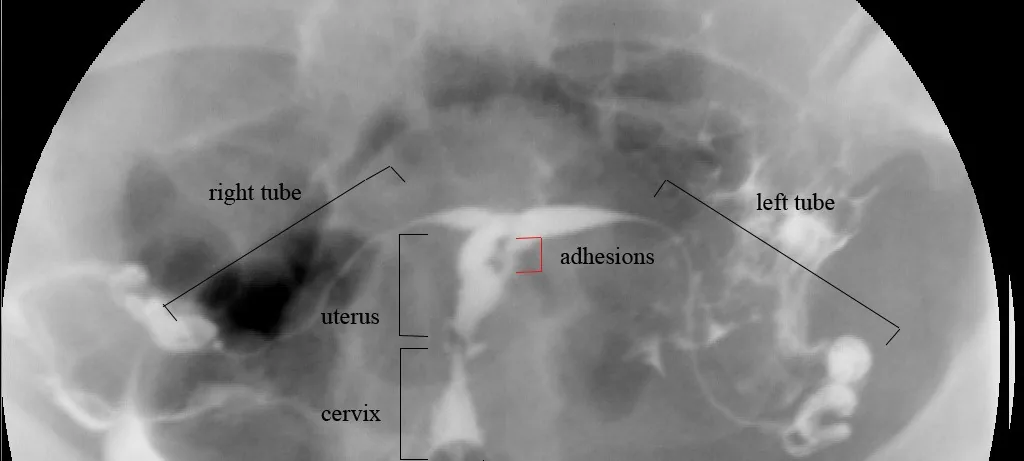 Mammography/MRI
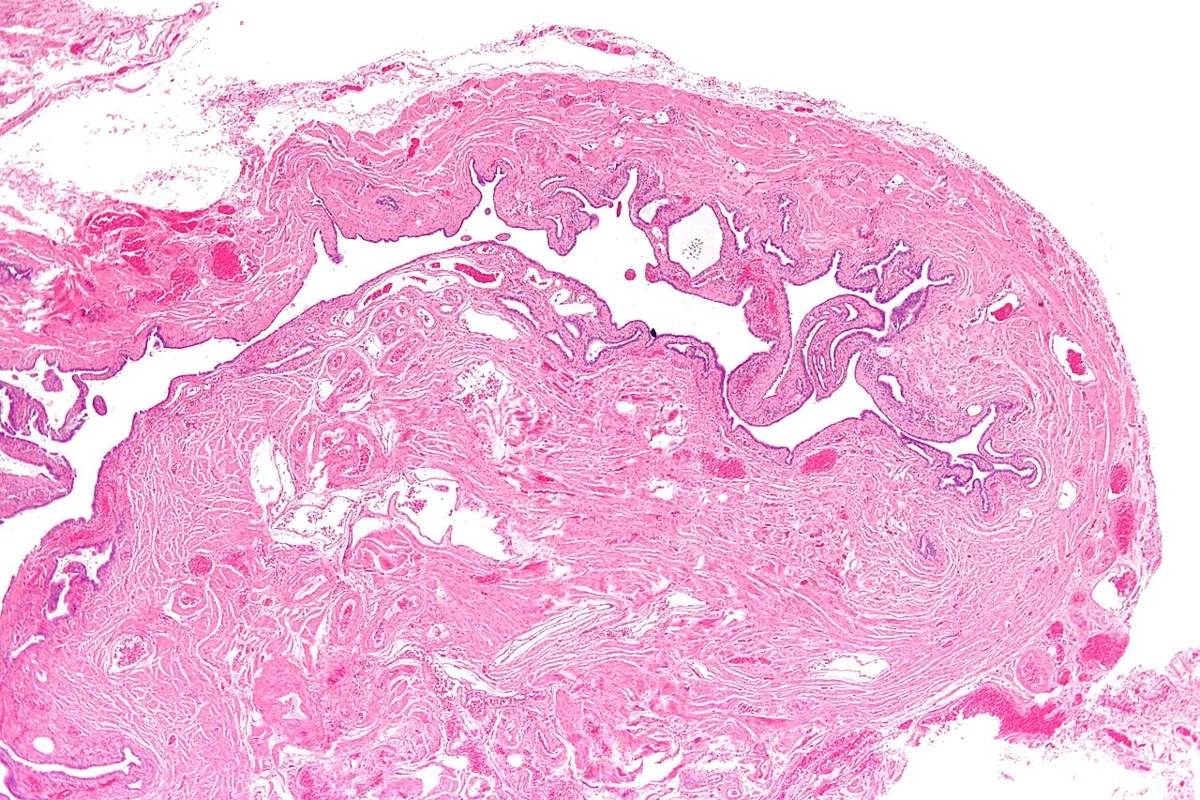 Histology & cytology
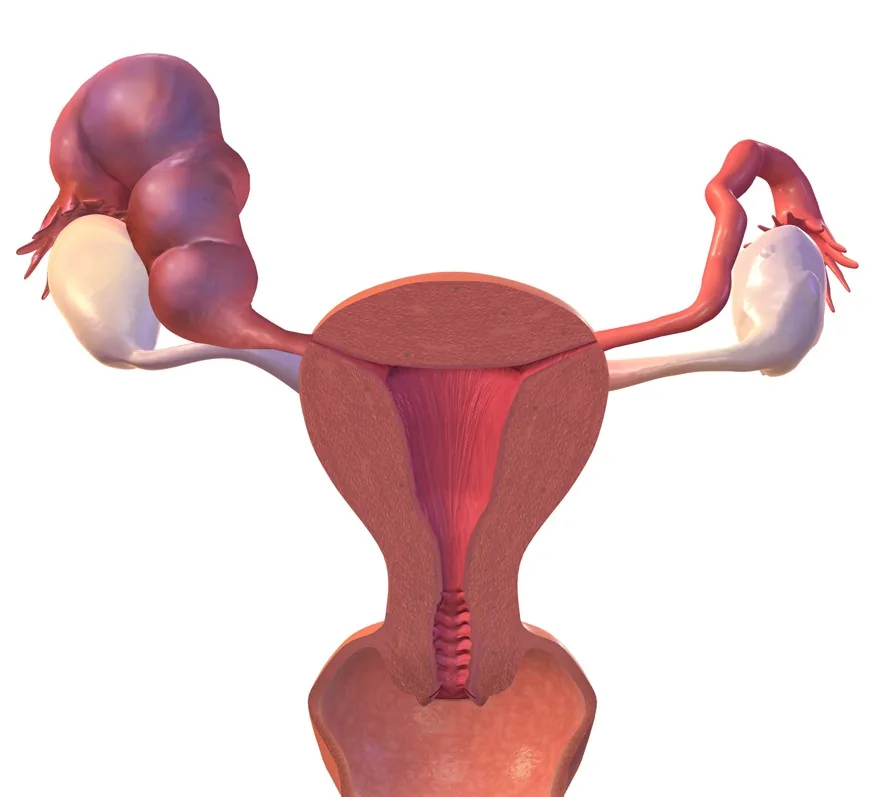 Diagram
Definition
When to Investigate
- Definition of sterility: no conception after 12 months.
- Age at which to start earlier: from age 35 (declining oocyte reserve).
- Primary vs. secondary sterility: primary: never been pregnant.
- Infertility denotes failure to conceive despite regular unprotected intercourse for 12 months, or for 6 months in women older than 35.
- With frequent unprotected intercourse, about 70% of couples conceive within 3 months, 80% within 6 months and 90% within one year.
Classification
- By cause, sperm disorders, ovulatory dysfunction, diminished ovarian reserve, tubal factors, endometriosis, uterine or other pelvic abnormalities, cervical factors and unexplained infertility are distinguished.
Occurrence & epidemiology
Epidemiology
- Up to 15% of couples worldwide are affected.
- A male factor, alone or together with a female factor, is involved in about half of cases.
Aetiopathogenesis
Sorting the Causes
- Uterine causes: fibroids, polyps, synechiae, septa.
- Endocrine causes: PCOS, hyperprolactinemia, thyroid disease.
- Peritoneal cause: endometriosis/adenomyosis with adhesions.
Aetiology and pathogenesis
- Ovulatory dysfunction accounts for about 21–25% of cases; polycystic ovary syndrome is the most common cause of anovulatory infertility (up to 80%), others being hyperprolactinaemia, functional hypothalamic amenorrhoea and thyroid dysfunction.
- Ovarian reserve is often diminished beyond the age of 35, with an accelerated decline around 37–38; endometriomas, pelvic infections, smoking and obesity can also reduce it.
- Tubal factors (11–67% of cases) can arise from fibrosis and tubal occlusion after salpingitis in the setting of pelvic inflammatory disease.
- Uterine causes include leiomyomas, endometrial polyps and intrauterine adhesions (Asherman syndrome); endometriosis is reported as the cause in 6–40% of cases.
- Smoking and excessive alcohol or caffeine consumption can impair fertility; in 15–28% the cause remains unexplained.
Clinical features
More facts from the study questions
- The investigation includes genetic causes (karyotyping) and anatomical uterine factors in addition to coagulation.
- Investigating for antiphospholipid syndrome is a key part of coagulation screening for recurrent miscarriage.
- The definition of recurrent miscarriage is the occurrence of three or more consecutive miscarriages.
- Measurement of thyroid (TSH) and prolactin levels is not cycle-dependent.
- They are part of the basic work-up for subfertility.
- Proof of ovulation is established by the rise in progesterone during the luteal phase.
- The measurement is typically taken around day 21 of the cycle.
- Laparoscopy with chromopertubation is a procedure to check fallopian tube patency.
- An alternative, less invasive method is contrast-enhanced sonography.
- Basal hormone diagnostics (FSH, LH, oestradiol, testosterone, AMH) are performed at the beginning of the cycle.
- The leading symptom is the unfulfilled wish for a child, frequently accompanied by anxiety, sadness, guilt and sometimes depression.
- Clues to the cause include menstrual irregularities, signs of hyperandrogenism such as hirsutism or acne, and uterine or adnexal findings such as leiomyomas or endometriomas.
Diagnosis
In the Woman
- Hormone lab tests on the correct day: FSH, LH, E2, testosterone, AMH on day 2–5.
- Measured regardless of the cycle day: TSH and prolactin.
- Proof of ovulation having occurred: progesterone rise in luteal phase (approx. day 21).
- What is looked for on ultrasound: fibroids, polyps, adenomyosis, uterine anomaly.
- Checking tubal patency: laparoscopy with chromopertubation.
In the Man
- Basic investigation: semen analysis per current WHO criteria.
- Proportion of male causes: approx. 1/3, plus 1/3 combined causes.
- A serum progesterone of at least 3 ng/mL about one week before the next menstrual period indicates that ovulation has occurred; the basal body temperature chart is often inaccurate.
- Ovarian reserve is assessed most sensitively by AMH and the antral follicle count on ultrasound, as FSH rises only late; TSH and prolactin are measured when cycles are disturbed.
- Tubal patency is assessed by hysterosalpingography, sonography with intrauterine fluid instillation or laparoscopy; laparoscopy is considered the gold standard for tubal abnormalities.
- The uterine cavity is first assessed by transvaginal ultrasound; hysteroscopy is the gold standard for intrauterine pathology.
- Because about half of cases involve a male factor, both partners are evaluated, the man with semen analysis.
Keep learning in the app
Further reading (selection)
Cross-references
Note: Learning content from the GynFuchs app (flashcards, exam questions, image cases) for medical education – not a treatment recommendation and no substitute for diagnosis or treatment decisions in individual cases. Treatment and management are deliberately not covered on this page.