Male breast cancer
Exam relevance: in 1 of 197 board exam reports · rank 171
- Specialty
- Gynaecology · Breast
- Images
- Histology & cytology 2
- Exam relevance
- 1 of 197 reports · rank 171
- Last updated
- 10/2026 · Dr. Pascal Bafteh
Contents
Images (2)
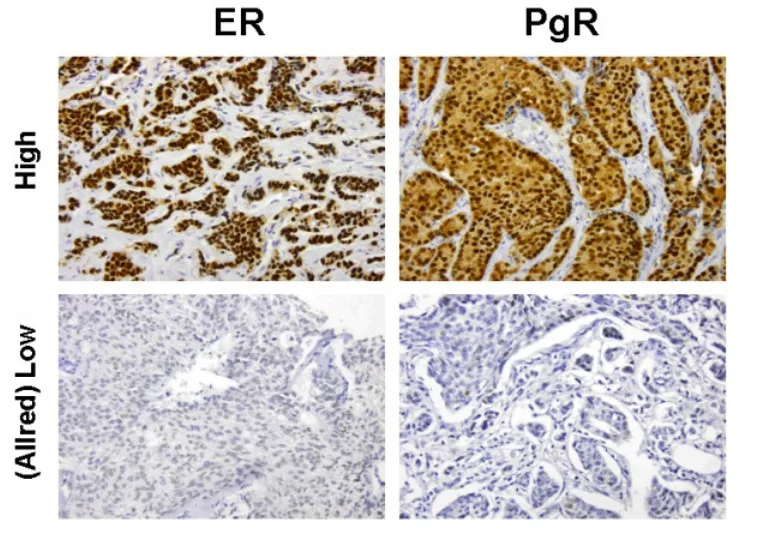 Histology & cytology
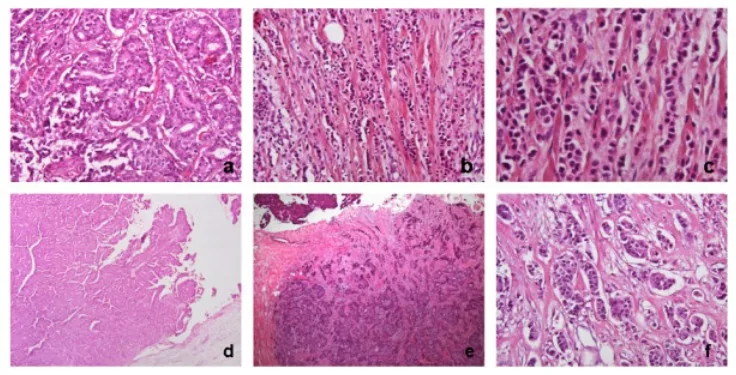 Histology & cytology
Occurrence & epidemiology
Epidemiology
- Male breast cancer is rare: fewer than 1% of all breast cancers occur in men.
- The mean age at diagnosis is between 60 and 70 years, but men of any age can be affected.
Aetiopathogenesis
Aetiology and risk factors
- Risk factors are older age, breast cancer in female relatives and germline variants in BRCA2 or BRCA1, the risk being higher with BRCA2.
- Variants in PTEN, TP53 (Li-Fraumeni syndrome) and PALB2 are also discussed.
- Raised oestrogen levels, for example in Klinefelter syndrome, liver cirrhosis, obesity or testicular conditions such as orchitis and undescended testis, and previous exposure of the chest to ionising rays increase the risk.
Clinical features
- Most present with a retroareolar mass; other signs are nipple retraction, bleeding from the nipple, skin ulceration, peau d’orange and palpable axillary lymph nodes.
- Because of diagnostic delay, breast cancer in men is more often found at an advanced stage.
Histology
- The commonest type is invasive ductal carcinoma, while invasive lobular carcinoma is very rare.
- Almost all tumours are hormone receptor positive; in one series 99% were oestrogen receptor positive, 82% progesterone receptor positive and 9% HER2 positive.
Diagnosis
- Imaging comprises mammography and ultrasound; suspicious findings are confirmed by core biopsy, and oestrogen receptor, progesterone receptor and HER2 are assessed on tumour tissue.
Keep learning in the app
Further reading (selection)
Cross-references
More topics: Breast
Note: Learning content from the GynFuchs app (flashcards, exam questions, image cases) for medical education – not a treatment recommendation and no substitute for diagnosis or treatment decisions in individual cases. Treatment and management are deliberately not covered on this page.