Gianotti-Crosti syndrome (papular acrodermatitis of childhood)
Exam relevance: in 2 of more than 50 board exam reports · rank 69
- Synonyms
- papulöse Akrodermatitis, Acrodermatitis papulosa eruptiva infantilis, Gianotti-Crosti, Gianotti-Crosti syndrome, papular acrodermatitis of childhood
- Specialty
- Dermatology · Viral infections
- Images
- Clinical 3
- Last updated
- 10/2026 · Dr. Pascal Bafteh
Contents
Images (3)
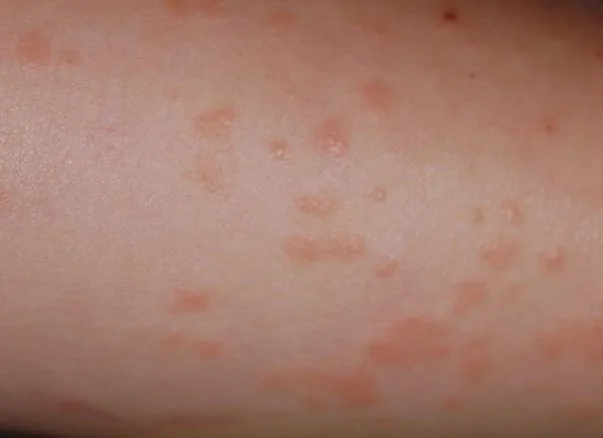
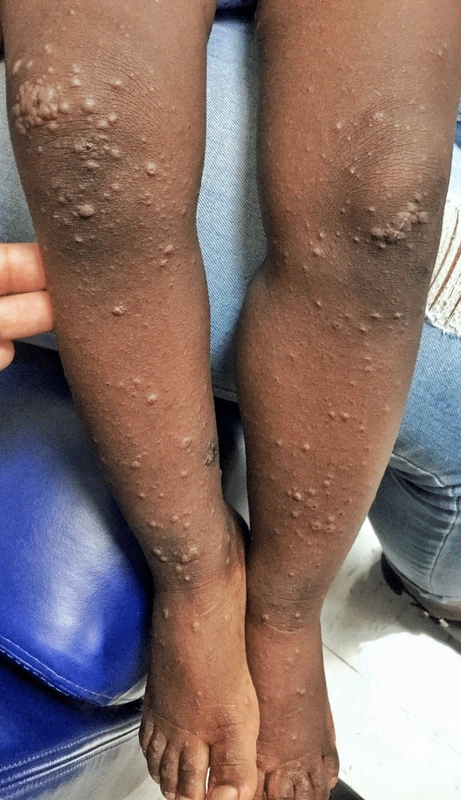
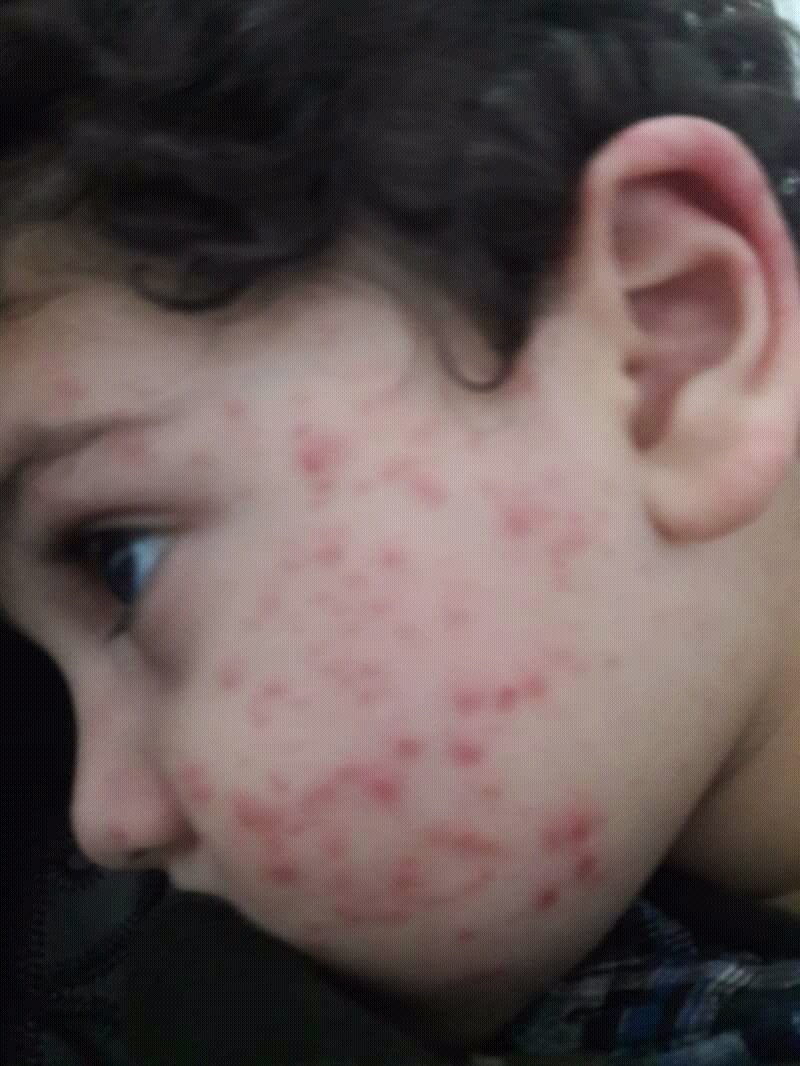
Definition
Gianotti-Crosti syndrome (papular acrodermatitis of childhood) is a characteristic skin response to viral infection with a papular rash that lasts for several weeks.
Occurrence & epidemiology
It mainly affects children between 6 months and 12 years and is rare in adults. Cases often cluster, frequently after an upper respiratory infection. Described triggers include hepatitis B, Epstein-Barr virus (now the most common association), cytomegalovirus, enteroviruses, echoviruses, RSV and SARS-CoV-2.
Clinical features
- Develops over 3–4 days: profuse dull red papules first on the thighs and buttocks, then on the outer aspects of the arms and finally on the face; usually symmetrical, the trunk is largely spared.
- Individual papules 5–10 mm, deep red, later often purple on the legs due to capillary leakage; vesicles may develop.
- Usually not itchy.
Diagnosis
- The clinical appearance is characteristic; many children need no tests.
- If needed, blood count, liver function and viral serology or PCR.
Treatment principles
- Gianotti-Crosti syndrome resolves spontaneously within weeks to months, and no specific treatment is required.
- For pruritus, emollients, low-potency topical glucocorticoids or oral antihistamines can be used.
- Reassuring parents about the benign course is important; the triggering viral infection is investigated further only if clinically indicated.
Specific treatment regimens with drugs and doses are covered in the DermaFuchs app.
Keep learning in the app
References (selection)
Cross-references
Keep learning: test yourself
One question from the DermaFuchs app on Gianotti-Crosti syndrome (papular acrodermatitis of childhood) – tap an answer.
Question 1 of 1
Besides HBV, HHV6, Parvovirus B19, and Parainfluenza, which other virus is classically associated with Gianotti-Crosti Syndrome?
Answer
Correct: EBV. Epstein-Barr virus (EBV) is one of the common viral triggers for Gianotti-Crosti syndrome.
More questions like these – with explanations and spaced repetition – in the app.
Note: This page is intended for medical education and does not replace diagnosis or treatment decisions in individual cases.