Eclampsia
Exam relevance: in 7 of 197 board exam reports · rank 88
- Synonyms
- eclamptic seizure
- Specialty
- Obstetrics · Pregnancy disorders
- Images
- Mammography/MRI 1
- Exam relevance
- 7 of 197 reports · rank 88
- In the app
- 1 flashcards · GynFuchs
- Last updated
- 10/2026 · Dr. Pascal Bafteh
Contents
Images (1)
Definition
Eclamptic seizure
- A tonic-clonic seizure in the context of a hypertensive disorder of pregnancy is called eclampsia, provided that no other cause is present.
- Possible prodromal symptoms include headache, visual disturbances, upper abdominal pain, and restlessness, as well as hyperreflexia.
- Eclampsia denotes new-onset tonic-clonic, focal or multifocal seizures in hypertensive disorders of pregnancy that are not explained by epilepsy or cerebrovascular events.
- It can also occur without preceding signs of pre-eclampsia such as hypertension or proteinuria.
Classification
- It can occur before, during or after labour; postpartum it typically presents within 48 hours, with the risk remaining raised during the first week.
- New-onset hypertension between 48 hours and 6 weeks after birth is classified as late postpartum pre-eclampsia.
Occurrence & epidemiology
Epidemiology
- Worldwide, eclampsia is reported in about 1.4% of births and pre-eclampsia in 4.6%; rates are higher in developing countries.
- Pre-eclampsia and eclampsia account for up to 14% of all maternal deaths worldwide.
Aetiopathogenesis
Aetiology and risk factors
- Risk factors correspond to those of pre-eclampsia, for example previous pre-eclampsia, multiple pregnancy, renal and autoimmune disease, diabetes mellitus, chronic hypertension, first pregnancy, age 35 years or older, obesity and pre-eclampsia in a first-degree relative.
- Uteroplacental ischaemia releases pro-inflammatory cytokines and anti-angiogenic factors; endothelial dysfunction disrupts the blood-brain barrier and cerebral autoregulation, and oedema and a disturbed neuronal microenvironment trigger the seizures.
Clinical features
Clinical features and complications
- Up to 83% of cases of eclampsia are preceded by prodromal symptoms: severe, frontal or atypical headache, visual disturbances (blurred vision, scotomata, photopsia, diplopia, transient blindness) and right upper quadrant or epigastric pain; however, more than one third occur suddenly without warning.
Diagnosis
- Investigations assess blood pressure, proteinuria and end-organ damage such as pulmonary oedema and impaired liver or kidney function.
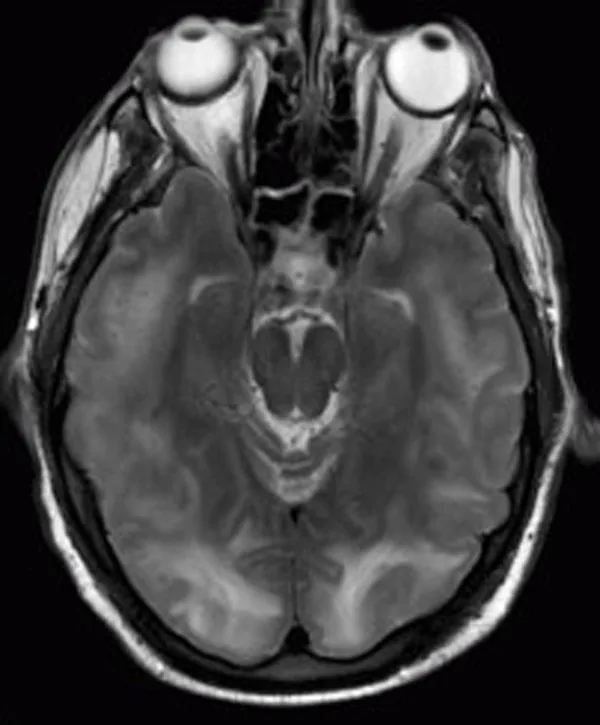
- In new-onset seizures, altered mental status or focal deficits, non-contrast CT or MRI of the head is used to detect intracranial causes.
Keep learning in the app
Further reading (selection)
Cross-references
Note: Learning content from the GynFuchs app (flashcards, exam questions, image cases) for medical education – not a treatment recommendation and no substitute for diagnosis or treatment decisions in individual cases. Treatment and management are deliberately not covered on this page.