HELLP syndrome
Exam relevance: in 10 of 197 board exam reports · rank 66
- Specialty
- Obstetrics · Pregnancy disorders
- Images
- Ultrasound 1 · Histology & cytology 1
- Exam relevance
- 10 of 197 reports · rank 66
- In the app
- 1 flashcards · GynFuchs
- Last updated
- 10/2026 · Dr. Pascal Bafteh
Contents
Images (2)
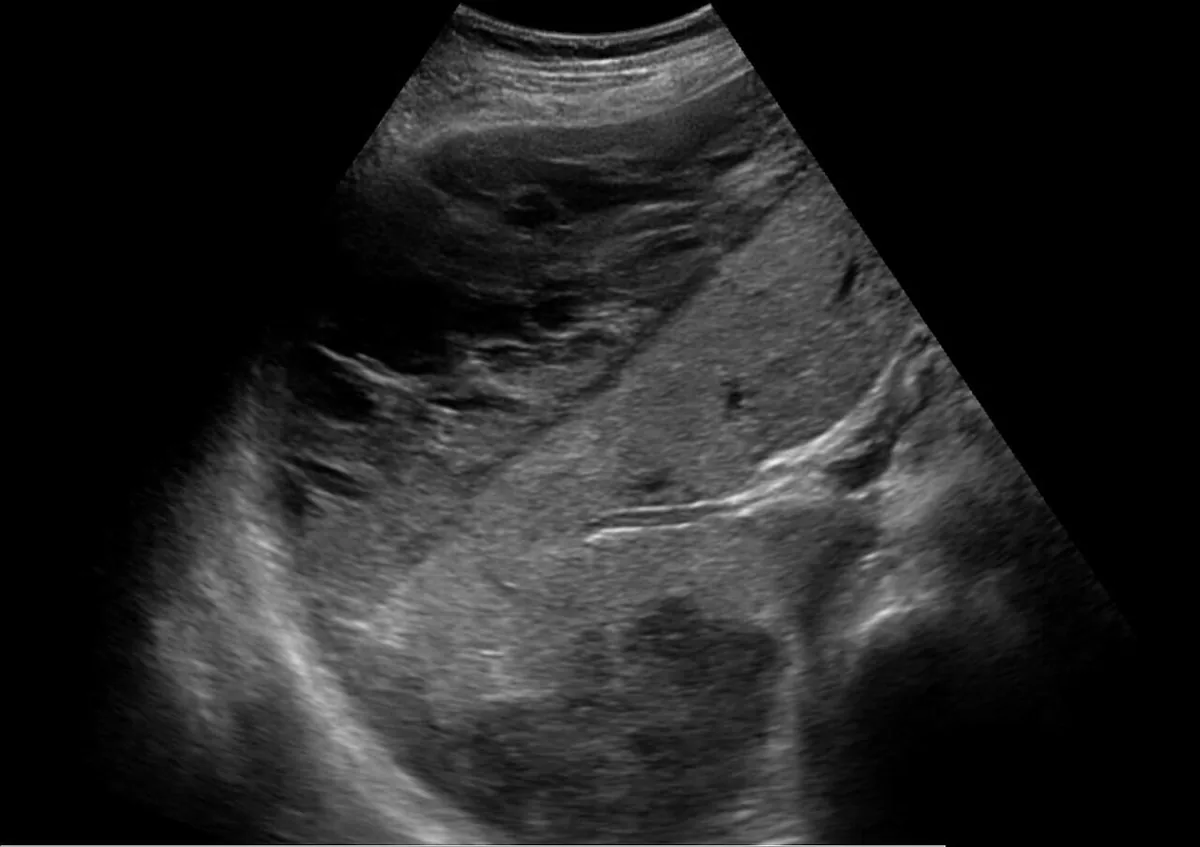 Ultrasound
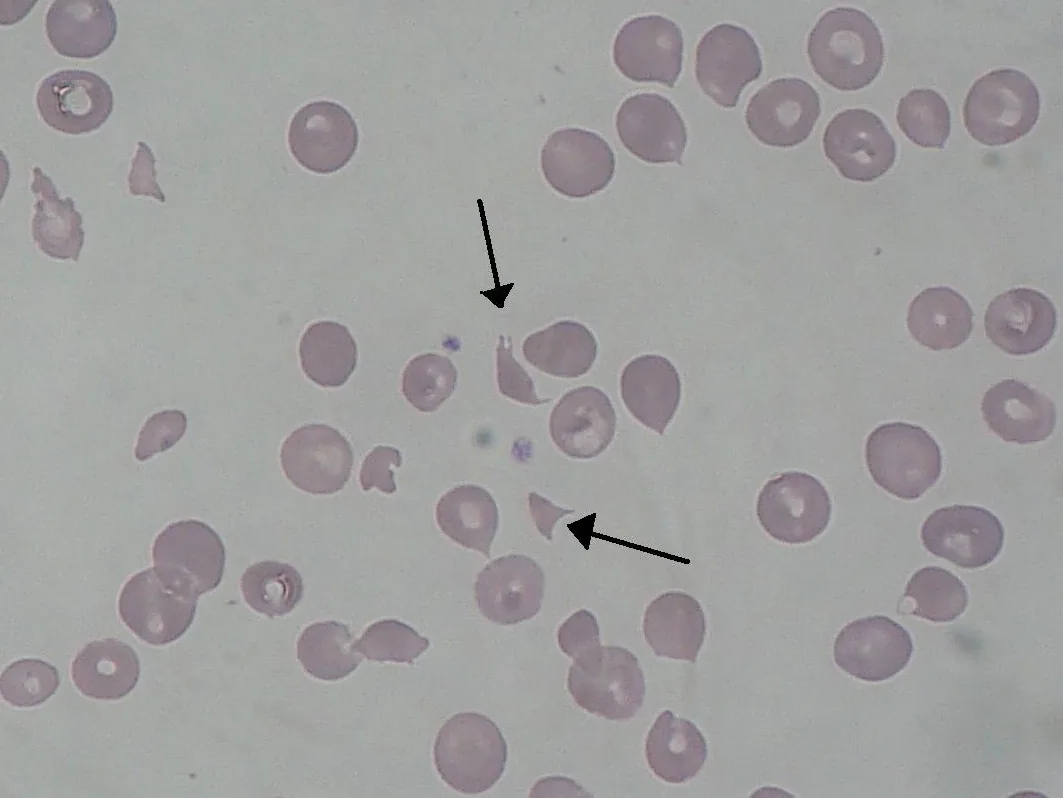 Histology & cytology
Definition
Definition and laboratory findings
- The acronym HELLP stands for Haemolysis, Elevated Liver enzymes, and thrombocytopenia (low platelets).
- Signs of haemolysis include fragmentocytes, elevated bilirubin, elevated LDH, and decreased haptoglobin.
- The platelet count is by definition below < 100,000/µl.
- HELLP syndrome denotes the combination of haemolysis with a microangiopathic blood film, elevated liver enzymes and a low platelet count in pregnant and postpartum women.
- It is regarded as a complication or progression of severe pre-eclampsia; however, preceding hypertension or proteinuria is absent in at least 15–20%.
Classification
- Complete HELLP syndrome requires all three components, partial or incomplete HELLP syndrome only one or two.
- The Tennessee classification defines the complete syndrome (platelets up to 100,000/µL, AST 70 U/L or more, LDH 600 U/L or more); the Mississippi classification subdivides by platelet nadir into class 1 (up to 50,000/µL), class 2 (above 50,000 to 100,000/µL) and class 3 (above 100,000 to 150,000/µL).
Occurrence & epidemiology
Epidemiology
- Its frequency is reported as about 0.2–0.9% of all pregnancies; it occurs in 10–20% of women with severe pre-eclampsia or eclampsia.
- About 70% of cases develop before birth, mostly between 27 and 37 weeks; the remainder within 48 hours after birth.
Aetiopathogenesis
Aetiology and risk factors
- The haemolysis is microangiopathic: red cells are fragmented as they pass through damaged endothelium; platelets are activated at the damaged endothelium and consumed at an increased rate.
- Risk factors include pre-eclampsia or HELLP syndrome in a previous pregnancy, multiparity and older age; a genetic predisposition has also been described.
Clinical features
Clinical presentation and pitfalls
- The leading symptom is right-sided/epigastric upper abdominal pain.
- A clinical pitfall is that a proportion of patients have no hypertension/proteinuria.
- About one-third of cases first manifest postpartum, within 48 hours.
Clinical features and complications
- Typical features are right upper quadrant or epigastric pain, often fluctuating and colicky, with nausea and vomiting; malaise often precedes presentation by some days, and excessive weight gain and generalised oedema precede the syndrome in more than half of cases.
- Complications include placental abruption (9–20%), disseminated intravascular coagulation (5–56%), acute renal failure (7–36%), eclampsia (4–9%), pulmonary and cerebral oedema, subcapsular liver haematoma and hepatic rupture.
Diagnosis
- Haemolysis is shown by an abnormal blood film with schistocytes, raised bilirubin and LDH above 600 U/L; a low or undetectable haptoglobin is the more specific marker of haemolysis.
- Most patients have hypertension and proteinuria, but in some they are absent.
Keep learning in the app
Further reading (selection)
Cross-references
Note: Learning content from the GynFuchs app (flashcards, exam questions, image cases) for medical education – not a treatment recommendation and no substitute for diagnosis or treatment decisions in individual cases. Treatment and management are deliberately not covered on this page.