Anaemia in pregnancy
Exam relevance: in 12 of 197 board exam reports · rank 59
- Synonyms
- anemia in pregnancy, iron deficiency
- Specialty
- Obstetrics · Pregnancy disorders
- Images
- Histology & cytology 2
- Exam relevance
- 12 of 197 reports · rank 59
- Last updated
- 10/2026 · Dr. Pascal Bafteh
Contents
Images (2)
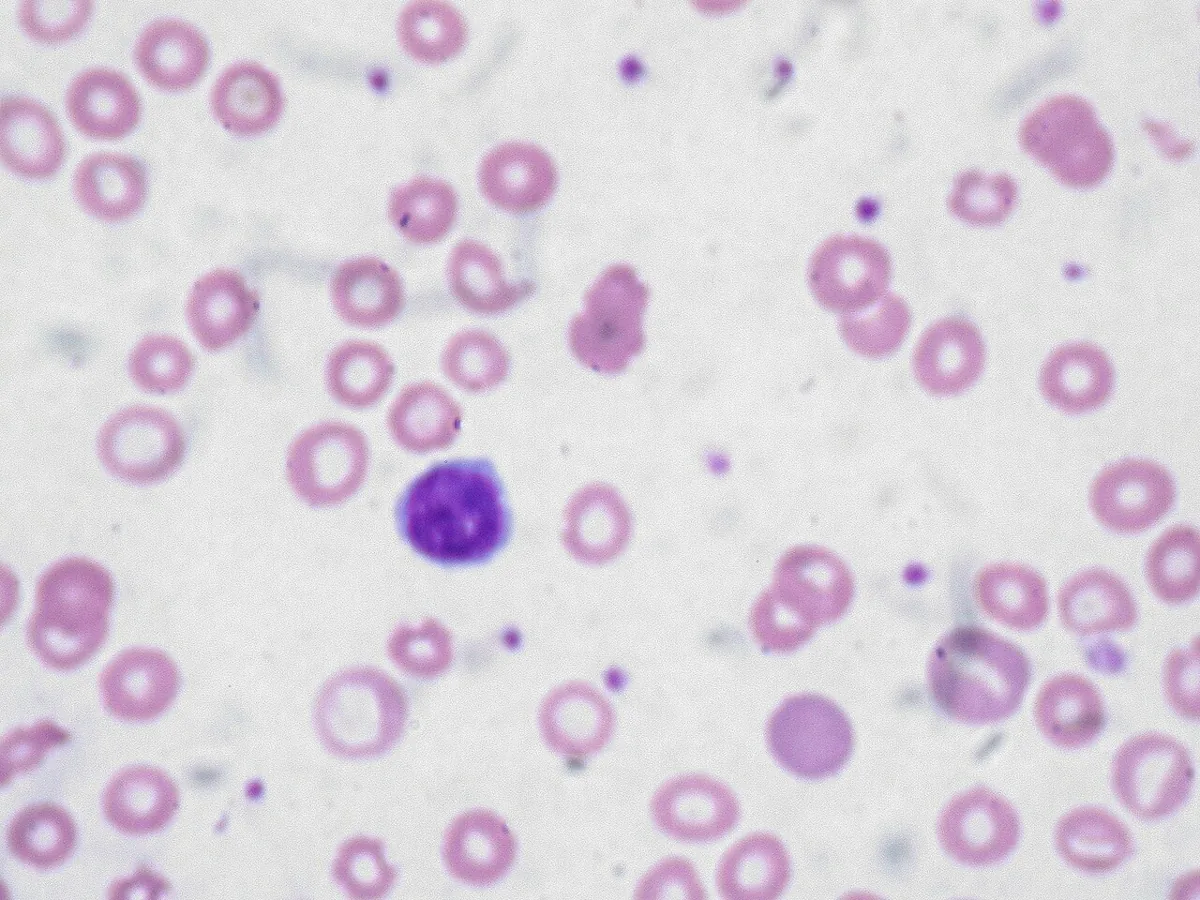 Histology & cytology
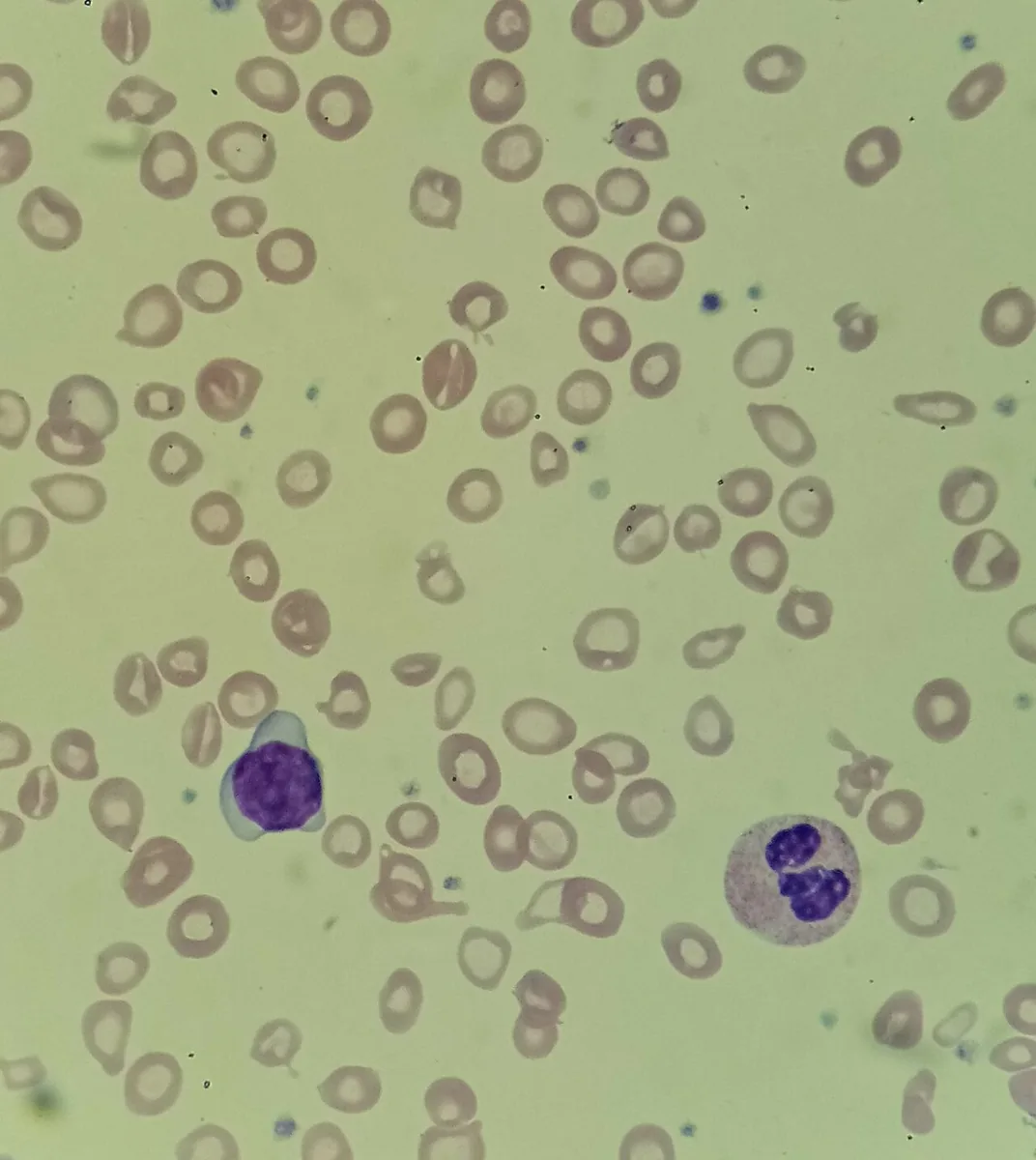 Histology & cytology
Definition
- Anaemia in pregnancy is a reduced haemoglobin concentration with trimester-dependent cut-offs; according to ACOG these are 11.0 g/dl in the first and third and 10.5 g/dl in the second trimester.
Occurrence & epidemiology
Epidemiology
- According to WHO estimates, about 37% of pregnant women worldwide are anaemic.
Aetiopathogenesis
Aetiology and pathogenesis
- From about 6 weeks, plasma volume increases disproportionately to red cell mass and at its peak is 40–50% above baseline, so that haemoglobin concentration falls by dilution.
- Among pathological causes, iron deficiency anaemia is the most common, particularly in high-income countries.
- Further causes include folate or vitamin B12 deficiency, infections such as malaria, chronic diseases and inherited red-cell disorders such as thalassaemia.
Clinical features
Clinical features and complications
- Common non-specific symptoms are tiredness, dizziness, headache and exertional breathlessness; severe anaemia can cause pale mucous membranes and rapid breathing and heart rate.
- Severe maternal iron deficiency appears to increase the risk of preterm birth, low birthweight and infant death.
Diagnosis
- Iron deficiency is usually defined clinically by a low serum ferritin or reduced transferrin saturation.
- A low ferritin always indicates iron deficiency; however, as an acute-phase reactant, ferritin may be normal despite iron deficiency in infection or inflammation.
- As iron deficiency progresses, first the MCV and then the MCHC fall, producing the typical microcytic hypochromic picture.
Keep learning in the app
Further reading (selection)
Cross-references
Note: Learning content from the GynFuchs app (flashcards, exam questions, image cases) for medical education – not a treatment recommendation and no substitute for diagnosis or treatment decisions in individual cases. Treatment and management are deliberately not covered on this page.