Lichen simplex chronicus
- Synonyms
- Neurodermitis circumscripta, Lichen Vidal, Lichenifikation, Lichen simplex, neurodermatitis, LSC
- Specialty
- Dermatology · Inflammatory skin diseases
- Images
- Clinical 6 · Histology 1
- Last updated
- 10/2026 · Dr. Pascal Bafteh
Contents
Images (7)
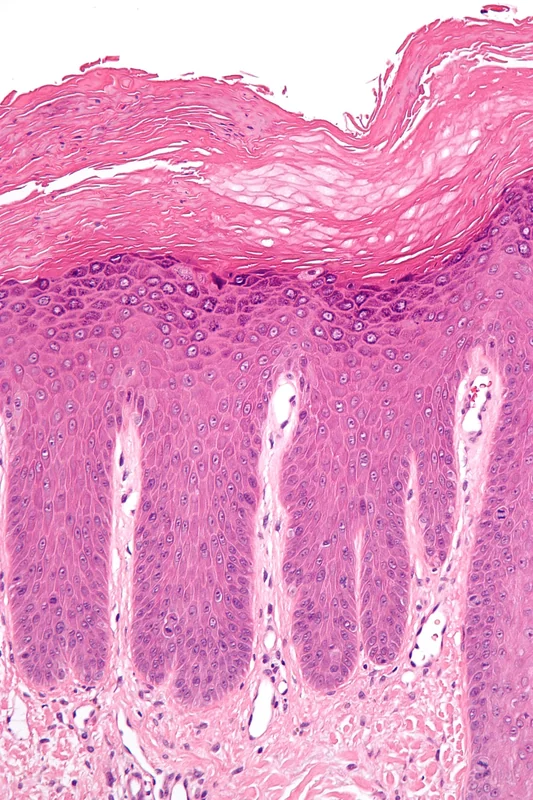 Histology
Definition
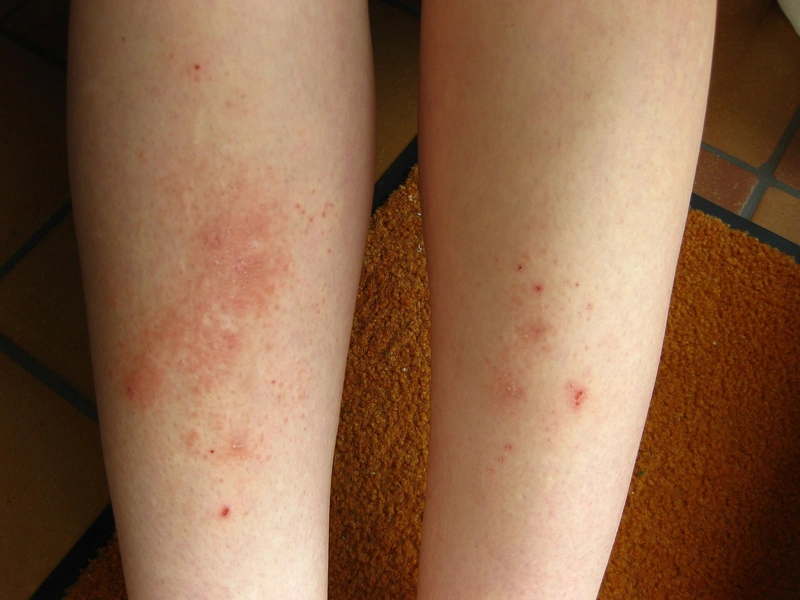
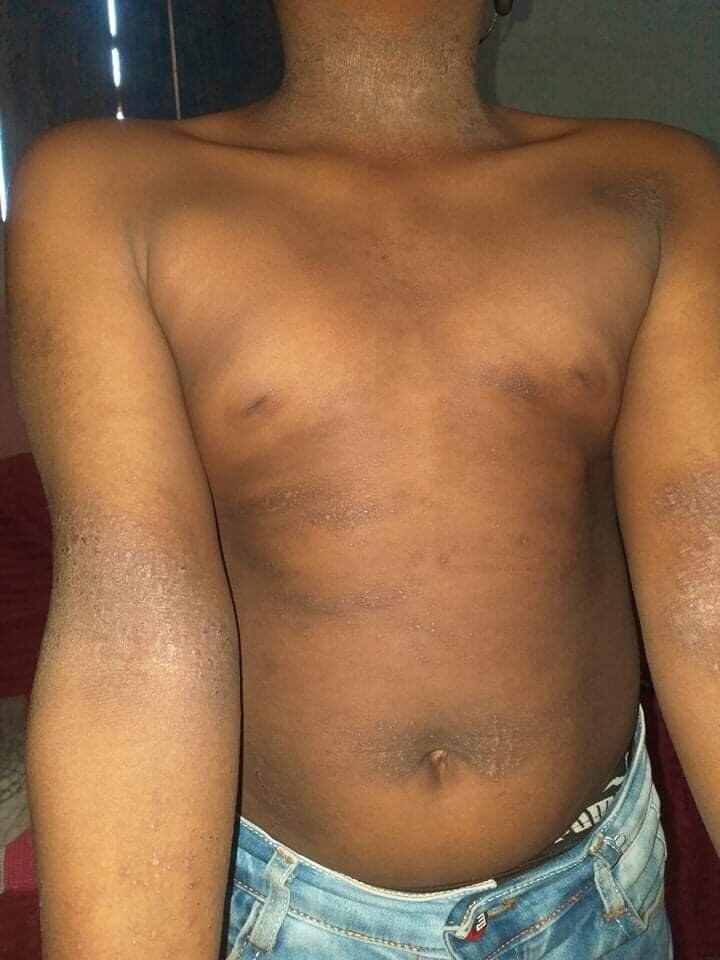
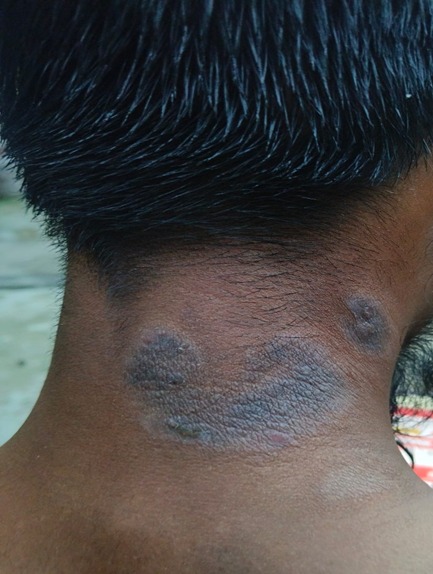
Lichen simplex chronicus (neurodermatitis circumscripta) is a chronic itchy skin disorder with well-demarcated, erythematous patches and plaques of thickened, leathery skin. It results from a chronic itch-scratch cycle.
Occurrence & epidemiology
It is relatively common, with a female preponderance of about 2:1, and occurs most often in people aged 30–50 years. It can occur in people with otherwise healthy skin, but also with psychiatric comorbidity, itchy skin diseases (particularly atopic eczema) and systemic diseases associated with itch.
Aetiopathogenesis
- Primary: on previously normal skin.
- Secondary: on an itchy skin disease such as atopic dermatitis, psoriasis, scabies or dry skin.
- Further causes of itch are neural (brachioradial pruritus, radiculopathy), systemic diseases (uraemia, polycythaemia vera, malignancy) and environmental factors such as heat and sweating.
Clinical features
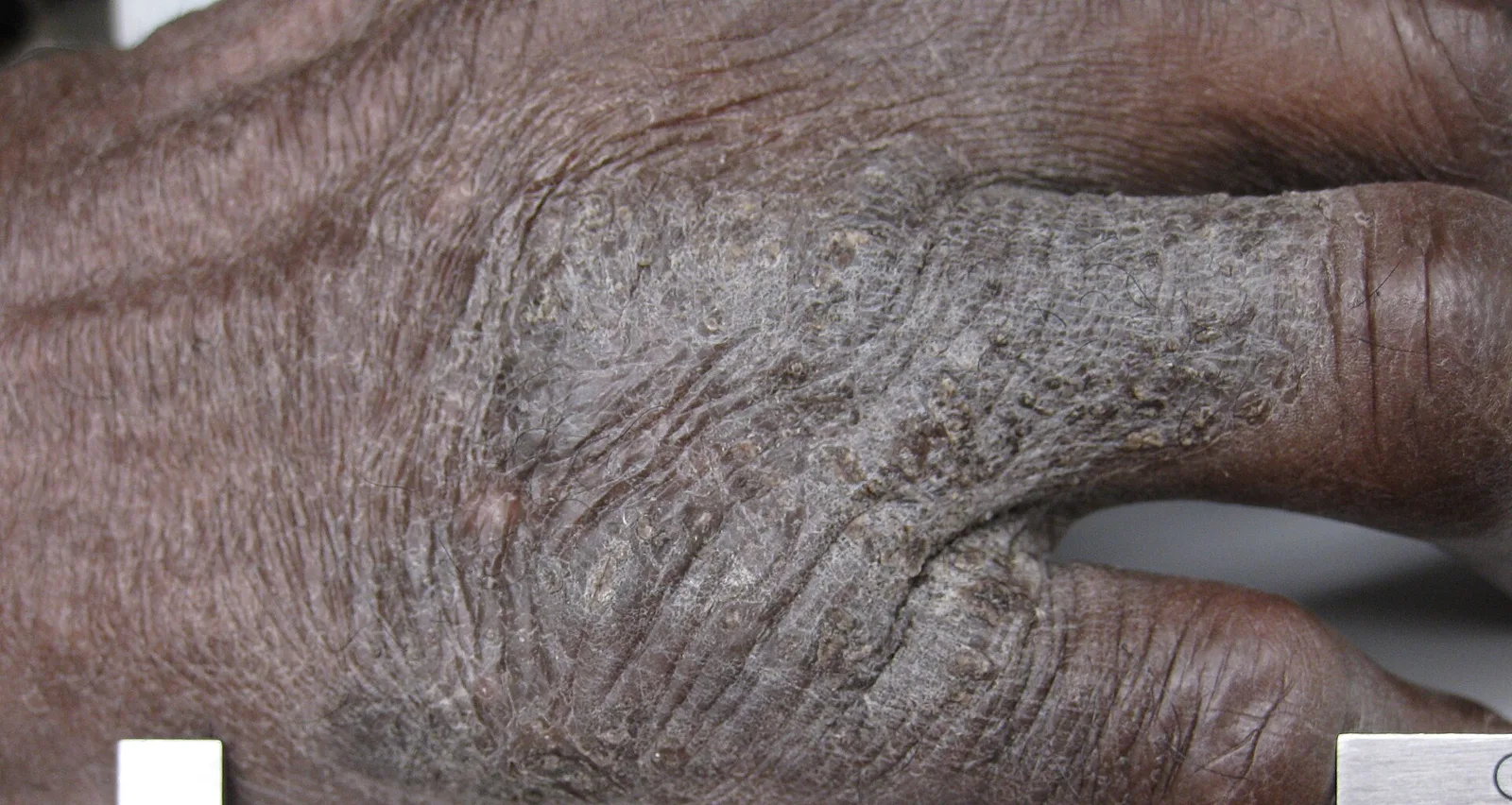
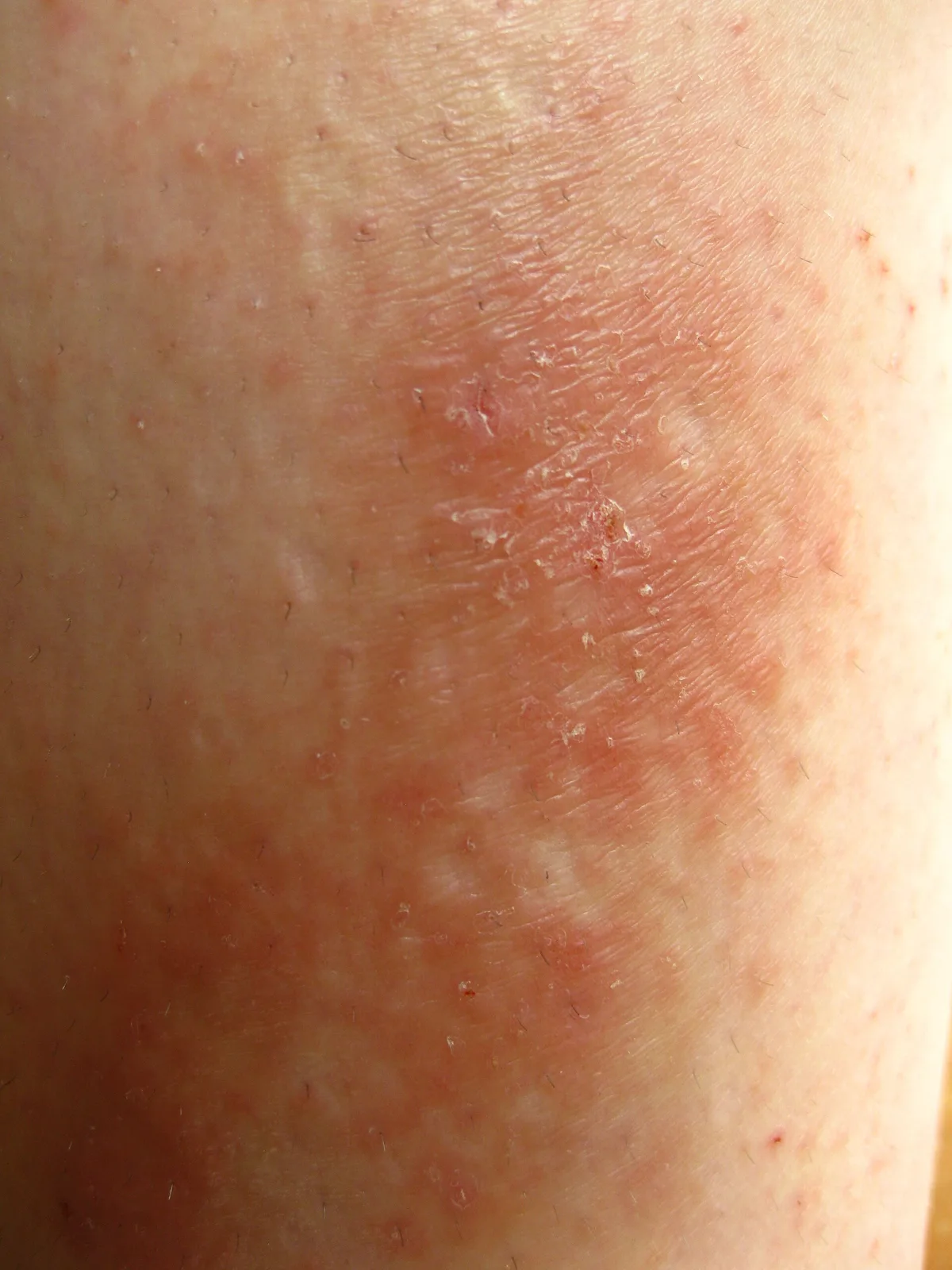
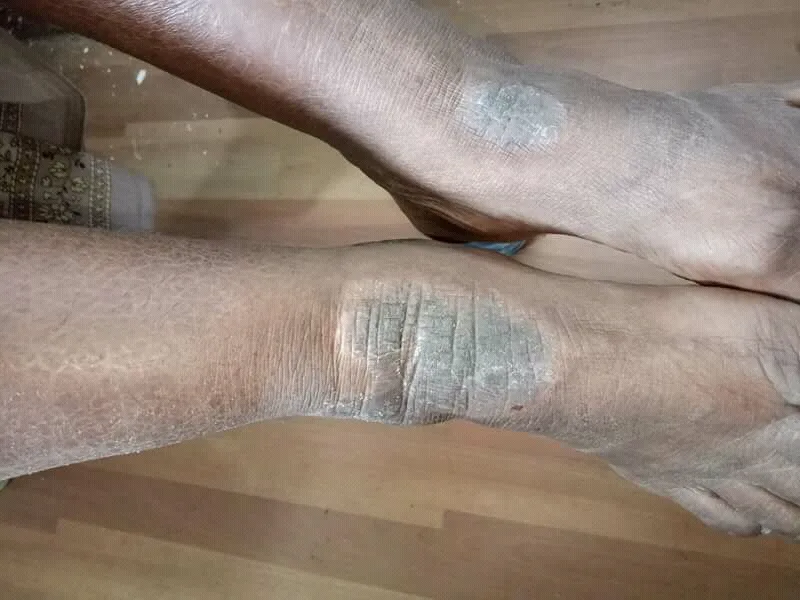
- One or more lichenified patches or plaques with exaggerated skin markings ("criss-cross" pattern).
- Hyper- or hypopigmentation (particularly in darker skin), scaling, thickening, excoriations, broken hairs or hair loss in the affected area.
- Mainly at sites that are easy to reach: neck and scalp, vulva, pubis and scrotum, wrists and extensor forearms, ankles, anterolateral shins and thighs.
Diagnosis
- Largely a clinical diagnosis.
- To exclude other causes: skin biopsy, patch testing (contact allergy), fungal culture (dermatophytes, Candida) and, if a systemic cause of itch is suspected, laboratory tests (thyroid, kidney and liver function, blood count) and imaging.
Treatment principles
- The aim is to break the itch-scratch cycle.
- Potent topical glucocorticoids are used, also under occlusion or intralesionally, together with occlusive dressings as a mechanical barrier against scratching, plus emollient care.
- Underlying dermatoses such as atopic eczema and psychological stress factors should be identified and treated.
Specific treatment regimens with drugs and doses are covered in the DermaFuchs app.
Keep learning in the app
References (selection)
Cross-references
Keep learning
Keep learning with flashcards, exam questions and spot diagnoses in the DermaFuchs app – free, in your browser or as an app.
Related pages: Lichenoid drug eruption · Behçet's disease · Grover's disease (transient acantholytic dermatosis)
Note: This page is intended for medical education and does not replace diagnosis or treatment decisions in individual cases.