Cervicitis
- Specialty
- Gynaecology · Cervix & HPV
- Images
- Colposcopy 2
- Last updated
- 10/2026 · Dr. Pascal Bafteh
Contents
Images (2)
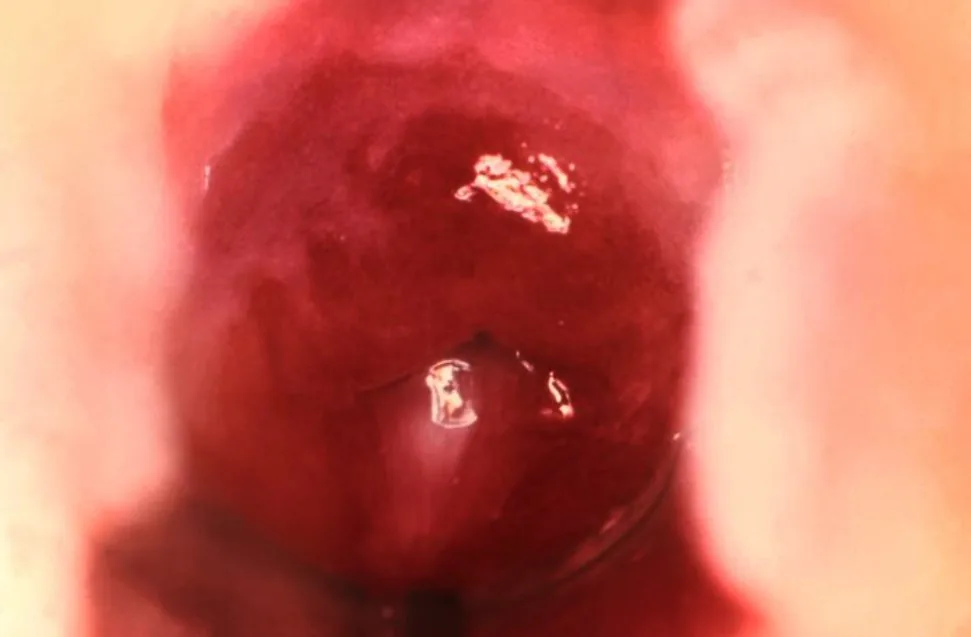 Colposcopy
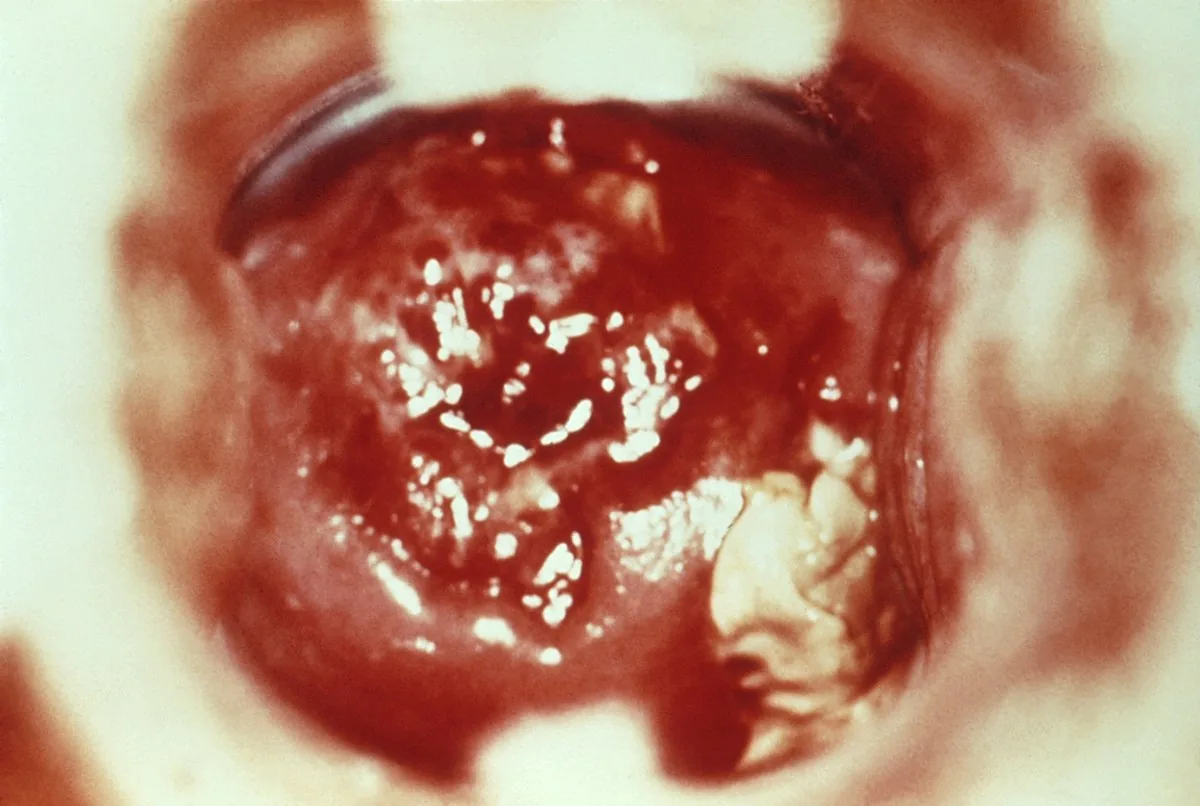 Colposcopy
Definition
- Cervicitis is infectious or non-infectious inflammation of the cervical epithelium; the mucus-secreting columnar epithelium of the endocervix is particularly susceptible to pathogens and irritants.
Occurrence & epidemiology
Epidemiology
- Cervicitis is common; the highest incidence is seen in women aged 15 to 24.
Aetiopathogenesis
Aetiology and risk factors
- Acute cervicitis is usually infectious, mostly due to sexually transmitted pathogens, whereas chronic cervicitis is usually non-infectious.
- The most common infectious cause is Chlamydia trachomatis, followed by Neisseria gonorrhoeae.
- Other causes include herpes simplex virus, Trichomonas vaginalis, bacterial vaginosis and Mycoplasma genitalium; often, however, no pathogen can be identified.
- Non-infectious causes include foreign bodies, chemical irritants, for example in douches, and allergens such as latex.
Clinical features
- Cervicitis is often asymptomatic; vaginal discharge, intermenstrual or postcoital bleeding and dyspareunia may occur.
- Ascending infection can cause endometritis or pelvic inflammatory disease and increases the risk of infertility and chronic pelvic pain.
Diagnosis
Typical imaging findings
- Colposcopy: The cervix is diffusely bright red over a broad area, the surface looks loosened and bleeds on contact with the swab. Cloudy mucus emerges from the os; no circumscribed lesion, no exophytic tumour.
- Colposcopy: The cervix is bright red with broad erosion, parts of the surface covered with yellowish fibrin. Purulent secretion comes from the os. The lesion is flat rather than exophytic and its margins blend into the reddened surroundings.
- Typical findings are purulent or mucopurulent cervical discharge, cervical friability, and cervical erythema and oedema.
- Punctate cervical haemorrhages (strawberry cervix) suggest trichomoniasis, and ulcers or erosions suggest herpes simplex infection.
- Nucleic acid amplification testing (NAAT) is the preferred test for identifying the causative organisms.
Keep learning in the app
Further reading (selection)
Cross-references
Note: Learning content from the GynFuchs app (flashcards, exam questions, image cases) for medical education – not a treatment recommendation and no substitute for diagnosis or treatment decisions in individual cases. Treatment and management are deliberately not covered on this page.