Cervical cancer
Exam relevance: in 17 of 197 board exam reports · rank 39
- Synonyms
- cancer of the cervix
- Specialty
- Gynaecology · Cervix & HPV
- Images
- Colposcopy 4 · Endoscopy & gross 1
- Exam relevance
- 17 of 197 reports · rank 39
- In the app
- 2 flashcards · GynFuchs
- Last updated
- 10/2026 · Dr. Pascal Bafteh
Contents
Images (5)
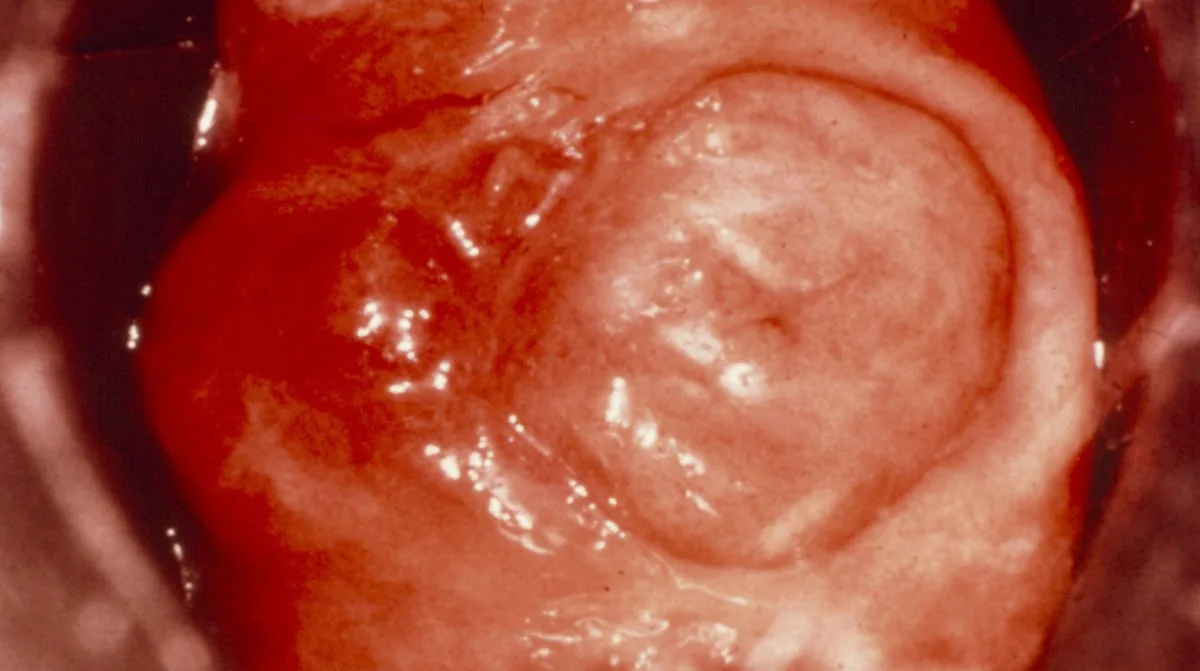 Colposcopy
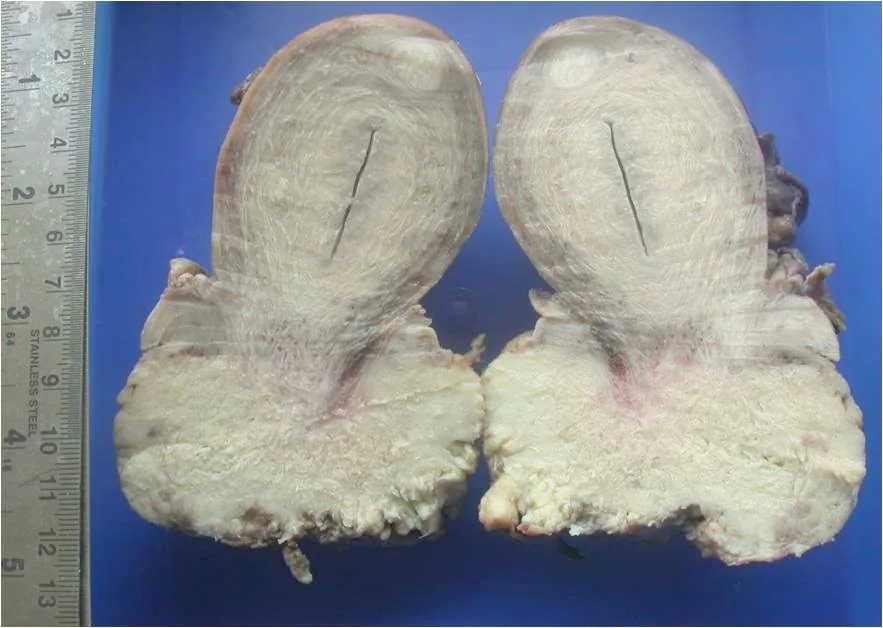 Endoscopy & gross
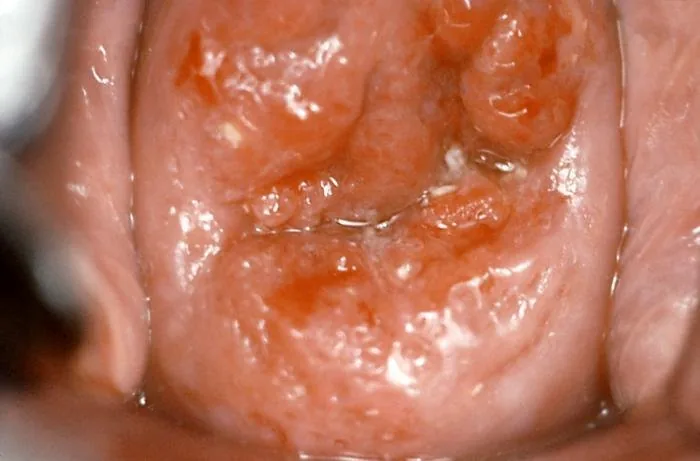 Colposcopy
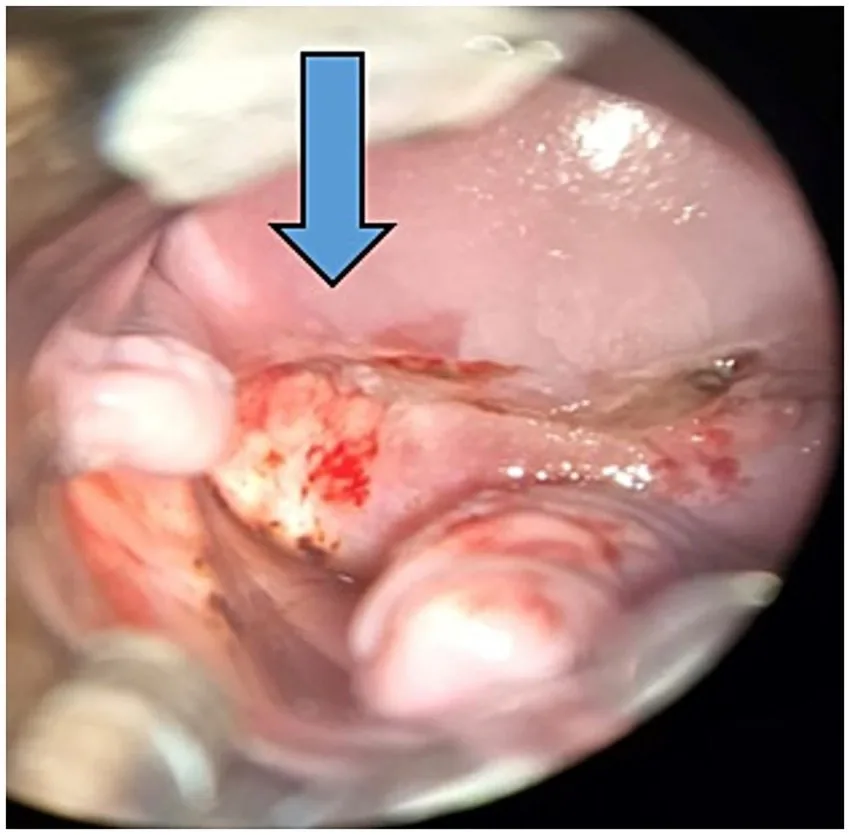 Colposcopy
 Colposcopy
Aetiopathogenesis
Risk factors
- The necessary factor: persistent infection with a high-risk HPV type — without HPV there is essentially no cervical cancer.
- Smoking raises the risk because carcinogens are detectable in cervical mucus and local immunity is weakened.
Clinical features
Symptoms — and why they come late
- Early stages are as a rule entirely asymptomatic.
- Later: contact or postcoital bleeding, foul-smelling, meat-water coloured discharge, intermenstrual and postmenopausal bleeding.
- Advanced: flank pain with hydronephrosis, leg oedema, sciatic pain, bladder and bowel symptoms.
Histology
- Most common type: squamous cell carcinoma.
- The proportion of adenocarcinomas is rising because they grow endocervically and are less accessible to cytology.
Diagnosis
How staging works today
- Since the 2018 revision, FIGO staging of cervical cancer is also imaging- and pathology-based, no longer purely clinical — and nodal status is included.
- Staging work-up: clinical examination, pelvic MRI, CT of chest/abdomen or PET-CT, cystoscopy/rectoscopy if indicated.
Typical imaging findings
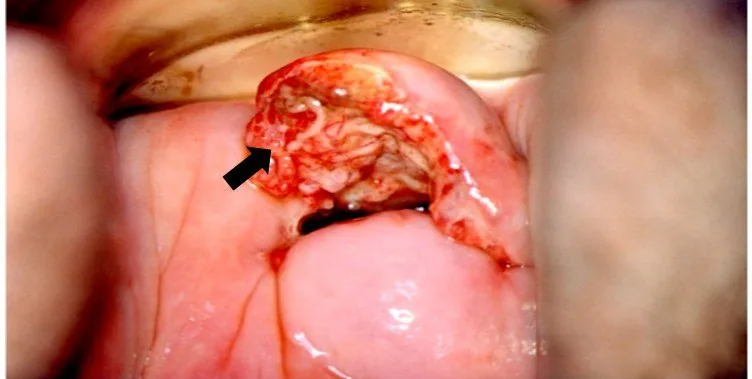
- Colposcopy: The cervix is replaced by an irregularly nodular, cauliflower-like tissue mass in which the os can no longer be identified. Its surface is friable and bleeds on contact, with necrotic material in several places.
- Colposcopy: An irregularly raised, whitish-grey area with a friable surface lies on the cervix and bleeds at the lightest touch. The os can no longer be reliably identified in this area and the tissue looks broken down.
Keep learning in the app
Further reading (selection)
Cross-references
Note: Learning content from the GynFuchs app (flashcards, exam questions, image cases) for medical education – not a treatment recommendation and no substitute for diagnosis or treatment decisions in individual cases. Treatment and management are deliberately not covered on this page.