Cervical polyp and ectropion
Exam relevance: in 2 of 197 board exam reports · rank 144
- Specialty
- Gynaecology · Cervix & HPV
- Images
- Ultrasound 3 · Colposcopy 3 · Endoscopy & gross 1 · Clinical 1
- Exam relevance
- 2 of 197 reports · rank 144
- In the app
- 2 flashcards · GynFuchs
- Last updated
- 10/2026 · Dr. Pascal Bafteh
Contents
Images (8)
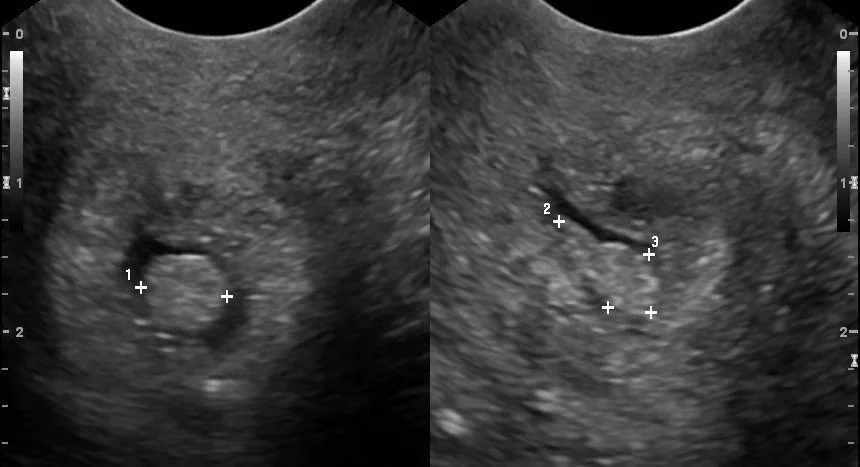 Ultrasound
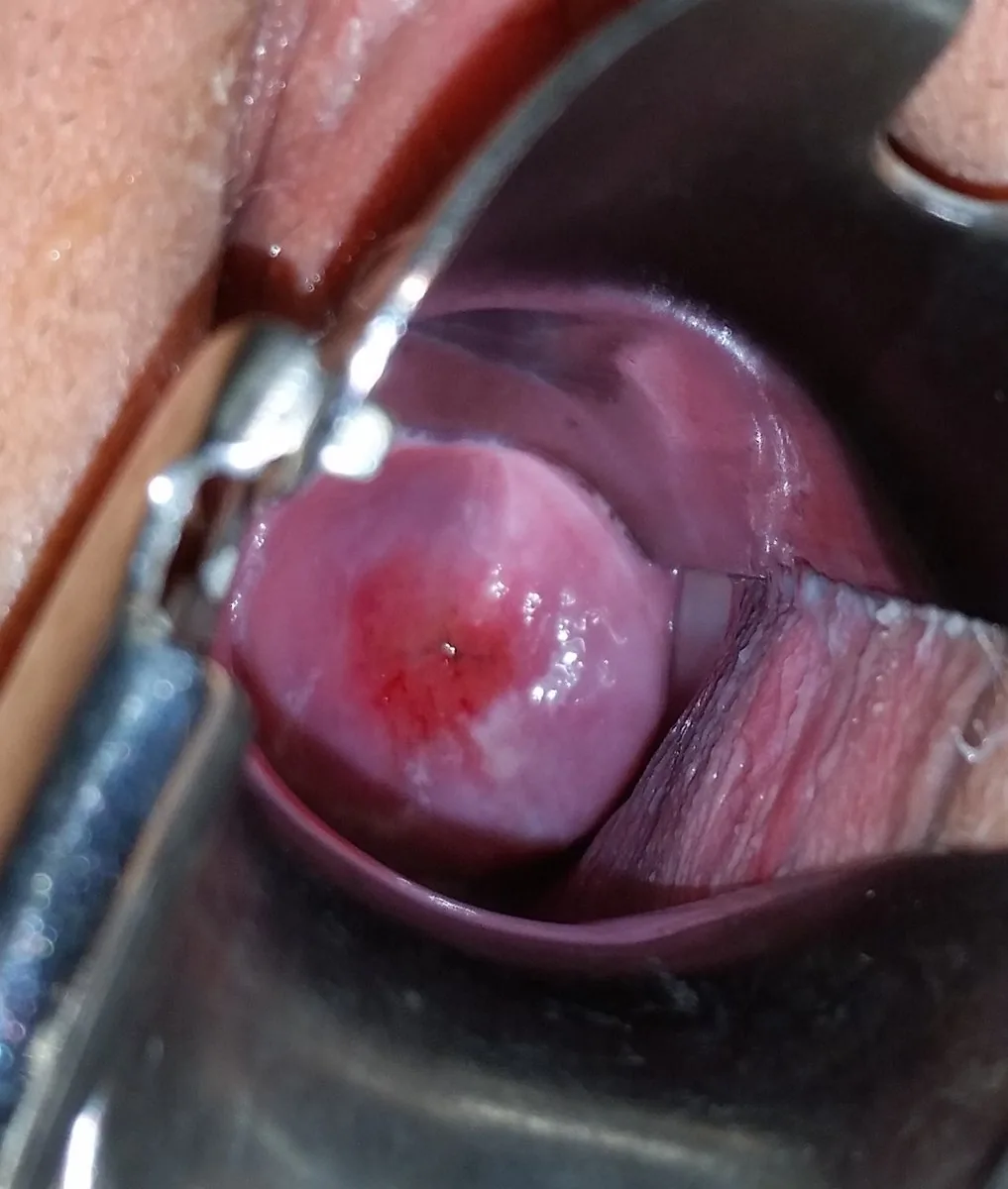 Colposcopy
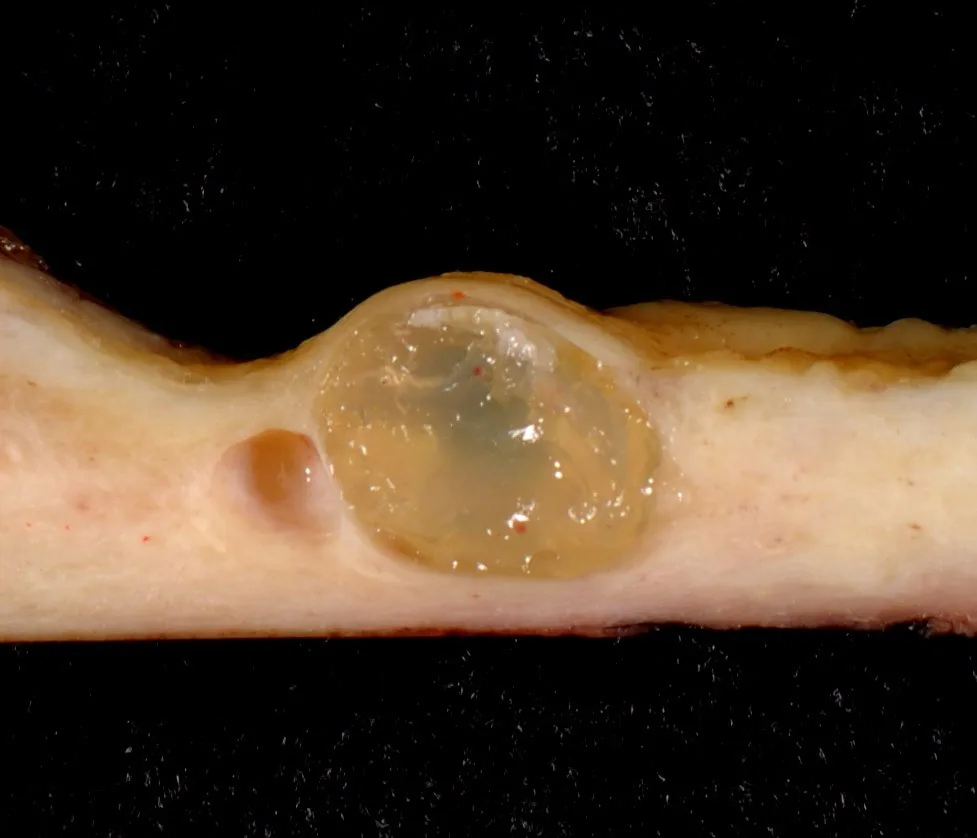 Endoscopy & gross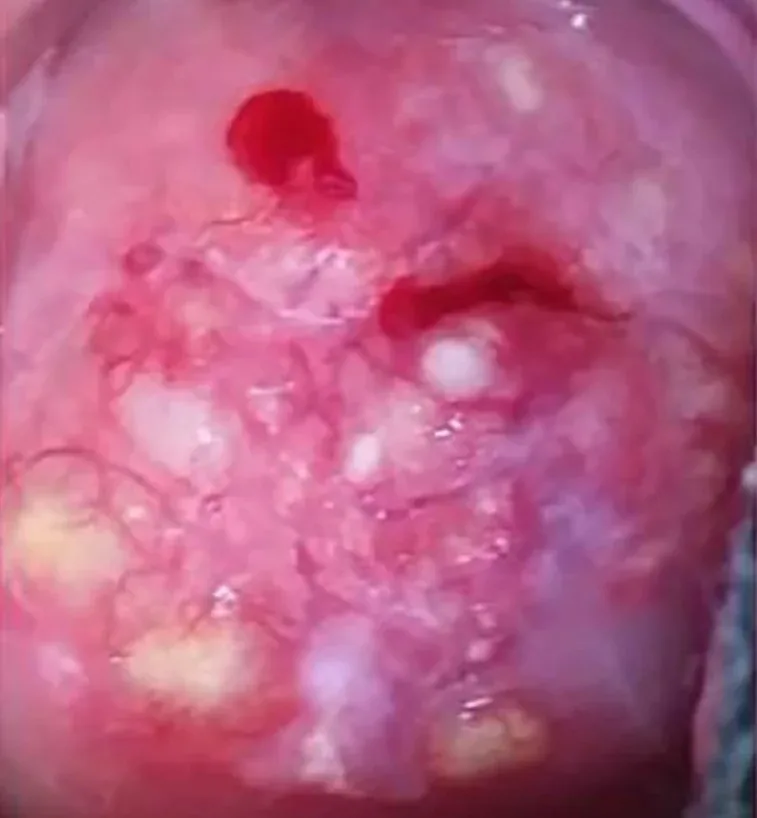
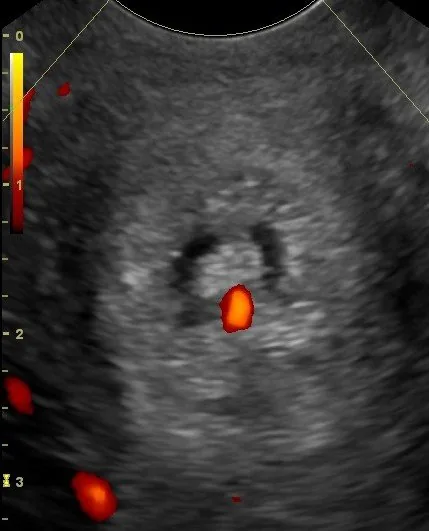 Ultrasound
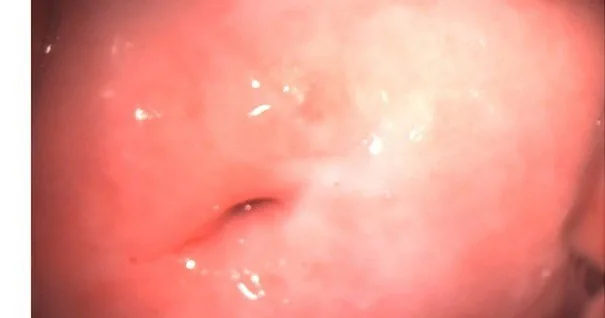 Colposcopy
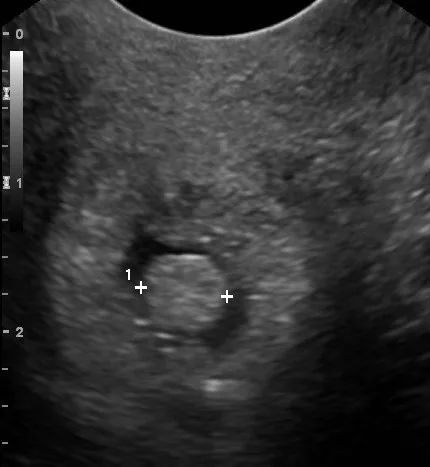 Ultrasound
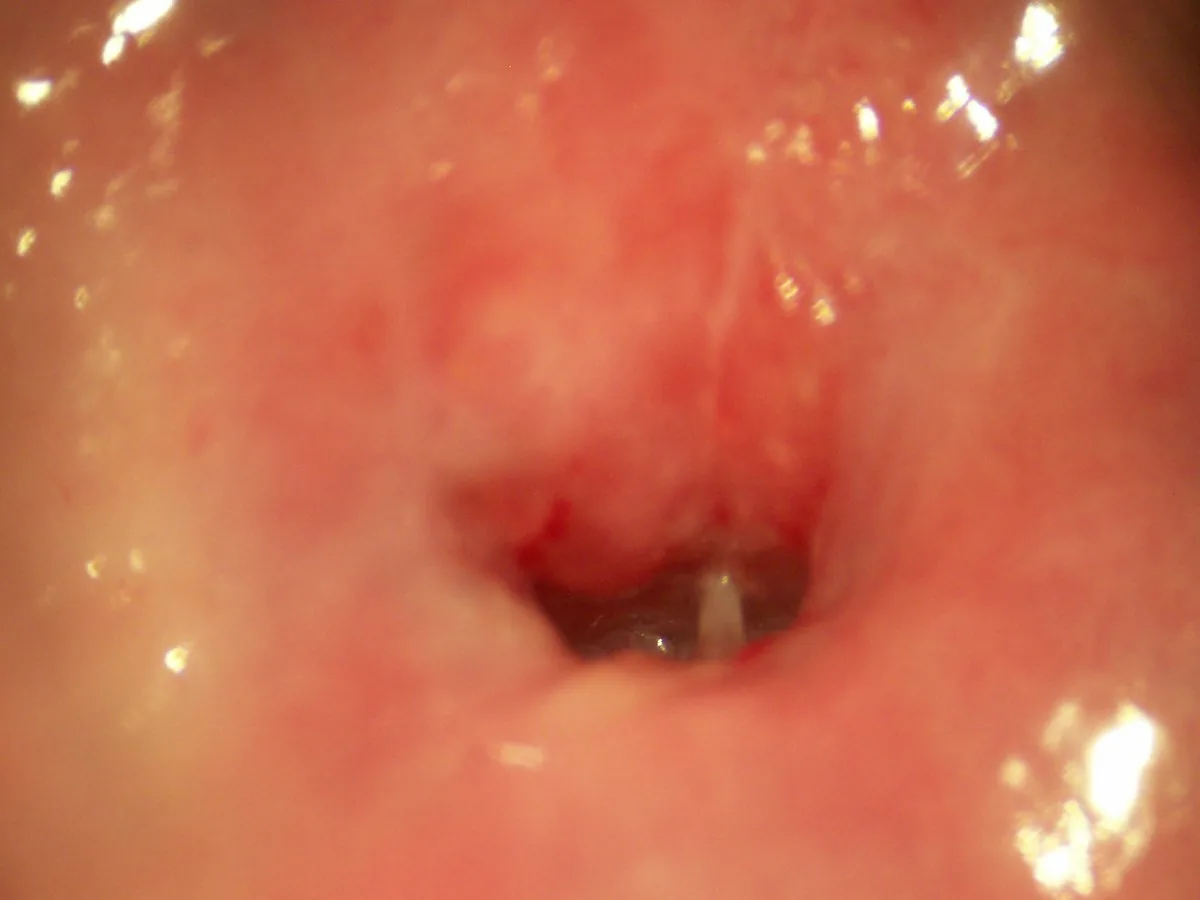 Colposcopy
Definition
Cervical polyp
- Typical presentation: contact bleeding and spotting, often an incidental finding.
- Important: histology is mandatory — and the polyp does not exclude a coexisting carcinoma, the Pap is still needed.
Ectopy
- Definition: columnar epithelium lies on the portio surface, i.e. outside the cervical canal.
- Cervical polyps are common benign growths of the cervix and endocervix; they usually originate in the endocervical canal and are mostly attached by a slender stalk.
- In ectropion (ectopy), endocervical columnar epithelium lies on the surface of the ectocervix owing to eversion of the endocervical canal.
Classification
Three types
- Type 1: TZ entirely ectocervical and fully visible.
- Type 2: TZ extends endocervically but is fully visible with instruments.
- Type 3: TZ endocervical and not fully visible — colposcopy inadequate.
Occurrence & epidemiology
Epidemiology
- Cervical polyps occur in about 2–5 % of women; women over 20 with several previous pregnancies are affected more often.
- Endocervical polyps occur mainly before the menopause, ectocervical polyps mainly after it.
- Malignant change is rare.
Aetiopathogenesis
What the transformation zone is
- The TZ is the area between the original and the current squamocolumnar junction — through squamous metaplasia virtually every dysplasia arises there.
Aetiology and risk factors
- They arise from focal hyperplasia of the endocervical columnar epithelium; chronic inflammation, cervical infection, congestion and raised oestrogen levels are regarded as contributing factors.
- Ectropion is a common, usually physiological finding in women of reproductive age and is strongly influenced by hormonal status, particularly oestrogen.
Clinical features
- About two thirds of women with cervical polyps are asymptomatic; intermenstrual bleeding, bleeding after intercourse and, if the polyp becomes infected, purulent discharge may occur.
- Ectropion remains asymptomatic in many women; increased discharge, postcoital bleeding and dyspareunia may occur.
Histology
- Histologically, cervical polyps consist of a vascular stroma covered by squamous or columnar epithelium.
Diagnosis
Typical imaging findings
- Colposcopy: A rounded, dark-red glossy protrusion with a smooth surface emerges from the os. It sits on a narrow stalk, can be moved sideways and bleeds easily on contact; the surrounding cervix is calm.
- Colposcopy: Around the os there is a sharply demarcated, velvety red grape-like area: columnar epithelium displaced onto the ectocervix. The border with the pale squamous epithelium is smooth with a regular vascular pattern; no atypical vessels.
- Colposcopy: Several tense, yellowish dome-shaped cysts a few millimetres across lie beneath intact epithelium, with delicate, regularly branching vessels running over them. Beside them are flat whitish plaques without sharp margins.
- Diagnosis is made on speculum examination: endocervical polyps are usually reddish pink, glistening and smaller than 1 cm, and may bleed easily.
- In ectropion, columnar epithelium is visible on speculum examination as an area extending beyond the external cervical os.
Keep learning in the app
Further reading (selection)
Cross-references
Note: Learning content from the GynFuchs app (flashcards, exam questions, image cases) for medical education – not a treatment recommendation and no substitute for diagnosis or treatment decisions in individual cases. Treatment and management are deliberately not covered on this page.