Miliaria Pustulosa
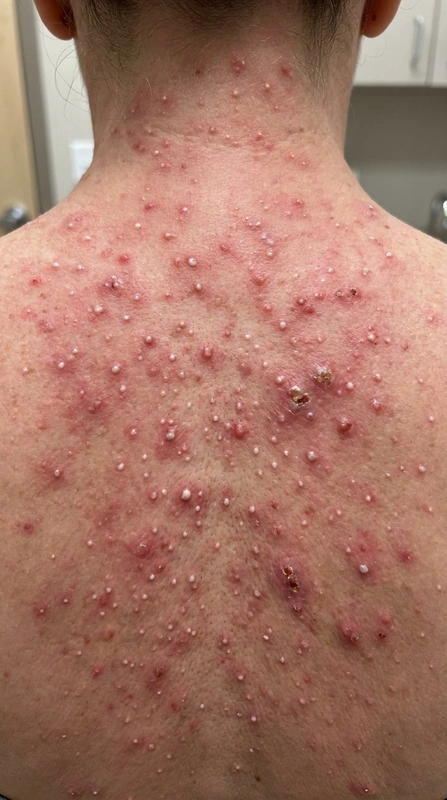
Overview
- Pathogenesis: secondary bacterial superinfection of pre-existing miliaria rubra — most commonly Staphylococcus aureus / S. epidermidis within retained sweat; sterile pustules also possible.
- Clinical: small 1–3 mm pustules on an erythematous base, non-follicular, often mixed with papulovesicles. Impetiginization (oozing crusts) possible with dense involvement.
- Localization: as miliaria rubra — trunk, intertriginous, diaper area.
- Fever plus pustules on erythema: Here AGEP (acute generalized exanthematous pustulosis) has to be excluded: sterile, non-follicular pustules on widespread erythema, starting hours to a few days after the causative drug (especially beta-lactams, macrolides), with fever and neutrophilia, resolving with desquamation after withdrawal. The second differential is pustular psoriasis of von Zumbusch type (history of psoriasis, recurrences, no drug time window). Miliaria pustulosa, by contrast, stays confined to occluded heat-exposed areas and causes no systemic illness.
Differential diagnoses
- Miliaria rubra (heat rash)
- Miliaria Crystallina
- Miliaria Profunda
- Acne papulopustulosa
- Impetigo
- Acne vulgaris
Practise Miliaria Pustulosa in the app
Flashcards with spaced repetition, exam questions and spot-the-diagnosis on this topic – in DermaFuchs, free of charge.
In the DermaFuchs app: 1 flashcards · 2 clinical images
Open in browser Download on the App StoreMore environmental and photodermatoses
- Erythema ab igne
- Miliaria Profunda
- Miliaria rubra (heat rash)
- Favre-Racouchot disease
- Phototoxic reaction
Note: This page is intended for medical education and does not replace diagnosis or treatment decisions in individual cases. Treatment and follow-up content is available in the app.