Stevens-Johnson syndrome
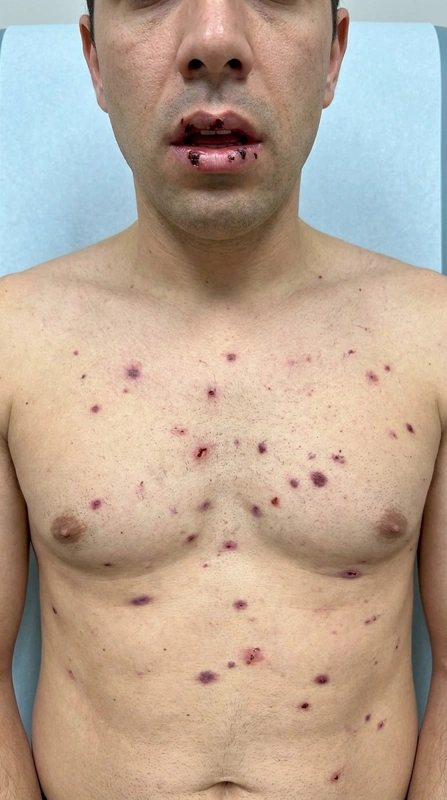
Overview
- Definition (BSA detachment): SJS < 10 %, SJS/TEN overlap 10–30 %, TEN > 30 % of body surface area.
- Latency: usually 4–28 days after first intake of the culprit drug.
- Triggers — high-risk groups: anticonvulsants, sulfonamide antibiotics, oxicam NSAIDs, allopurinol — specifically carbamazepine, lamotrigine, phenytoin, phenobarbital, cotrimoxazole/sulfasalazine, piroxicam/meloxicam, allopurinol and nevirapine.
- Further, less commonly cited triggers: terbinafine as well as beta-lactams and quinolones. In German practice allopurinol and antiepileptics dominate; the textbook-prominent sulfonamides have become less frequent because prescribing habits have changed.
- Genetic predisposition: HLA-B*58:01 for allopurinol and HLA-B*15:02 for carbamazepine (mainly Han Chinese and South-East Asia) — established there as pre-prescription screening.
- Pathophysiology: CD8/TNF/IFN-γ/Fas-ligand-mediated keratinocyte necrolysis (granulysin as key mediator).
- Prognostic score SCORTEN > 3 → transfer to burn center: Urea, glucose, bicarbonate, age >40, malignancy, >10 % TBSA.
- Fuchs syndrome: SJS with eye and mouth involvement.
Differential diagnoses
- Toxic shock syndrome
- DRESS-Syndrom
- TEN (toxic epidermal necrolysis)
- Epidermoid cyst
- Impetigo
- Toxic epidermal necrolysis (TEN, Lyell's syndrome)
- Fixed drug eruption (FDE)
Practise Stevens-Johnson syndrome in the app
Flashcards with spaced repetition, exam questions and spot-the-diagnosis on this topic – in DermaFuchs, free of charge.
In the DermaFuchs app: 2 flashcards · 2 clinical images
Open in browser Download on the App StoreNote: This page is intended for medical education and does not replace diagnosis or treatment decisions in individual cases. Treatment and follow-up content is available in the app.